Fallout: New Vegas voice actors announced, geeks everywhere rejoice

Tags

I told myself once that I wouldn’t ever write a column while in the grips of a nerd-conniption, but today I must break that vow. Tremble not, gentle reader, for you too are about to be caught up with me in squeals of geekish delight.

As you should know by now, Fallout: New Vegas is coming out soon – geekout reason #1. You might also know that it’s being developed by Obsidian Entertainment – reason #2 – which is home to many of the same folks who worked on the original Fallout games – reason #3.

What you don’t know, unless you pay extraordinary attention to developer press releases, is that the voice cast list has just been announced. And it contains Michael Dorn (Mr. Worf!), Felicia Day (Penny!), Zach Levi (Chuck!), and of course, Ron Perlman (Narration…narration never changes). So that’s reasons 4-9 (Zach Levi counts for two).

There’s also a bunch of other fancy folks, like Matthew Perry and Kris Kristofferson. You can read the full list here.

Bethesda has a penchant for recruiting fine voice talent (Patrick Stewart in Oblivion; Liam Neeson in Fallout 3). They also have something of a reputation for wasting it and letting them phone in their lines (Patrick Stewart in Oblivion; Liam Neeson in Fallout 3). However, Fallout 3 was a marked improvement over Oblivion in this area, and Obsidian is at the helm here, so there’s hope.

What do you think? Will this Obsidian-driven, star-studded adventure be easier on the ears than Attack of the Clones (aka Oblivion)?

Jerod Jarvis is an independent gaming journalist and founder of Duality Games. He maintains gaming columns for The Washington Times Communities and for The Outpost. When not blogging madly about games, he freelances for the Spokesman-Review in his hometown of Spokane, Washington and attends school at Whitworth University. Check out his presence on Facebook and Twitter to stay up on Duality Games updates and the inside scoop on the gaming news you care about.

Glory Glory Hallelujah – A trip back to 1862

BOOM.

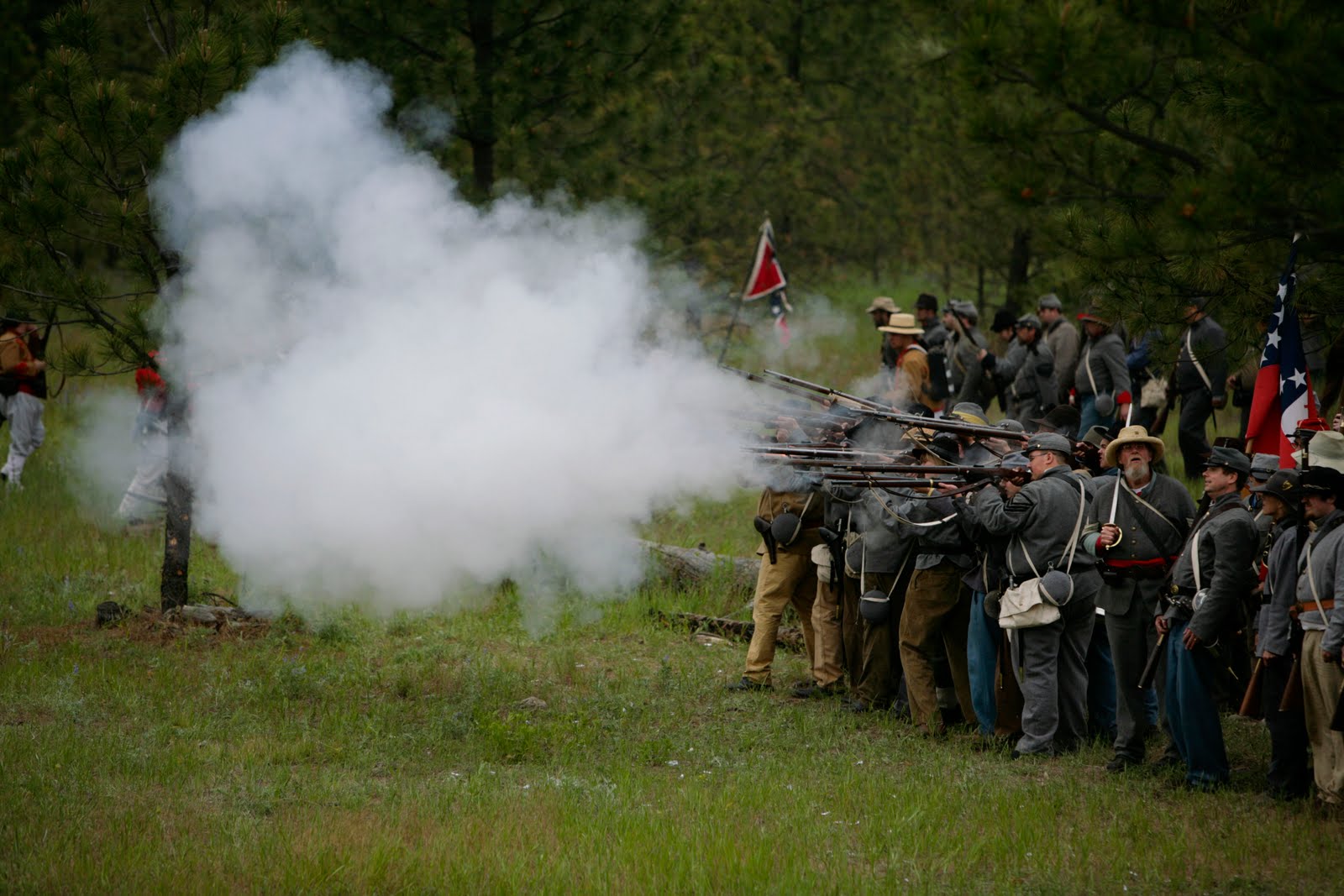
Smoke rolls like dark clouds over the battlefield as thunderclap shock waves slap into my chest. Roaring cannons buck as a team of artillery men rush to reload their charge. The sound of gunfire crack through the air, each musket accompanied by a tongue of flame. Officers bellow at their men, trying to keep them in line.

The Confederate army slowly advances across the contested ground, stopping only briefly to return fire in the face of the Union line. Squadrons of cavalry from both armies dart and weave between and behind the lines, wreaking havoc on the enemy’s flanks.

The cries of the wounded, the shouts of the combatants,  the clash of brother against brother; crouching on the sidelines of the battle, I catch myself believing, for just a moment, that it was all real.

And to the people out there on the field, it is.

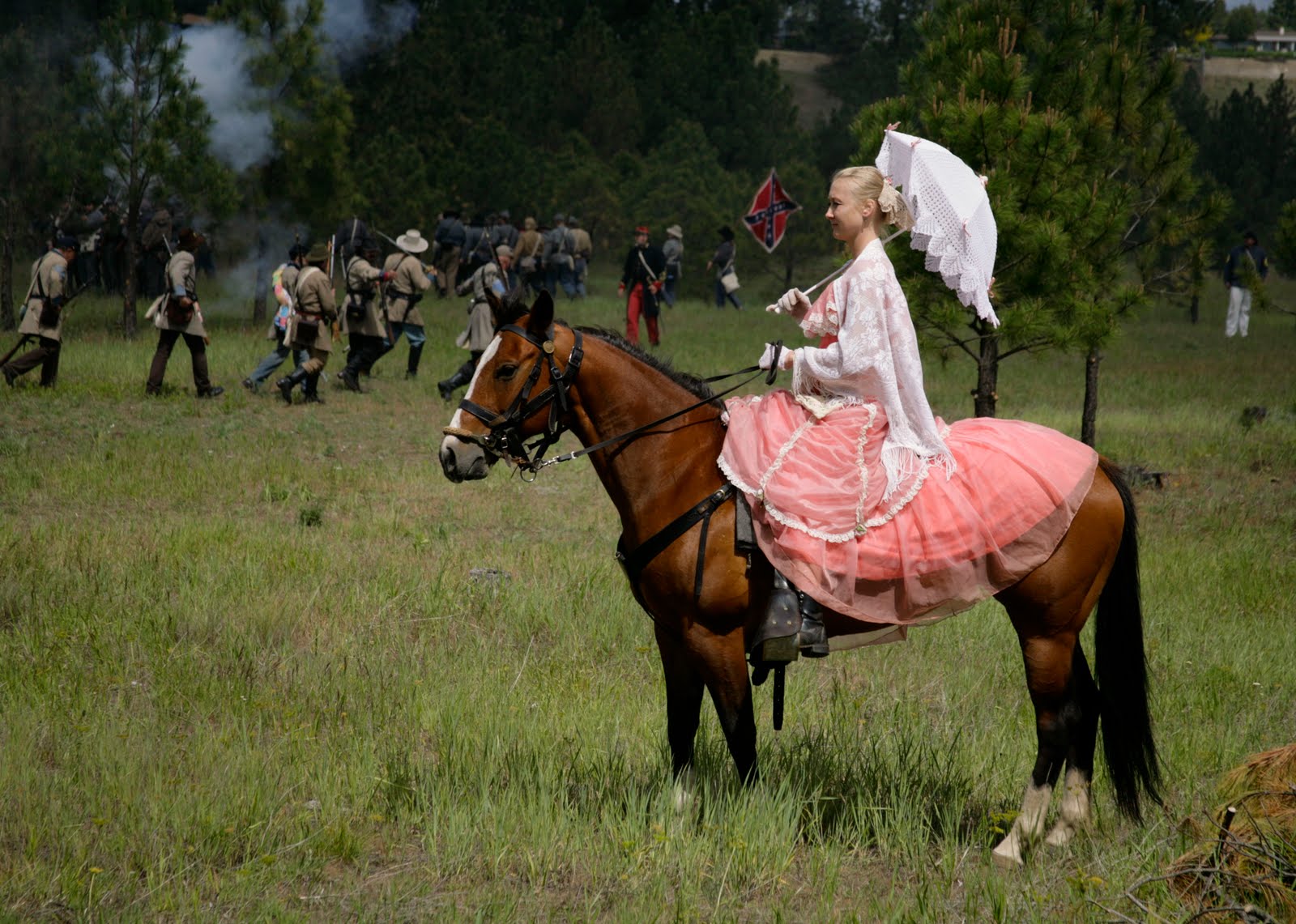
The Washington Civil War Association is holding their annual Battle of Spokane Falls in Spokane, Washington. Though no actual battle of the Civil War was ever fought in this area, Riverside State Park is a perfect location for an escape back through the decades, with its abundant pine forests out of sight of modern development.

Over two hundred reenactors are gathered here, split roughly in two between the Union and Confederate armies. The battles recreation is the main event, the part of the festivities that most attracts the public. But for the actors, the fantasy extends far beyond the field of honor.

When my intrepid photographer, Taylor Zajicek, and I first arrive, we wander into the camp and ask a friendly-looking confederate officer where we might fight Jim Vaughn, the organizer for the event.

“Jim is up in the U.S.,” he said, speaking as if he’d never been to that place and hopefully never would. We’re not in Kansas anymore, I think to myself. After all, Kansas was a Union state.

“Take this road up, keep right and it’ll take you straight into union territory,” the officer told us. He was very friendly, but something about his tone made it clear that he didn’t entirely approve of “union territory.” Taylor buys some hard tack in the Company K general store, and we set out to find Mr. Vaughn.

Hard tack is every bit as nasty as Laura Ingalls Wilder claimed it was. It’s not exactly a gift of Galadriel.

Walking through the camp is like walking into a history book. Everything in sight is authentic. Tents, cookware, furniture, clothing, weapons. Especially the weapons. Most are recreations of Civil War era guns, but there are a few well preserved authentics floating around. Every gun will fire real bullets if loaded to do so; they use blanks for the staged battles.

Soldiers stand or sit in small groups, chatting and cleaning weapons. There’s a battle planned in about an hour, so preparations are well underway.

We find Jim standing underneath a small awning that protect his desk and gear from the rain that had been falling intermittently throughout the day. He is dressed to the nines, from his cracked leather boots to his faded brass buckles to his carefully cropped facial hair. He stands just shy of six feet, gloves tucked tastefully into a broad belt near the holster that holds his revolver.

After he greets us, he gives us an overview of the event and gives us a warning: there are a few folks present that are “still fighting the war”. That’s not something that I had considered as a possibility – the war never really made it up to the Pacific Northwest; the idea that there might be people here still hanging onto old grudges seems unbelievable. But I suppose we can’t all live in the present.

Not that you’d want to here. One soldier stops to talk with us, quiet passion for his hobby leaking out from behind his stubble-decorated smile as he told us that time travel is what brings him back again and again.

“Every now and again you’ll just be walking along and you’ll see something that will just transport you back to 1863,” he said, hands on the hips of his faded blue trousers. “You’ll see people sitting around the campfire, singing a song, and just for an instant … you’re there.”

It’s easy to see what he means, and even easier to understand the intoxication of that feeling.

And it’s not a difficult sensation to stumble across. Everyone here is dedicated to their part; most are amateur historians who have done years of research on the their military unit and the character they roleplay for the weekend. This is readily obvious in the attention to detail that goes into costume, gear and living arrangements.

The exception is the actors who stay in the modern camping area for the weekend. These less-dedicated souls, who apparently don’t have their priorities quite straight, bring modern tents and even RVs up to “camp” a fair distance away from their more historically correct counterparts.

Needless to say, Taylor and I erect our tent as far away from these types as we could without seeming openly snobbish.

We wandered around the camp for a while, stopping to chat with the actors. Each unit is it’s own local club of sorts, often made up of friends and family members. Many of the units are based on actual Civil War units, and many of the actors have chosen an actual Civil War soldier to roleplay.

The 1st Michigan Artillery is responsible for the Union Army’s cannons. Their leader, a man in his sixties with picturesque salt-and-pepper mutton chops, is a machinist who makes the cannons himself. They are fully functional, certified by both the state of Washington and the WCWA for use in reenactments. They take nearly a year to produce and cost ten to fifteen thousand dollars apiece. When they go off, the shockwave can be felt from the other side of the camp.

Around dinner time we walk over to the confederate camp. The difference in aura is palpable, if undefinable. Perhaps it is the stigma of what those men fought for. Perhaps it’s the hindsight that tells us they are all doomed. Whatever the case, something about the camp makes us reluctant to enter. Most of the troops are enjoying an evening meal so we let them be.

We did return the next day and decide to brave the confederate came again, and end up having a pleasant conversations with the confederate cavalry. Maybe we were imagining things the day before. Or maybe cavalry are just more welcoming by nature.

After we left the confederate camp, we made a late night visit to the campsite of a Union naval unit, complete with a landship rigged in the grassy area outside their tent. Apparently, landships were (and are) a real thing, used to maintain naval traditions and discipline among shore parties. The two men sitting around the campfire were in their seventies, bearded and talkative. In the half-light of the flickering fire, surrounded by the sights and sounds of the Union camp, staring at these old men in their uniforms talking about the Civil War, I have remind myself that we were still in the 21st century, and that these men are talking about their great-grandparents, not themselves.

One of them claimed that his great grandfather was a general in the Union army, and had been the one that talked President Lincoln out of executing Robert E. Lee for treason. It’s probably true that if Lincoln had been inclined to such a course of action, it would have split the country a second time. This man speaks with easy pride of his ancestor, the man who saved America from a second Civil War.

True story? Impossible to say. Stories do have a habit of growing in grandeur with each generation that tells them. But it’s stories like his that made the trip worth it.

As we broke down our tent the next day and drove out of the camp, a mix of emotions stirred inside me. I couldn’t help feeling that I was leaving a special place, an almost magical place. A place that, for one weekend out of the year, steps out of stride with the march of time and rolls back for a look at the way things used to be.

This slideshow requires JavaScript.


Review – Starcraft II: Wings of Liberty

Tags

, , ,

I was tempted to begin this review with some type of epithet recounting the long years of waiting for the sequel to one of the greatest games ever made. But honestly, that would be dishonest. Starcraft came out some time before I was sucked into the gaming machine, and it was only in the last year or two that I picked up the battlechest at Best Buy and gave it a spin.

Confession first: I have yet to finish the first game, and I haven’t even touched the expansion, Brood War.

So there really hasn’t been much of a wait for me. As far as I was concerned, Blizzard could take their sweet time releasing the game. And they did – it’s been over a decade since we’ve seen a game in the franchise.

But it was so, so very worth it.

Even given my relative inexperience with the original games, Starcraft II feels incredibly familiar. The interface is reminiscent of the original, as are the controls. The graphics have certainly been updated, but they haven’t been dramatically changed, making the experience more like putting glasses on and finally being able to see the detail of the original game. Factions, tech trees, units, maps, mechanics – all have been tweaked and updated (and, in some cases, changed/removed/added), but all maintain an atmosphere appropriate to an heir of the RTS King.

Others have said this, but it bears repeating: Starcraft was a masterpiece and it didn’t really need an update. The visuals were the only major portion of the game that didn’t age well, and the game is still bigger in Korea than the NBA is here (I don’t have any research to back that up, but it sounds impressive, so go with it).

So all the nostalgia that you get when playing the game is there on purpose – Blizzard didn’t try to reinvent the wheel with this game. While major renovation is appropriate at times (for example, Dawn of War II nearly belongs to a different genre than its prequel), in this case it would have been akin to adding paint to a Picasso.

But enough tongue-bathing. The game starts out with a slow-ball training mission to reintroduce Jim Raynor (sans Vulture bike) and set the scene for the story. And while said story isn’t anything particularly award-winning, it’s certainly engrossing and entertaining, in a summer-movie sort of way. The voice acting is top notch, and while the game could be accused of campiness at times, that appears to the be the flavor Blizzard was shooting for. In a nutshell, Jim is leading Raynor’s Raiders in a rebellion against Arcturus Mengsk, who is both the leader of the evil-empire Dominion and the recipient of the Strange Yet Strangely Awesome Villain Name award.

All this freedom fighting is sidetracked when the Zerg show up in all their truly disgusting glory. Missions divide themselves fluidly into several types as you attempt to gather resources and intelligence to fight off the Zerg, the Dominion and the occasional Protoss fanatic.

It all gets mildly twisty and emotional and action-movie-esque as the story moves forward to its climatic and inevitably open ending.

The difficulty curve ramps up slowly but surely as the game introduces new units and tactics for both you and your enemies. The interface is a simple as could be asked for – nothing is more than a click or two away, and advanced techniques like control groups and hotkeys are easy to pick up.

It’s all done with an oily smooth panache that is the hallmark of a genius developer with a huge bankroll. The largest and most entertaining innovation on the RTS formula is the between-mission menu, which isn’t really a menu at all but rather the interior of Raynor’s ship, the Hyperion. While you aren’t free to walk around the ship, you can visit several areas to interact with other characters, research permanent upgrades to your units and buildings, hire mercenaries, and select your next mission. It feels like the type of thing that developers should have been doing all along, and I hope it’s a trend that catches on.

Starcraft multiplayer is the stuff of legend, and the sequel doesn’t disappoint. Others have complained about Blizzard’s new Battle.net matchmaking system, but I haven’t had any issues with it so far. The service is fully integrated into the game, makes it easy to make connections with other Battle.netters through Facebook or via e-mail, and most importantly, manages matchmaking in order to keep things competitive.

You’re given the option of playing up to 50 practice games (unranked 1v1 or 2v2 matches against other practice-leaguers) before entering the leagues. After that, you play a few games so the system can get a feel for your skill level, and then you’re placed in a league and bracket appropriate for you. So those of you afraid to wade into the multiplayer scene, let your terror fade: it’s very accessible.

Of course, you can also play against the computer or against your friends. And while Blizzard has removed LAN support from the game, it’s easy enough to create a game with friends over Battle.net that I’m not sure it will really be missed.

All of this is tied together somewhat by an achievement and reward system that not only recognizes your successes in both single and multiplayer, but it announces those successes to your friends. Automatic bragging. What will they think of next.

So, in short, the game is brilliant. While some have wailed and gnashed teeth over the decision to split Starcraft II into a trilogy (this game, Wings of Liberty, is part one), it appears to have been a solid decision. The Terran campaign is satisfyingly long and fleshed out, and the game has been given a coat of polish it probably would not have received had all three campaigns been stuffed in.

This way, the players get three sprawling campaigns and three years of guaranteed major updates to both single and multiplayer, and the developers make absolute scads more money. Everybody wins.

On the content side, there are some minor concerns. I can’t think of a cutscene in which someone wasn’t drinking out of a flask or dragging on a cigar. Also, mild language pops up throughout (mostly damns and hells, and one or two s-words that were rather surprising for a T-rated game).

The tragic leader of the Zerg, the Queen of Blades, is still recognizably female and not really clothed. However, she isn’t really human, either, and is covered in Zergy chitinous armor. Nothing that should raise any eyebrows.

Violent content is about what you’d expect for a PG-13 movie. Blood splashes when humans die. The Zerg buildings are biological, so anytime anything of theirs is destroyed it goes up in a gory explosion.

All of it comes together to push the boundaries of what I’m used to in a T-rated game (I had to double check that there was only a T on the box after playing the first few missions). However, there isn’t really anything that will cause concern for mature gamers; you just probably shouldn’t play it with your little brothers.

Ultimately, Starcraft II is a worthy successor to its legendary progenitor. The game shows all the marks of a finely tuned machine polished to a glorious sheen. It’s slick, it’s entertaining, it’s challenging, and it’s fun. Innovative is really the only thing it isn’t, at least in terms of gameplay. But that isn’t much of an issue here.

So while my wait between Starcraft and Starcraft II wasn’t much of an ordeal, the wait between Wings of Liberty and Heart of the Swarm will be. This is a great game that will be around for a long time, and you owe it to yourself to pick it up and bathe in its sheer excellence.

Jerod Jarvis is an independent gaming journalist and founder of Duality Games. He maintains gaming columns for The Washington Times Communities and for The Outpost. When not blogging madly about games, he freelances for the Spokesman-Review in his hometown of Spokane, Washington and attends school at Whitworth University. Check out his presence on Facebook and Twitter to stay up on Duality Games updates and the inside scoop on the gaming news you care about.

PCs killed the console star

An interesting blog post by Rahul Sood (founder of Voodoo PC) ponders the implications of a rumored project that Microsoft is rumored to have canceled, rumor has it. Apparently, Microsoft was working on cross platform gaming that would allow PC players to take on their lesser Xbox counterparts. This isn’t particularly unknown news – Halo 2 and Shadowrun are both cross-platform games, and there was a big PR hoopla about the concept a year or three back.

Sood claims he has it on good authority that the project was canceled largely because the console players couldn’t compete with PC gamers.

Shocker? Hardly. There aren’t many game genres out there that don’t benefit significantly from the versatility and accuracy of a mouse and keyboard. Playing a shooter on a console is like trying to ride a motorcycle while wearing boxing gloves and with both arms in casts. Possible, but so unwieldy it’s a far cry from fun. With the possible exception of sports games, the same principle holds true for nearly every other genre out there.

So pitting those poor console types against gamers armed with mouse and keyboard is a little like throwing stormtroopers at Darth Maul. Microsoft apparently felt sorry enough for the Xboxers (or, more likely, feared a mass boycott of the games that were “unfairly balanced”) that they canceled the project.

It’s impossible to say how true this story is, but I wouldn’t be surprised if it was. Just another sign of these sad times.

Sood’s post is worth a read. Check it out.

What do you think? Do PCs really hold that much of an edge over console gamers?

Jerod Jarvis is an independent gaming journalist and founder of Duality Games. He maintains gaming columns for The Washington Times Communities and for The Outpost. When not blogging madly about games, he freelances for the Spokesman-Review in his hometown of Spokane, Washington and attends school at Whitworth University. Check out his presence on Facebook and Twitter to stay up on Duality Games updates and the inside scoop on the gaming news you care about.

Tatem Games Q&A: Crafting Carnivores

Tags

,

Jerod Jarvis is an independent gaming journalist and founder of Duality Games. He maintains gaming columns for The Washington Times Communities and for The Outpost. When not blogging madly about games, he freelances for the Spokesman-Review in his hometown of Spokane, Washington and attends school at Whitworth University. Check out his presence on Facebook and Twitter to stay up on Duality Games updates and the inside scoop on the gaming news you care about.

Dragon Age 2 coming with new art, more personal story

Tags

,

Bioware/EA are slowly beginning to unveil details on their inevitable sequel to last year’s RPG hit. Game Informer has an extensive article on the reveal that’s worth reading, but I’ll list some of the important details here.

First, while you’ll be able to import your save game from Dragon Age: Origins (and probably Awakenings, if you played it), the DA2 story centers around a new protagonist: Hawke.

It looks as though the Dragon Age team has spent some time across the hall at Bioware snooping around the Mass Effect team’s offices. Hawke will be fully voiced, dialogue responses will be stance based rather than fully written out, and a greater emphasis will be placed on combat. None of these things are necessarily bad, though the nostalgic in me laments the shrugging off of long-time RPG staples.

The console version will apparently take a different approach to combat than the PC version. No details on exactly what this means yet, but I say let the consolites have their dumbed down combat. Dragon Age is a call back to the days of true tactical turn-based RPGs, and any decision that allows the PC version to focus on that is a good decision in my book.

The art style is supposedly changed, though the artwork that’s been released doesn’t appear all that dramatically different from my memories of the first game. A general graphical upgrade would be nice for the game, but I’m not sure it needs an art design overhaul. We shall see.

The story is, supposedly, much more character driven than the first DA, which was mostly event driven. While this again smells a bit like Mass Effect, that’s definitely an aroma I can handle.

For more info, check out the Game Informer coverage, and this collection of facts on the DA fansite GrayWardens.com.

Jerod Jarvis is an independent gaming journalist and founder of Duality Games. He maintains gaming columns for The Washington Times Communities and for The Outpost. When not blogging madly about games, he freelances for the Spokesman-Review in his hometown of Spokane, Washington and attends school at Whitworth University. Check out his presence on Facebook and Twitter to stay up on Duality Games updates and the inside scoop on the gaming news you care about.

Vice President Biden bashes digital pirates

Editor’s note: This article represents the debut of Amanda Baker on Duality. Amanda is responsible for much of the site’s design and the fact that most of the articles here don’t have spelling mistakes. She’s an editor and writer extraordinaire, so listen up, noobs.

Vice President Joe Biden recently made a statement concerning the pirating of American movies and music by foreign websites. According to Reuters, Attorney General Eric Holder and Homeland Security Secretary Janet Napolitano, among other officials, flanked Biden when he made this statement on Thursday, June 24:

“But piracy is theft. Clean and simple. It’s smash and grab. It ain’t no different than smashing a window at Tiffany’s and grabbing [merchandise].”

Besides the obvious grammatical errors, the VP has a point that we at Duality have been trying to make for a while. Pirating equals stealing, as Jerod articulated in his piracy rant. The fact that the federal government is taking an even more active stance on this issue is encouraging.

In an article posted on June 22, Maximum PC reported:

“The guidelines contain 33 recommendations. One major point is an intention to work with foreign governments to shut down infringing websites. As expected, Hollywood studios applaud the new list of recommendations. The movie and music industries contend that they are losing billions of dollars to piracy, though many have disputed the numbers. Biden also commented that ISPs should be cooperating with entertainment industry efforts to penalize users. He was likely referring to various plans for so-called ‘three strikes’ rules that would result in users being disconnected after repeated accusations of infringement.”

While this initiative probably won’t eradicate piracy off the face of the earth, it is a positive step forward in bringing awareness to theft in the multimedia industry. Hopefully this will be a big blow to the illegal websites that raise prices and make things harder for those of us who like to keep it legal.

Steam saves lives with huge sale

According to Steam, there have been over 2,000 recorded unprovoked shark attacks worldwide, but there have been no recorded deaths related to Steam. Therefore, the Valve-owned digital storefront is doing its part to save lives this summer by slashing prices on a sizable portion of its inventory.

Seriously, this sale is huge. Huge enough that I actually purchased Call of Duty 4: Modern Warfare, breaking several of my personal ethical boundaries in the process. So don’t doddle around reading this post, get thee to Steam and spend way less money than you typically would have to.

Then come back and look at this picture. It’s fake. Probably. But it’s worth looking at.

Jerod Jarvis is an independent gaming journalist and founder of Duality Games. He maintains gaming columns for The Washington Times Communities and for The Outpost. When not blogging madly about games, he freelances for the Spokesman-Review in his hometown of Spokane, Washington and attends school at Whitworth University. Check out his presence on Facebook and Twitter to stay up on Duality Games updates and the inside scoop on the gaming news you care about.

iPhone game review – Carnivores: Dinosaur Hunter

Tags

Let’s just be honest with one another: dinosaurs are awesome.

Anyone care to dispute this?

I thought not.

In a desire to tap into the universal adoration dinosaurs receive from every demographic (except, perhaps, the Geico cavemen) Tatem Games launched Carnivores: Dinosaur Hunter last week for the iPhone and iPod Touch.

The game is ostensibly a shooter – indeed, it looks and feels like a shooter at first glance – but in reality, it is not. Carnivores is a strategy game of surprising depth that is perhaps a bit too ambitious for its platform.

There are two game modes: Survival and Hunt. Survival is a tacked on arcade version of Hunt mode in which you stand motionless with a shotgun while waves of dinosaurs attack you. It’s not really worth talking about.

Hunt mode, on the other hand, is rather intriguing.

Before you head out and start slinging prehistoric lead, you have to select the area you wish to hunt in, the dinosaurs you wish to hunt, and the hardware you wish to hunt them with. You start out with fifty points which you can spend on these things, enough to start on the free map with one or two varieties of dinos and a pistol. As you rack up the kills, you earn points which allow you to unlock more areas to hunt in, more challenging adversaries (up to the mighty T-Rex himself), and better weaponry.

You’re placed on the map with a limited amount of ammunition for whatever guns you have with you and basically set free to stalk dinosaurs, which isn’t as simple as it might sound. You have to take into account how much noise you make, the wind direction, the time of day, whether your target is a carnivore or an herbivore and what, if any, camouflage you take with you into the field (wearing camo to cover your scent or reduce visibility, making it easier to stalk the dinos, but also incurs a point penalty). There’s a wide variety of dino life on each map, but you only get points for the ones you chose to hunt before you started.

It’s a lot to think about, but when you get used to it, it works.

What doesn’t work is the learning curve. This is an iPhone game that requires -requires – a read-through of the manual. On a platform that caters more naturally to the casual rather than the hardcore crowd, this is a bit of a concern. Jumping straight into Hunt mode without doing a bit of reading will result in frustration. I suspect that most of the people trying this game will give up after only a few minutes of confusion, which is disappointing as the game does get better as it goes on.

The main frustrations are due to the limitations of the platform. The graphics processing power of the iPhone is impressive, but not quite impressive enough to do this game justice. The wide open sandbox maps populated with dozens of dinosaurs are all displayed surprisingly smoothly, but the draw distance is a critical problem. You usually can’t see your target well enough to actually line up a shot until it sees or smells you and either heads for the hills (herbivores) or heads for your jugular (carnivores). This is alleviated a bit once you gain access to the sniper rifle, which allows you to zoom in, but it takes a lot of hunting to earn enough points for that.

The only other real problem is relatively minor – the controls are a little difficult. When I first picked up the game, I noticed that it was in first-person perspective and that I had a gun, and so I tried to play it like a shooter.

Unfortunately for me, this game is not a shooter, at least not in the sense that I was expecting. Much like Tom Clancy’s Ghost Recon is more strategy than shooter, this is a first person strategy game with guns. Once you realize that, the sluggish controls become more bearable because you stop trying to run around spraying bullets at dinosaurs.

Though if you feel that need, there’s always Survival mode, minus the running around.

Carnivores: Dinosaur Hunter is an ambitious game for the iPhone – perhaps a bit too ambitious. But for those looking for something a little slower-paced and strategic for their stuck-in-the-waiting-room gaming, I recommend it wholeheartedly.

Jerod Jarvis is an independent gaming journalist and founder of Duality Games. He maintains gaming columns for The Washington Times Communities and for The Outpost. When not blogging madly about games, he freelances for the Spokesman-Review in his hometown of Spokane, Washington and attends school at Whitworth University. Check out his presence on Facebook and Twitter to stay up on Duality Games updates and the inside scoop on the gaming news you care about.

Epic Review – Alpha Protocol

Tags

, ,

It’s been a while since I’ve played a game that’s left me as conflicted as “Alpha Protocol” has. On the one hand, it’s nothing like I expected it to be; but on the other hand, that’s not necessarily a bad thing. On one foot it’s a rather sub-par RPG shooter; on the other foot it’s a fascinating choice-driven narrative. On one bicep it’s not nearly as mucky as I was fearing, content-wise; on the other bicep, the few issues it does have are extremely … issuey.

The game begins with your character, Michael Thorton, waking up from a drugged coma strapped to a medical examination table. It quickly becomes apparent as you begin to make your escape that the whole setup is an elaborate test of your spy-ness. It’s also the only area of the game you’re likely to get through without having to kill anyone, making it really the only area of the game where you’re likely to play as an actual spy. But more on that later.

After passing this test, a crotchety old commanding officer runs you through some rigmarole about how to make friends and influence people, and then ships you off to Saudi Arabia with the intention of using bullets to mangle terrorists’ faces.

This being a spy thriller, none of this goes as planned and you’re quickly thrown into a twisty, snakey story full of government betrayal, mistaken identity and cloaked daggers. You’re working for Alpha Protocol, a government organization so secret that even those who know about it aren’t sure they know about it. The whole thing feels like the writers of the game spent their break time watching reruns of “24” and playing “Splinter Cell.” Which isn’t necessarily a bad thing, just not entirely original.

What is original, in application if not in design, is the level of control over the narrative that the dialogue system offers. When presented with an opportunity for conversation, you choose a stance (aggressive, suave, or professional, typically, but the options change based on the context) for your response rather than a spelled-out dialogue choice, a la Mass Effect but with more frustrating vagueness. It’s amplified by a timer that limits the amount of pondering you can do over your response. At times you’ll have only a second or two to react and make a split second decision. It goes a long way toward increasing the intensity of dialogue situations, particularly ones that occur in flashpoints, where the decision you make will determine who lives and who dies.

It’s not perfect, but it rarely feels artificial. The only real complaint is that it’s difficult to know at times what some options will do. One time I walked into the bar and started chatting with an old Russian man, my informant for the area. Being a tender, caring sort of a spy, I asked him about his health and told him about my situation, politely asking if he could assist in any way. He then asked me what I wanted, and the word “bottle” appeared in my response options. Intrigued, I clicked it only to be shocked and horrified with my tender, caring character grabbed a bottle of vodka off the counter and smashed it across the old man’s face.

I thought I was going to pour him a drink! And now he was bleeding out all over the counter while I make snide remarks about alcoholism and how good I looked in aviators.

“Interrogate” might have been a better word choice, Obsidian. Now I’ve got guilt …

The game does offer substantial player control over how the story plays out and how you’re character is perceived. Unfortunately, there’s no getting away from the fact that Michael is a bit of a smarmy cad. The voice actor behind Thorton does a decent job most of the time, but when his attempts at classic Bond nonchalance come off as less debonair and more whiny teenager. And the “suave” diaologue option usually results in something less charming and more “get away from my daughter, you pervert!”

The end result was I wasn’t able to play as the calm, cool, collected Cary Grant sort of a spy I had been hoping for.

I wasn’t really able to play a spy at all. The stealth mechanics in the game are largely broken; Enemy AI is at times omnipotent and at other times hopelessly oblivious. Stealth is rarely the most effective way to deal with a problem, and often the least enjoyable. There are moments when the game feels a lot like “Splinter Cell,” but you never feel as cool or capable as Sam Fisher.

This wouldn’t be so bad if the shooting mechanics weren’t so rough. The game has a cover system, but it only works when it feels like it. The whole combat system in general is just rather chunky. While it’s reminiscent of “Mass Effect 2,” it’s nowhere near as slick or satisfying.

Also, Michael’s crouch-run is just painful to watch. Sam Fisher’s signature stalk might be unrealistic, but at least he doesn’t look like a very odd dog with its tail between its legs all the time.

Different characters will like or dislike you depending on your choices in dialogue and gameplay. This is nothing new, but Obsidian mixes things up here a bit by ensuring that there are no ‘wrong’ choices. No matter what type of character you choose to play there are gameplay benefits (i.e. making your handler love you will provide a bonus, but so will making her hate you). Either way, the choices you make will dramatically affect how other characters respond to you down the road. There’s not a ‘bad’ way or a ‘right’ way. There’s just the type of person you want to be and the consequences attached to those decisions.

It’s intriguing. The game doesn’t foist a morality system upon you; rather, it presents morally gray situations and rather believable consequences to choose from. Being a saint or a sinner with both get you to the end of the game with the day saved … but will you be able to sleep at night afterward?

As much as I’ve been harping on the irritating niggles, none of these stopped me from starting over immediately after the credits rolled. It says a lot about the quality of the branching narrative that it overcomes many of the game’s shortcomings.

However, issues on the content side prevent me from recommending the game, or from finishing it myself a second time.

The level of violence is expected in a game like this and is similar to what you would get in one of the latest “Splinter Cell” games. Intense and brutal at times, but never overly gory or horrific.

Language pops up throughout; f-bombs fall at awkward, random times as if the writers got through the script and realized they’d written something awesome but had forgotten to lace it with profanity, and then went back and stuck it in at odd places. Disappointing.

On my first play-through, I was relieved to discover that the sexual content from previews was largely absent. You can bed a few of the female characters throughout the game, but it’s optional and there’s nothing graphic (a kiss before a fade to black). Nothing praiseworthy or necessary to the game, but at least it’s something you could let your spouse watch without a marriage counselor on speed dial.

All of this tameness is more than made up for, however, in one short scene that occurs toward the end of the game if the player chooses a particular female to be his handler for a mission. You find yourself once against strapped to an examination table, unable to move while the woman takes sexual advantage of your bound state. The scene contains no nudity and fades for the actual act, but is still wincingly graphic. It’s borderline rape, and if the gender roles had been reversed there’s no way it would have made it into the game without bumping the rating up to Adult.

This alone knocks it solidly into the blacklist. There’s absolutely no justification for that level of graphic sexuality in a game, especially when it adds zilch to the story and does nothing for character development except make you feel slightly dirty about everyone involved.

So, what does all that say?

“Alpha Protocol” is a fascinating experiment in choice-based narrative that works well enough to overcome the game’s many design flaws. Unfortunately, content issues including harsh language and cringe-inducing sexual situations make this a game I can’t recommend.

Obsidian has put out some great games, and they’ve got some good-looking stuff coming down the pipe. I really hope the results aren’t all such a mixed bag, and that someone with a better taste in content takes charge.

Jerod Jarvis is an independent gaming journalist and founder of Duality Games. He maintains gaming columns for The Washington Times Communities and for The Outpost. When not blogging madly about games, he freelances for the Spokesman-Review in his hometown of Spokane, Washington and attends school at Whitworth University. Check out his presence on Facebook and Twitter to stay up on Duality Games updates and the inside scoop on the gaming news you care about.

Design a site like this with WordPress.com
Get started