Review – Alien Shooter: Vengeance

Tags

, , , , ,

I haven’t gone out on a limb and purchased a game I don’t know much about for quite some time. Back when I first got into games, I didn’t know anything about ratings or which developers could be relied upon to serve up a good experience. Luckily, I managed to stumble upon a couple of classics in my early days that cemented my fate as a seedy basement-dwelling keyboard commando. Or something like that.

A few burns and some money wasted on crushing disappointments taught me to be a bit more careful with my purchases (I’ll never get those hours back from Mystery of the Nautilus …).

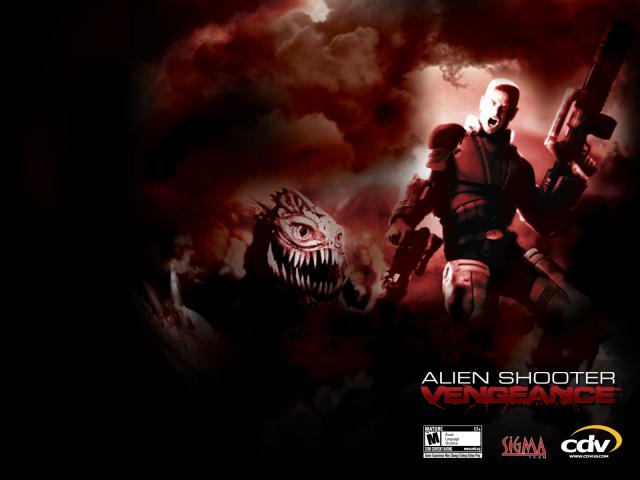
On the flip side, though, I’m quite certain I’ve missed out on a few gems. If Steam hadn’t put all of Strategy First’s games on sale, I probably would have missed Alien Shooter as well. It’s a low budget B-movie sort of game with graphics from ten years ago and a story as generic and cliche as they come, and it’s precisely because of those anathemic attributes that it succeeds so brilliantly.

To enjoy Alien Shooter: Vengeance, you have to know a bit of what to expect. The label ‘cult hit’ should get you on the right track. This is not a triple A blockbuster event. Developed by The Sigma Team (who also created the original Alien Shooter), this is barely more than an indie title. But it rises above its many pitfalls for the same reason cheesy B-movie sci-fi flicks do — it’s completely self-aware and totally unashamed of itself. AS:V knows it’s not a genre shaker, and instead of wallowing in pathetic failure it instead revels in it.

The voice acting is so over the top cheesy it’s impossible not to laugh (think Command and Conquer with lower production values); the gameplay is rough but doesn’t get in the way of anything, and the RPG elements serve their purpose well enough; the action is totally, utterly ridiculous and is easily the game’s most endearing facet.

It may be difficult to appreciate if you haven’t played the game, but mowing down a seething horde of alien scum by the hundreds as they fill your screen with their pixely vileness is maddeningly fun and hysterical in the way that Monty Python manages to be. After clearing a level it can sometimes be impossible to find a texture that hasn’t been streaked red or stacked high with the bodies of xenoscum. While admittedly horrendously violent, it’s the kind of violence that is accomplished with such low-grade visuals and in utterly unbelievable volume that it completely forgets to be horrific and skips immediately to being pure roflcopters.

Truth be told, it’s not a game for everyone. There is a certain amount of language, and the over-the-top violence won’t appeal to some. And of course there are those who just don’t enjoy B-games. It’s a pity.

If you have Steam, check out Alien Shooter: Vengeance. It’s a lighthearted slap in the face to the science-fiction genre, and a kick to play through. Love it or hate it, let me know what you think.

Jerod Jarvis is an independent gaming journalist and founder of Duality Games. He maintains gaming columns for The Washington Times Communities and for The Outpost. When not blogging madly about games, he freelances for the Spokesman-Review in his hometown of Spokane, Washington and attends school at Whitworth University. Check out his presence on Facebook and Twitter to stay up on Duality Games updates and the inside scoop on the gaming news you care about.

Review – F.E.A.R. 2: Project Origin

Tags

, , ,

So, in general, I’m not a big fan of the horror genre, in any medium. On a surface level, I just don’t enjoy horror movies and books. Having the pants scared off of me just doesn’t fall under the heading of ‘fun’ in my big book of things that I do.

I have made a few exceptions to this rule in games, however. For some reason, I don’t find horror games nearly as frightening as horror movies. Perhaps it’s because in a game I usually have a fully loaded assault weapon in my hands and can do something about the thing that’s scaring me. Probably the same phenomenon behind why I loathed the first Alien film but really enjoyed the second: more guns = more funs.

The first F.E.A.R. game is a classic example of this (the acronym stands for First Encounter Assault Recon, and from now on I will simply call it ‘Fear’ because all those periods get really irritating by about the fourth paragraph). I’m told the game takes a lot of cues from horror flicks like The Ring, but that is of less importance to me than how awesome a game it is. I’ll go into more detail as I continue to write, but suffice to say for now that it ranks among my favorite games of all time, and it has most decidedly not been replaced by its sequel.

The story of Fear 2 is long and convoluted and you can read about it from some other gaming journalist. In a nutshell, it’s the original developer’s vision of how the story of Fear continues, which primarily involves completely ignoring the two abysmal expansion packs which were released for the first game (read: do not play them if you enjoy retaining your intelligence). Sadly, despite promising beginnings, this sequel is largely a disappointment. Allow me to demonstrate by making a list of all the things that made the first game great, and then of how the second game murdered them and left them to bleed out and die.

Story: The story behind Fear is a bit convoluted and I’m not going to recount it here, partially because it would take up a full article and partially because I want you all to go play the game. In short, you are a member of the First Encounter Assault Recon team, an elite group dedicated to investigating paranormal encounters. You’re sent in to investigate Armacham, a giant corporation that has been developing clone super soldiers that can be controlled by a psychic commander. Alma, a powerful psychic girl who mothered the commander of the clone soldiers, has gone completely bonkers from lifelong abuse at the hands of Armacham’s scientists, and through a series of unfortunate events she is released from captivity and immediately begins to kill everyone around her. While it sounds a bit flat on paper, trust me when I say that it’s an absorbing and intense story to play through, which a few twists and turns to keep it interesting.
Fear 2’s story, on the other hand, I was never really able to get a firm grip on. You play a different character, a member of a different military team, sent in to arrest one of the directors of Armacham. The sequel opens a few minutes before the end of the first game, and so some of its events are supposed to run parallel to those of the original. This is rarely taken advantage of, however, and the story sadly consists largely of confusing journal entries and the accounts of badly voice-acted characters.

Perhaps the biggest failing in the story department is that way in which it is presented. In the first game, you are your character. The operative you play as has no personality of his own, leaving a blank slate of sorts for the player to fill in with whatever makes the most sense. You don’t have to try and share in someone else’s experience, or empathize with a foreign character. You are character. And thus the story becomes personal and involving.

Fear 2 went with a different approach, asking you to instead fill the shoes of a pre-made character named Micheal Beckett. While this storytelling technique has been used succesfully in countless games, here it only serves to distance the player from the game’s events, ultimately resulting in my utter lack of interest in what was happening.

Atmosphere: The first Fear game positively dripped with atmosphere. Its corridors were dark, its lighting was spooky, the bad guys were believable, and the scares were genuine. Everything about the game shouted, “I was made by people who care about me.” Fear 2, on the other hand, feels unfortunately like a cash-in on its predecessors success, a smarmy leech riding on the coattails of greatness. While much of the game feels similar, it doesn’t so much emulate the first game as it copy/pastes it, leaving the player feeling more like they’d been promised the real Mona Lisa only to be given a cheap knock-off that looks more like Madonna.

Intensity: the original Fear ranks easily in the top three most-intense-games-in-the-world-ever. The firefights were incredible — gunshots incredibly loud, gun smoke and dust clogging your vision, huge chunks of concrete ripped from walls by stray bullets, the enemies shouting intel to each other about your location while you desperately slammed another magazine into your weapon. And even the sections without a shot being fired managed to spike the old heart rate.

Fear: The original game was scary. Really. Not ‘monsters are jumping out at me’ scary, but truly under-your-skin frightening. The secret to this was the remarkable restraint the developers showed in putting the game together. Many of the most potent scares the game delivered were built upon long sections of nothing happening. You’d be moving through a building filled with scary looking dark corners, muscles rigid because every new corner looks like something is going to jump out and clobber you, but nothing would until you finally began to expect that nothing would and then your guard would be down and then HOLY PANTS TERROR FROM BEHIND!!!!

The game got under your skin because it worked to build an atmosphere of uncertainty and psychological fear. Fear 2, sadly, ditched most of this in favor of a mixture of cheap scares, recycled tricks, and gore. There’s times where it will begin to have success at generating actual fright, but then it seems to get tired of the effort and hangs a mangled corpse in your face. Ooo, scary.

Violence: If it’s not already clear, both Fear games land solidly in the M-rated category. Language, violence, and (in the sequel) some sexual elements make their appearances. But the first game, while violent, didn’t revolve around the bloodshed. It was there, but it wasn’t glorified and set on a pedestal with banners reading, “Look at the blood!” The sequel, on the other hand, revels in the bloodbath, taking every opportunity to shove the player’s face into another gory scene. Where the violence in the first game added to the atmosphere, the violence in the sequel is just distracting and detracts from the experience.

There are a few other categories I could go into, but I’m not going to because I’m tired of writing about this disappointing game. If you’re looking for a top-notch horror game with real scares and incredible action, rent or buy the first game (it’s available for PC, Xbox 360, and Playstation 3) and ignore the sequel.

Jerod Jarvis is an independent gaming journalist and founder of Duality Games. He maintains gaming columns for The Washington Times Communities and for The Outpost. When not blogging madly about games, he freelances for the Spokesman-Review in his hometown of Spokane, Washington and attends school at Whitworth University. Check out his presence on Facebook and Twitter to stay up on Duality Games updates and the inside scoop on the gaming news you care about.

Pirates, File-Sharing, and the End of All Joy and Happiness

Tags

, , ,

So let’s just get this out in the open. I’m a pirate hater. I’ve been known to launch into verbal tirades when confronted with those nefarious types who download illegally. I’ve even killed my share of them by tracking them down and firing explosive computer viruses to their IP addresses.

Why yes, I am rather hardcore.

As is my custom, I will deliver my debate-ending argument in nontraditional fashion. I won’t talk about how it’s stealing (no, seriously — it is). I won’t talk about how it’s driving the prices of media up to ozone-threatening levels (and you thought that hole was caused by greenhouse gases … n00b). And, in what may come as a surprise to you cynical types, I won’t even guilt trip you by telling you that pirating is how Jack Thompson got all his games (“I need you to postpone my court date, Ms. Jensen — this sick filth hasn’t finished downloading yet”).

And now you’re all on the edge of your seats, waiting for it. “What is he going to say?” you’re asking yourself. “How can he possibly talk about pirating without mentioning the aforementioned mentionings?”

Well, the sad truth is, I can’t, so disregard everything I just said, and we’ll start with how pirating really, truly, actually is stealing.

This part is rather elementary, but in spite of this is seems to be the part people have the hardest time grasping. So I’ll use an example.

Say you’re walking through your local mall. You browse Gamestop (but not for long, because they only sell like five PC games), grab a bite at the food court, and walk past Hot Topic without even glancing in the door (and are awarded a +2 Mantle of Un-n00bliness). Finally, you get to your favorite store. Just pick one. Picture it in your mind.

You walk in, and immediately you see something strange. People all around you are grabbing things and just walking out with them. Security manages to grab a few of them, but most of them are able to walk right out. You’re flabbergasted (I love that word …). Remembering that your paycheck was only half as epic as you were hoping it was going to be this week, you see this as your golden opportunity, and you start grabbing everything you can carry and make for the door. You return every day for a week and repeat your performance. After all, everybody’s doing it. And besides, half this stuff is stuff you already own, you just misplaced it somewhere — so it isn’t really theft, it’s cheap replacement.

However, sometime later, you walk in and are stunned to see that all the merchandise is now in security boxes — and not only that, but the prices have doubled. You stop to preach a small sermon on censorship and free speech, and then proceed to grab whatever you can again.

A bit later, you arrive at the mall to find the store closed up. You ask around and discover that it went out of business. You feel a surge of righteous pride, because, after all, it was just karma. They shouldn’t have raised prices and put things in security boxes. They were just asking for it.

A couple of days later, the FBI breaks into your house and throws you in prison for life. And you deserve it, you thieving destroyer of worlds.

Did you follow that? Did you catch the part with the irony? I’m rather proud of that part. Go back and read it again, just for me.

The truth that many people conveniently are able to deny is that music, movies, and games are products. They are the result of somebody’s labor and the source of someone’s income. Taking money out of somebody’s pocket is wrong, no matter how rich they are and how much it makes you feel like Robin Hood.

And then the hilarious thing is that people complain about how much those products cost nowadays. A proverb about making your own bed come to mind …

It’s a rather simple equation, really. Here’s how it works: First, you go out and spend time (and time is money) and resources (which are also money) on something. Doesn’t matter what it is. We’ll call it Glop. You are the world’s primary source of Glop. Glop is your brainchild. You’re a huge fan of your Glop. You work hard at perfecting it. You have to charge for it, of course, so you can keep making it (capitalism at work), but you price it very reasonably.

Then comes the sad day when people start to steal your Glop. They hijack the shipments, rob the stores, and raid your factories. They steal the Glop wherever they can, because they just love your Glop. And while you’re very happy that people are so very into your Glop, you’re a bit sad that you can no longer afford to make it, because the cash flow has mysteriously stopped.

You can’t stop making Glop — that would be like the end of the world. So you do the only thing you can — you raise the price of your Glop so that you can afford to keep making it.

Unfortunately, people seem to take exception to this. Some of them are the ones who were stealing it beforehand — you’re not sure why they’re upset about the price change since they weren’t paying for the Glop in the first place. Then there’s the ones who were paying the original price, but are a bit disgruntled about the raise. “After all,” they say, “It wasn’t my fault the price had to be raised — I shouldn’t have to be punished.” This rather narrow-minded view of the situation, of course, fails to recognize its inherent viciously cyclical nature.

So now even more people are stealing your Glop. You are forced to hire men with huge guns to guard the Glop. Of course, they must be paid, so you have to raise prices again, causing another huge wave of pirate recruiting.

It’s a horrible cycle. And when you go on national television asking people to stop stealing your Glop, they have the audacity to write you hate mail and actually blame you for the pirating. You can’t remember ever forcing anyone to buy your Glop, much less to steal it. In despair you destroy your factories, bury your Glop recipes, and move to Canada to become a beaver rancher, and people blog furiously about what a jerk you are.

Sad, isn’t it? The saddest part is that the pirates actually feel that it’s someone else’s fault that they are stealing. It’s so sad it makes me want to find a nice mental hospital for them to live in.

In addition to all this, the pirates have also earned my hatred, because I solemnly refuse to play, watch, or listen to anything that I (or a member of my family) hasn’t paid for. And since the pirates are driving up prices, that means I am constantly having to pay more and more to obtain those things. And so I call down the fires of heaven upon you.

Speaking of heaven, there is of course the foundational issue of stealing being a sin. “Thou shalt not” is what the Book says, if I’m not mistaken. Even if it happened to be true that you weren’t hurting anybody with your theft, that it was somehow a justified reaction to Nazi security schemes, or that somebody made a law making it ok for people to steal what they couldn’t afford, it would still be wrong, because it’s theft. Taking something that doesn’t belong to you just because you want it is wrong, and if you really want me to I can lay out exactly how and why that is in upwards of a dozen different ways.

Anyhoo, I don’t imagine I’ve made too many new friends with this post, but as always, comment away. I feel pretty confident I can defend my stance, but I’m open to rebuttals as always. And while you’re constructing your whiny reproach, check out this article to get another perspective on the issue.

Jerod Jarvis is an independent gaming journalist and founder of Duality Games. He maintains gaming columns for The Washington Times Communities and for The Outpost. When not blogging madly about games, he freelances for the Spokesman-Review in his hometown of Spokane, Washington and attends school at Whitworth University. Check out his presence on Facebook and Twitter to stay up on Duality Games updates and the inside scoop on the gaming news you care about.

Review – Cave Story

Tags

, , , , ,

*Editor’s Note* Jac Falcon will be submitting the occasional review to Duality. He’s got a gamer’s heart *sniff* and it’s beautiful. What follows is his first review. Look for more from Falcon in the coming weeks.

~~

Well, Jerod asked if I wanted to write a review, and I said I’d love to. I decided to review a game that nears the other end of the spectrum in comparison to most other games reviewed so far. It’s called Cave Story, and its a freeware pixel sidescroller.

Now I know that phrase right there may have given you a feeling of bored dread, but don’t be so quick to shun it. This game has quickly spread across the internet like a disease for its amazingness, being ported for sales to PSP, and homebrew ports for PSP, Nintendo DS, Wii Ware, and other systems.

Cave Story starts you off with nothing. Well, I guess you can jump … and you have enemies. Though they are only a challenge to someone still tuning themselves to the physics. Not long after, you receive your first gun, which will bring you joy as you blast bats, blue jumping things, and some boxes.

After shooting your first enemy, you’ll notice the item drops. Sometimes they’re hearts for health, but more often strange yellow triangles (and missiles later when you get the missile launcher). When you collect the Triangles, you gain experience. After a while, you’ll level up, which will make your weaponry more powerful. Take out more baddies, but don’t let them hit you — if they do, you’ll lose experience. As you play, you collect more weapons, and each will have its own experience level, depending on what you collect while your using it. Each gun has 3 levels, varying the shot, damage, and length before it dissipates. You’ll often find yourself leveling down and up very quickly in the heated battles.

The game also has a great story. At first you may assume its just a game puller (with no significance on its own), but things actually start pulling together, and a great plot is born. StudioPixel (the game’s creator) made sure to stick many subtle hints throughout the game. On repeat plays, you’ll catch a lot of stuff that seemed insignificant before. Robots, floating islands, evil “doctors”, and a grumpy toaster oven are just a small part of what this game holds. People have made fan sequels, and begged Pixel to make official continuations. You may find yourself going online to understand the subtle metaplot going on in the game.

And oh, how the soundtrack amazes. Sure, its some pretty simple 8-bit-esque music, but the melodies are so well designed, they still contain great emotion. After playing pretty far in, be sure to check out the Cave Story Remix Project, put together by some amazing arrangers, taking the original emotions and pumping them up to much higher levels of pwnage via the ears.

Even the artwork of the game is done well. I mean, its Pixels, but it’s well done, and memorable. there’s lots of secrets, including an uber-difficult “Hell” level. If you want to get to it, you’ll probably have to go on line to figure out how (or download a save for it).

One of the top things about this game? Freeware! You can download this game legally free. And its thanks to Aeon Genesis for the English translation. It’s small too, and you can also download a “Deluxe” edition that contains the pre-patched version, the original soundtrack, and other goodies.

That’s it! Comment if you like my review (or the game itself).
— Jac Falcon

http://jacfalcon0.googlepages.com

FEAR the sequels

Tags

, ,

Har har har…that title is so punny

So it’s been a while since I’ve added to the blog. Mostly because there really hasn’t been much happening on the gaming scene recently, other than massive layoffs. EA’s kicking upwards of 1,000 people out the door and THQ followed suit recently by slashing their manpower budget to the tune of 600 jobs. The only developer who apparently isn’t suffering is Stardock, the creators of Sins of the Solar Empire (excellent strategy game, by the way) among other things. They’ve just opened a new studio and are hiring.

In spite of the lack of new appearances on the gaming scene, however, there have been two events of note—the release of the FEAR 2 demo and the Dawn of War II multiplayer beta.

First, FEAR 2. Or, more accurately, F.E.A.R. 2: Project Origin. If you haven’t played the original F.E.A.R., you’re a bit out of luck … first, for having missed such an excellent game; and second, because the story is maddeningly difficult to summarize — I’ve tried several times without any luck. Suffice to say it involves a creepy little girl who wants to kill you. With clones. And you get a gun that skeletonizes people. And if that doesn’t make you salivate with desire, you have clearly not watched enough B-movies.

But seriously, it is a great game, involving some of the most intense firefights and atmospheric moments in gaming. More importantly, it’s terrifying. I remember playing the demo for the original game in a dimly lit room after midnight, completely and totally scared spitless from beginning to end, and loving every second of it. After purchasing and playing the awesome full game and snubbing the lame expansions, I parked the experience in the back of my mind along with S.T.A.L.K.E.R., Homeworld and real Hawaiian pineapple in the area reserved for ‘awesome experiences I’ll probably never have again.’ Because, honestly, a repeat performance fell outside the bounds of believability.

And so it was with a certain amount of skepticism that I downloaded and installed the demo for FEAR 2 (take note here — all reviewers of this game stop punctuating the title at some point, usually after the seventeenth time they write F>E,aR..) demo and fired it up. “They can’t phase me,” I said to myself while turning off all the lights and putting on my sound-insulating headphones. Jaded I was, steeled against all the tricks of the scare-game trade. Yes, FEAR had frightened me, but that was then, and this was now, and there was no way FEAR 2 could do it again.

After I restarted my heart for the third time, I began to suspect that perhaps FEAR 2 had indeed done it again.

I won’t give too much away, but the game looks awesome. The graphics have been significantly tuned up, the interface is crisp and immersive, the gameplay is tight, and if the content of the demo is anything to go by, the game will be equal parts scarifying and action-packed. Look for a review here after it comes out.

Second, the Dawn of War II multiplayer beta. In contrast to the FEAR demo, I knew this was going to be good. With the possible exception of Homeworld 2, developer Relic has never let me down. All of their games are must-plays for anyone with even a passing interest in real-time strategy — starting with the legendary Homeworld and continuing with Impossible Creatures, Company of Heroes, and the original Dawn of War series.

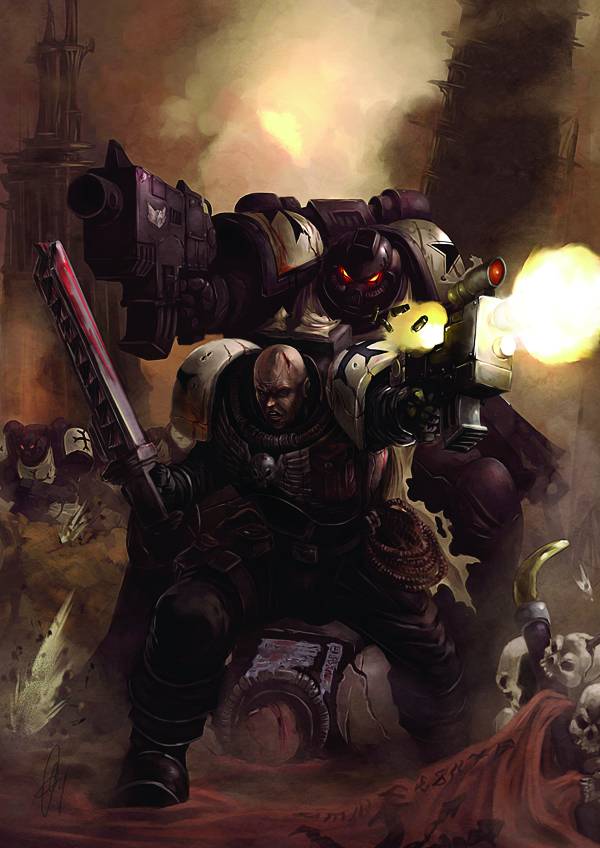
Set in the grim future world of Warhammer 40,000, the game draws heavily from the Company of Heroes playbook, in that it differs dramatically from the traditional RTS formula. There is no base building; there is only territory control and the annihilation of the enemy.

The beta has been a blast so far. Supplied with six maps (two one-on-one and four six-on-six), and two modes (territory control and annihilation), it is far from the complete game. But the action is fast, the combat is brutal, the graphics are gorgeous, and the gameplay is smooth as silk. There are some balancing issues (the Tyranids’ in particular are a bit unbalanced), but that’s what a beta is for. If you have Steam, definitely download it and check it out. If you don’t have Steam, slap yourself repeatedly and do not stop until you get it.

So, as I told you in my earlier preview of this game, keep your eye on this one. It looks to be fantastic.

Apologies for the long time between posts. Keep your eye on these games. And if you’re a particularly big fan, send me money so I can afford to buy them and review them for you.

Jerod Jarvis is an independent gaming journalist and founder of Duality Games. He maintains gaming columns for The Washington Times Communities and for The Outpost. When not blogging madly about games, he freelances for the Spokesman-Review in his hometown of Spokane, Washington and attends school at Whitworth University. Check out his presence on Facebook and Twitter to stay up on Duality Games updates and the inside scoop on the gaming news you care about.

The Way Things Are

Tags

, , ,

Warning: philosophical post.

Remember back in the day, when you were a little tyke, and all you wanted out of life was some sort of grand adventure? I remember. I wanted to be an army man, or a fireman, or one of those other mans. I created stories in my head about how I was an epic crime fighter or an intergalactic warrior hero dude.

I suspect that this kind of thing is true for the majority of people. I wouldn’t be surprised to find it’s a bit different for the females among us, the wiring being a bit different between the two sexes. But I believe the same principle will apply pretty much universally: we have a hunger for the fantastic, for something greater than what we have. It’s built into us, with us from birth, and even if it’s strangled later on down the road by cynicism or depression, it’s still there, waiting to be given fuel. It’s that desire that has propelled mankind’s greatest achievements, from landing on the moon (even if it was a scandal, it was an epic scandal) to winning the Super Bowl. To be part of something bigger than ourselves is a basic desire of human beings.

This is a big part of why we love stories. From books to movies to games, people love a good story, an epic, an adventure. Men tend more towards those stories that depict a conquering hero; women more towards those which depict happiness ever after.

Because of this, video games have taken off like a skyrocket. In just a few years, they’ve gone from the basement hobby of ubernerds to a multi-billion dollar industry. Games have gone from simple electronic distractions to the bearers of great tales. The reason for this, at least in part, is that games feed that hunger for adventure in a way that books and movies can’t. Watching a movie, you get to watch someone else experience something great, and depending on how well made the movie is, you might get to share in some of that greatness by osmosis. The same is largely true for books. But with games, you don’t have to watch someone else do great things — you get to do them. The fate of the human race isn’t on the shoulders of Harrison Ford or Christian Bale or Angelina Jolie — it’s on yours. And if you don’t climb that hill, conquer that foe, plant that flag, everything’s hopeless.

It’s the purest way that we’ve yet invented to give fuel to that burning desire for adventure. It’s why there have been people addicted to games in a way that people were never addicted to movies or books. In real life, perhaps those people aren’t well-liked, or perhaps they haven’t accomplished much — but in Tamriel, Azeroth, or in the bowels of a Halo ring, those same people are heroes, applauded by thousands and sought after by those needing help.

(Of course, there are those who play evil characters and are universally feared and loathed, but in practice this amounts to the same thing.)

So, people like stories. What’s the big deal?

The big deal is that stories shape our outlook on the world. Go back to those days as a kid. Why did you want to be an army man/fireman/cowboy? Because you’d heard stories about them, or watched stories about them, and the adventurous life they led. Seen through the eyes of a child, their adventure seemed pure and their grandeur complete. They were loved and admired, just like we wanted to be. And so, for a while, those expectations and desires shaped our lives.

Of course, then we grew up and lost a lot of that. The innocence of childhood slips away for better or for worse, and most of us stop wanting to be army men. But that doesn’t mean we stop wanting.

We still desire that greatness. Our definition of what exactly that means has certainly changed, and perhaps our ability to expect it has been dulled by the reality of the way the world works. But we still crave it.

And so video games come along, offering us the ability, for a short time, to be Gordon Freeman, Master Chief, or a Jedi Master. We dive into them, relishing them, basking in the status that we are given in that fictional world.

The problem of addiction to this is perhaps the most apparent, even if it is relatively rare. More subtle, however, is the effect it can have on real life.

Just as a well-done movie can shape the way we see the world (Who hasn’t jumped at shadows after seeing a horror movie? Or started seeing suspicious behavior in elected officials after watching a conspiracy film?), so can a well-made game. But the potential for persuasion is greater tenfold because the player is not passively taking the messages in — he or she is actively participating in them.

Like it or not, that affects us, more than most people are willing to admit. It is certainly possible to minimize this effect, to play games with your head screwed on straight, to be able to sit back and analyze the message of a game and judge it correctly. But even doing that, those messages, those expectations, can still seep into our brains and hide there, often so well and so deep we never really realize that they are there.

That’s the way things are. A game that is a showcase for masterful storytelling, like a Bioshock or a Half-Life 2, is an incredible tool for persuasion.

Now, I’m not saying that playing a few video games is going to send you off the deep end, or completely change your outlook on life, or change you fundamentally as a person, any more than smoking one cigarette will addict you to them for life. But it has been proven that what we immerse ourselves in affects who we are, in subtle ways.

So, will playing Grand Theft Auto turn you into a murderer or a car thief? Probably not. But might a constant diet of games like that which glorify violence and corruption desensitize you to that violence in real life? It’s pretty easy to see how that might be.

One example of this might be swearing. Say you’re a person who doesn’t swear, for whatever reason. Then let’s say you get a job someplace, and all your coworkers use language every time they open their mouths. At the same time, you’re playing games and watching movies with language in them. Over time, what’s probably going to happen? Chances are good you’ll start swearing, unless you’re actively working against that inevitable slide.

This is why it pays to be careful what we take in — what we watch, play, read, and listen to. That love of stories is an awesome thing, but if we’re not aware of what we’re feeding ourselves, those stories can change us in ways that we might not otherwise approve of.

So, bottom line — play with your brain turned on. Be watching for those messages in the games you play. Ask yourself what it is that the games creators are trying to say, or perhaps what their game says about them. Take every thought captive, as the Bible says. And avoid exposing yourself to the games that promote things that you don’t want to be. Cuz why spend your money and time on something that you don’t agree with? I find that to be ridiculous, and suggest that instead you play the games I recommend. Starting with Fallout 3 (ZOMGEPIX!!!). Unless you’re under 18. In that case play Homeworld.

Anyway, just a few thoughts that had been bouncing around in my brain. I imagine there will be quite a few people who disagree with me, or take issue with some part of what I’m saying … feel free to comment and throw buckets of cold logic on my parade. I’ll do my best to answer.

Jerod Jarvis is an independent gaming journalist and founder of Duality Games. He maintains gaming columns for The Washington Times Communities and for The Outpost. When not blogging madly about games, he freelances for the Spokesman-Review in his hometown of Spokane, Washington and attends school at Whitworth University. Check out his presence on Facebook and Twitter to stay up on Duality Games updates and the inside scoop on the gaming news you care about.

Epic Review – Bioshock

Tags

, , , , ,

Water everywhere, water without end
Water scratching at the door, trying to get in
Water calling out, calling out my name
Is the water different?
Or are we both the same?

Water ends where life begins
Water wins where my life ends
Water pouring now, far too late to flee
Is the water different?
Or is it part of me?

— Jerod Jarvis
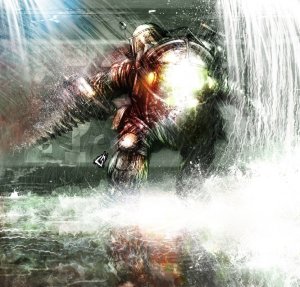
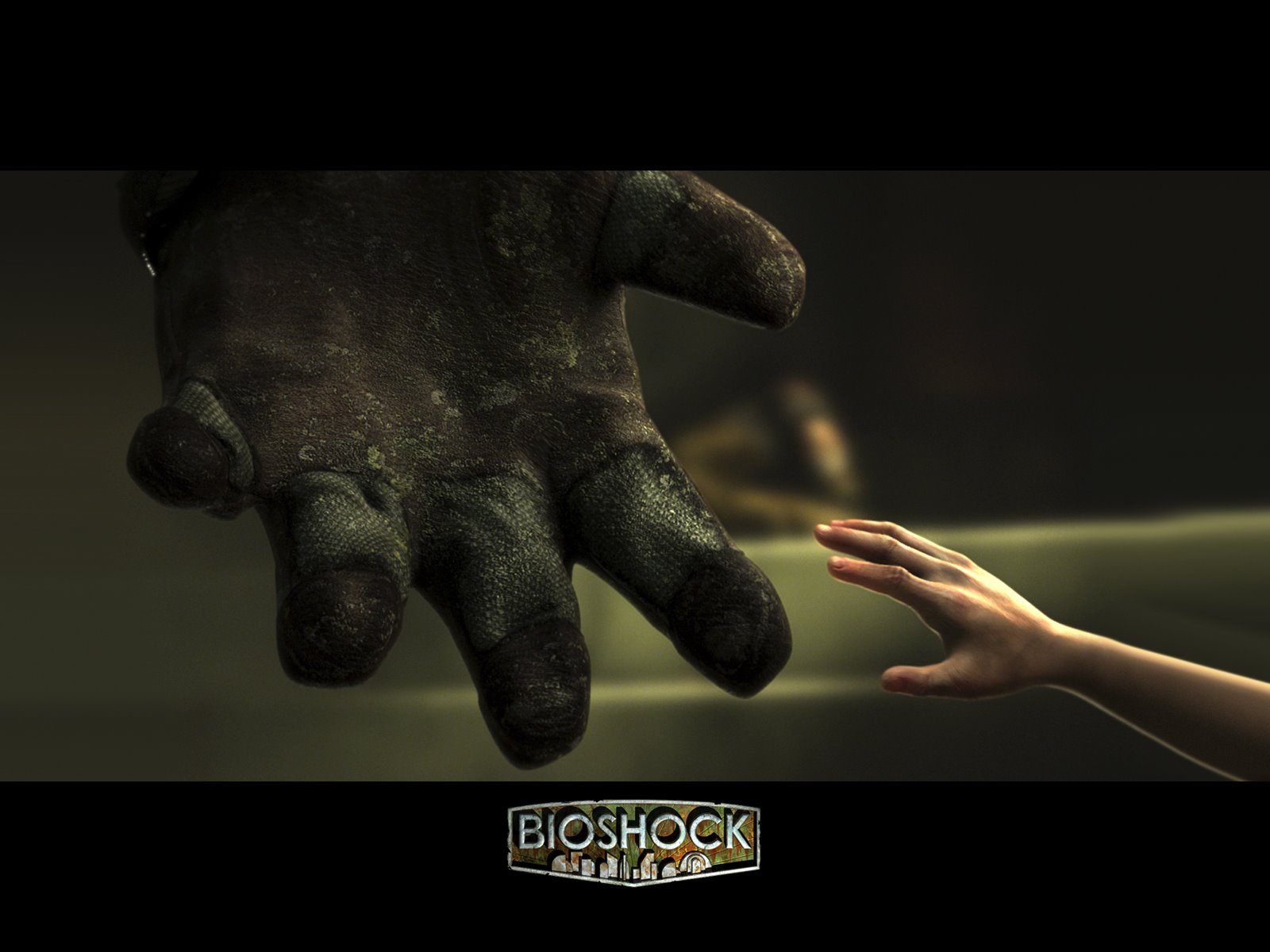
From the moment the game begins, Bioshock makes one thing clear — water is your enemy, and if you’re not careful, it will end up being your tomb.

The game opens with the player seated on an ill-fated airplane, which wastes no time in coming apart at the seams and crashing into the ocean. The air in your lungs holds out just long enough for you to reach the surface, where you’re greeted with what is quite possibly one of the most jaw-dropping scenes in gaming history. Flames cover the water where the plane has spewed fuel and oil; the tail section is slowly sinking beneath the hungry waves ahead of you; a strange tower juts out of the water in the near distance, dark and imposing, but your one chance of escaping a watery death; all of this rendered in absolutely stunning fashion. A few years from now, it is conceivable that the graphical quality of Bioshock may become substandard, but for now, it is quite simply one of the more gorgeous games ever to grace a screen.

After dragging yourself out of the water and shakily gathering your nerves, you slowly move up the stairs towards the door of the tower, still dark and mysterious but welcoming in that it is your only chance of survival. As you step through the doorway, it slams shut behind you and lights flicker on, illuminating a grand interior done up in tasteful art deco style, dominated by the statue of a man and a scarlet banner with the words “No gods or kings — only man” written upon it in gold.

Making your way down the stairway you find a submersible, and while you are perhaps reluctant to venture back into the water, it does seem like the only direction available. Stepping inside and pulling the lever, the door closes and the bulbous device slips down into the depths.

On the way, you’re treated to a short presentation that seems to have been intended for travelers similar to yourself, albeit those who had arrived in a less disastrous fashion. A man who calls himself Andrew Ryan tells you he grew tired of the world taking from him what he had created … and so instead of submitting, he chose to escape, and build an undersea city — Rapture. A place where the gifted and privileged of the world could practice their art, their science, and their entrepreneurship without the legal and ethical boundaries of the world above to hold them back.

With that introduction, the game sets itself apart from the pack. Most games, particularly first person shooters, are content to hand the player a weapon and point them at the enemy, providing little in the way of story other than, “Go there, shoot them, save the world/planet/universe/human race/your dog.” While there are some that have certainly risen above that drivel, Bioshock is head and shoulders above the rest. There really isn’t another game on the market like it. The only one that really comes anywhere close in terms of depth would be Deus Ex. Issues like utilitarianism, secular humanism, tyranny, human nature, ethics, sanity, morality, and even the existence of God and what place he has in our lives are dealt with either directly or indirectly.
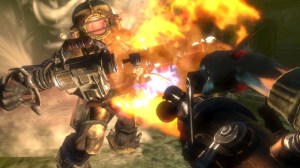
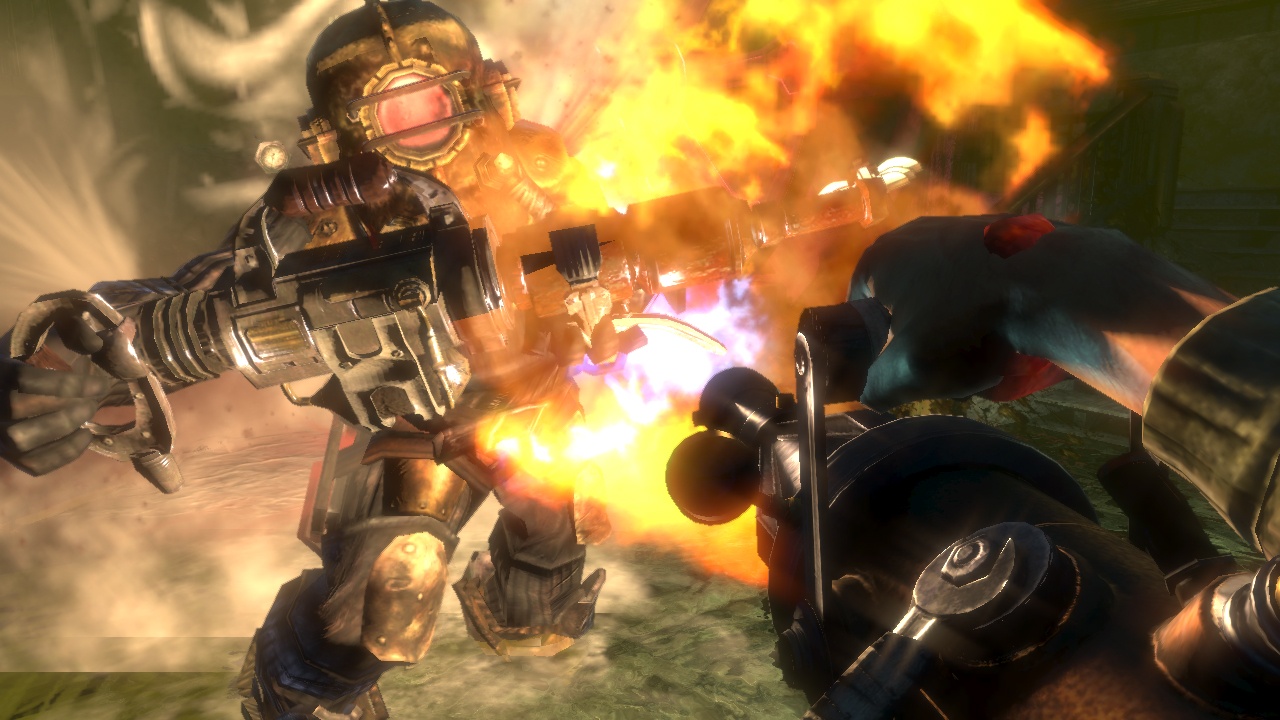
As the submersible surfaces in the station (greeting you with one of the more frightening scenes in any game ever), it becomes clear that Rapture is not the paradise that Andrew Ryan described on your way down, but instead a broken down, leaking, bloody insane asylum. You start to explore the city, discovering the back-story by listening to recordings left by citizens, you begin to uncover what has happened. Without the boundaries of law and morality, what began as a utopia quickly descended into a battleground populated by tyrannical leaders, bloodthirsty rebels, and ordinary people driven violently insane through abuse of genetic modification. You are attacked, toyed with, led along, deceived, and ultimately betrayed in one of the most shocking and brilliant twists a video game has ever offered.

The game’s most controversial points were easily its themes of secular humanism (essentially atheism), and the characters known as the ‘little sisters’. However, having played through this game and spent significant time reflecting upon it, I find that I cannot simply stand back and throw rocks at the game, as some other Christian reviewers have done.

First, the worldview themes. The game is based around the idea that man is the ultimate being, and that freeing him from the bonds of government and religion is the key to securing the future. Andrew Ryan saw himself as a visionary ahead of his time, and those who followed him thought likewise.

However, it is startlingly, shockingly clear upon one’s first entering into Rapture that something went terribly wrong. As the game is explored and the mechanisms of the city’s self-destruction are uncovered, the clues increasingly point towards the one thing that Andrew Ryan and his idealists didn’t factor in — that human nature is innate, not something impressed upon us by outside influences. Human greed, desire for power, and selfishness are not things that religion and government have given us, as Ryan believed. Instead, in seeking to escape those things, he instead created a place where they could truly thrive. The sad truth of the matter is that human beings are fundamentally flawed — greed, selfishness, and pride are built into us. Social conventions can certainly mellow these somewhat, but without a true inner heart change, as Christ offers, humans are humans, wherever they are.

The fascinating aspect of this predicament that the game hints at is found in the gruesome execution scenes of smugglers. Throughout the game, you develop a feeling that Ryan is not fond of smugglers bringing things in from the world above, outside his control, and the crucifixions of these apparent criminals highlight this in tragic fashion. But what is far more interesting is the glimpses into what those smugglers were smuggling: crates of Bibles.

Huh.

So what are the developers saying? That when the world starts collapsing, people turn to religion? I suspect that might have been the point they were trying to make—but their stab in that direction actually illustrates a much stronger, deeper point—when man removes God from the picture, the picture falls apart. Man can only keep up his acting for so long before his true nature begins to reassert himself—and when that happens, when people find themselves at the mercy of their own natures, they turn to things that can change those natures. In this case, in what is either a stroke of genius on the developer’s part or an award-winning case of God using people in spite of themselves, the people of Rapture were turning to the Truth: the Bible.

Most of the Christian reviews, and even some of the secular reviews, seemed to take the execution of Bible-smugglers as a slam against Christianity. And it is — but it’s Andrew Ryan slamming it, not the message of the game. I strongly suspect that this nod to Christianity was unintentional on the part of the developers. Listening to interviews and commentaries leads me to believe they weren’t gunning for anything deeper than man’s apparent need for a religious crutch when things get hard. But if one takes the time to look deeper, a different message can be found.
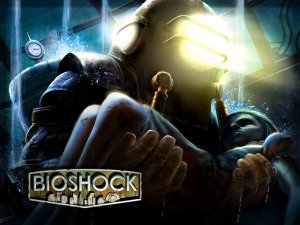
The second point of controversy, the little sisters, is a bit of a different beast, and one which I admittedly can’t defend fully. But I do think there is more to it than what most Christian reviews of this game found.

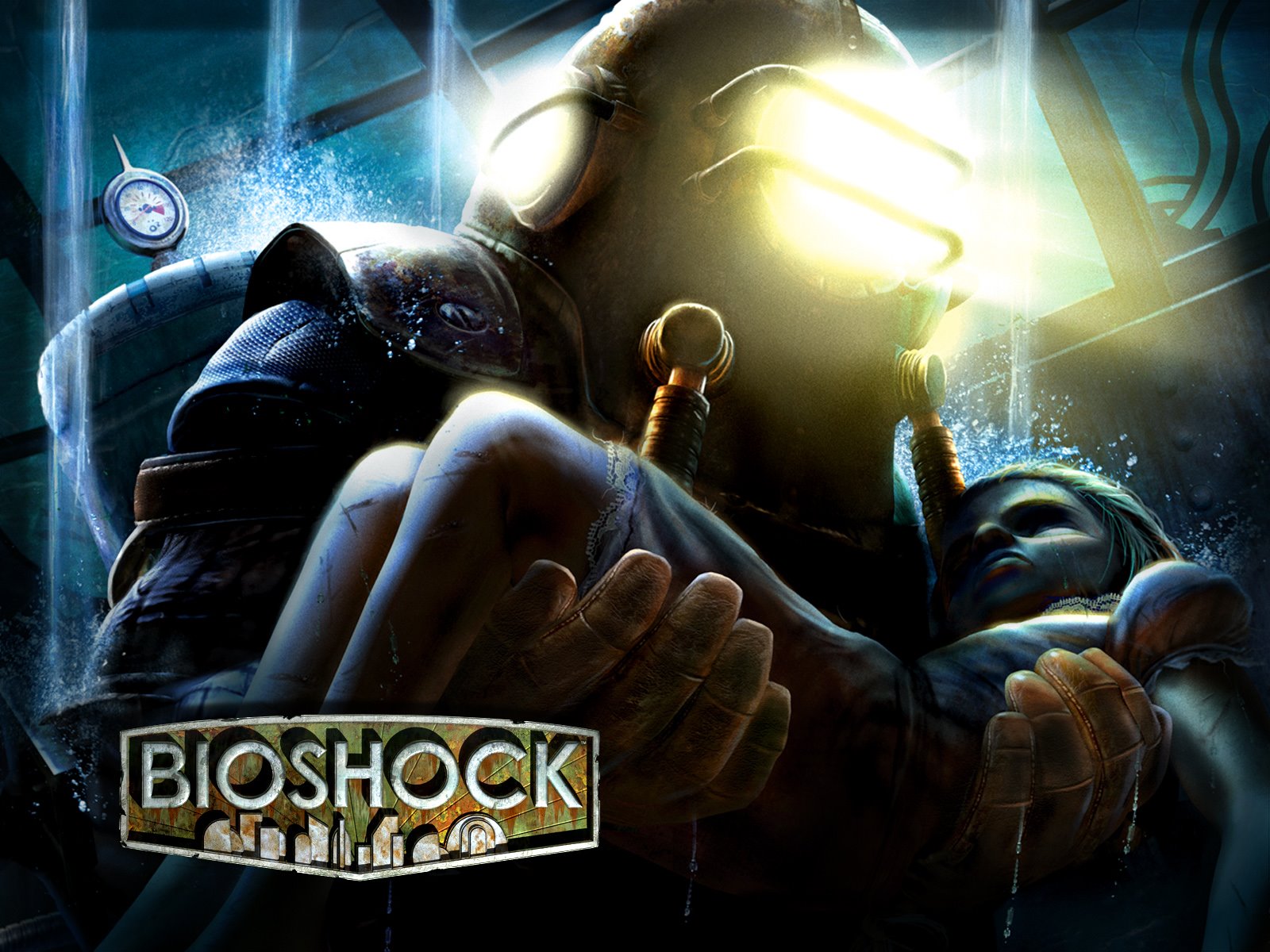
Without giving too much away, the little sisters are genetically modified young girls who have been programmed to harvest a substance from the dead bodies around Rapture and ingest it, allowing their bodies to refine it and then expel it as Adam, the substance that makes all the genetic modifying in Rapture possible. As the player encounters these characters, they are ultimately faced with a choice — do they harvest the little sister for her precious Adam, which is needed for survival; or do they rescue her, changing her back into a normal little girl?

The catch is this: the first option (harvesting) will net the player more of the much-needed Adam, but it will also kill the little sister. Rescuing will result in less Adam, but the little girl goes free. The idea behind this ethical dilemma was to confront players with a choice — will they stoop to murdering helpless children to serve their own needs? Or will they choose instead the path of self-sacrifice?

Admittedly, this is an incredibly extreme moral dilemma, and begs the question: are gamers so desensitized to this kind of thing that they have to be slapped across the face with a 10-ton ethical choice before they’ll sit up and take notice? I submit that while certainly some are, that isn’t largely the case — but that’s another discussion for another time.

So, ignoring for now the bluntness of the ethical dilemma, the decision before the player remains.

This is where the rock-throwing starting becoming a hailstorm. Christian reviews, and even some secular reviews, decried the game as one that rewarded you for murdering a little girl, citing the fact that the Adam gained for that choice is greater than for saving the little sister. However, once again, those who choose to look a bit deeper will see that there’s more to it than this.

While it is true that killing the little sister results in greater instant gratification, those who commit to the more difficult path of rescuing them will soon find that their rewards are far greater. The little sisters reward the player for his mercy with gifts of Adam and power-ups that far outweigh the reward of murder.

At its heart, then, it’s a face-off between instant and delayed gratification. Choosing the evil choice might seem like it will benefit you more now, but choosing the right thing will reap you greater rewards in the future, even if it makes your life difficult now. And isn’t that how life works? Isn’t that what Christ calls his followers to? Putting others first even at the expense of themselves?

You can lie to your boss about being late for work, and it’ll probably get you out of trouble (instant gratification); but when a co-worker lets slip what really happens, you’ll be in a world more hurt than if you had just told the truth in the first place.

Again, murder of small children is an admittedly blunt tool for illustrating this point, and one that can’t really be completely defended. My point is merely that it does have some modicum of redeeming value, and it certainly is not a reward system that encourages murder, as some have said.

At the end of the day, the player is sent through a series of choices, confrontations, and memorable encounters, all of which serve to shape the outcome of the game. In a city surrounded by cold, merciless water seeping through the cracks to take the lives of the intruders, will the player become part of that system, taking and killing and becoming numb? Or will he resist it, fighting to find a way to right the wrongs even when surrounded by the horrors of evil and attacks on all sides? Will the player join with the water? Or will he fight against it?
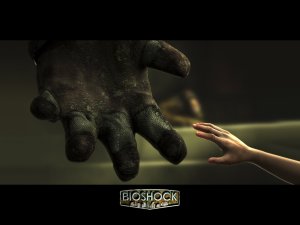
Bioshock is an epic game in every sense of the word. Certainly the issues described above land this game solidly in M-rated territory. Other issues include intense violence throughout, language, and some sexual themes (none of which the player participates in, only finds out about through non-explicit back-story). However, just being an adult doesn’t qualify one to play Bioshock, in my mind. The game’s subtle themes and the issues it presents and deals with can be completely passed over by a player simply looking for a playground in which to shoot things. And to those paying slightly more attention, the surface themes of humanism and atheism, those goals towards which Rapture was reaching can seem like unreached trophies rather than ideals that are fundamentally flawed and doomed from the outset.

Bioshock is a head-trip, and I can only recommend it to those who are willing to put the time into thinking it through and examining what it has to say, and remembering always to check its messages against the Truth — the Bible.

For those who fall into that category, then, I heartily recommend the game as an absolute triumph of the video game medium. Thought-provoking, intellectually disturbing, infuriating, triumphant, eye-opening — these are not terms that are often used to describe games. And while I’d certainly like to see games of this caliber that can be described as uplifting, encouraging, inspiring, and that dabble less with needless M-rated content, this is a step in the right direction for gaming as a medium, and I’m excited to see what the coming years will be like for video games in this post-Bioshock age.

So, with that, I’ll wrap up this exceedingly long post. If you’ve stuck around until now, you’re either a crazy fan of Duality (yes, thank you, you can put your hands down now) or a crazy fan of Bioshock, or you’re just unusually interested in one or the other. Whatever the case, feel free to comment and share your thoughts on this watery epic.

Jerod Jarvis is an independent gaming journalist and founder of Duality Games. He maintains gaming columns for The Washington Times Communities and for The Outpost. When not blogging madly about games, he freelances for the Spokesman-Review in his hometown of Spokane, Washington and attends school at Whitworth University. Check out his presence on Facebook and Twitter to stay up on Duality Games updates and the inside scoop on the gaming news you care about.

Classic Review – Morrowind

Tags

, , , , ,

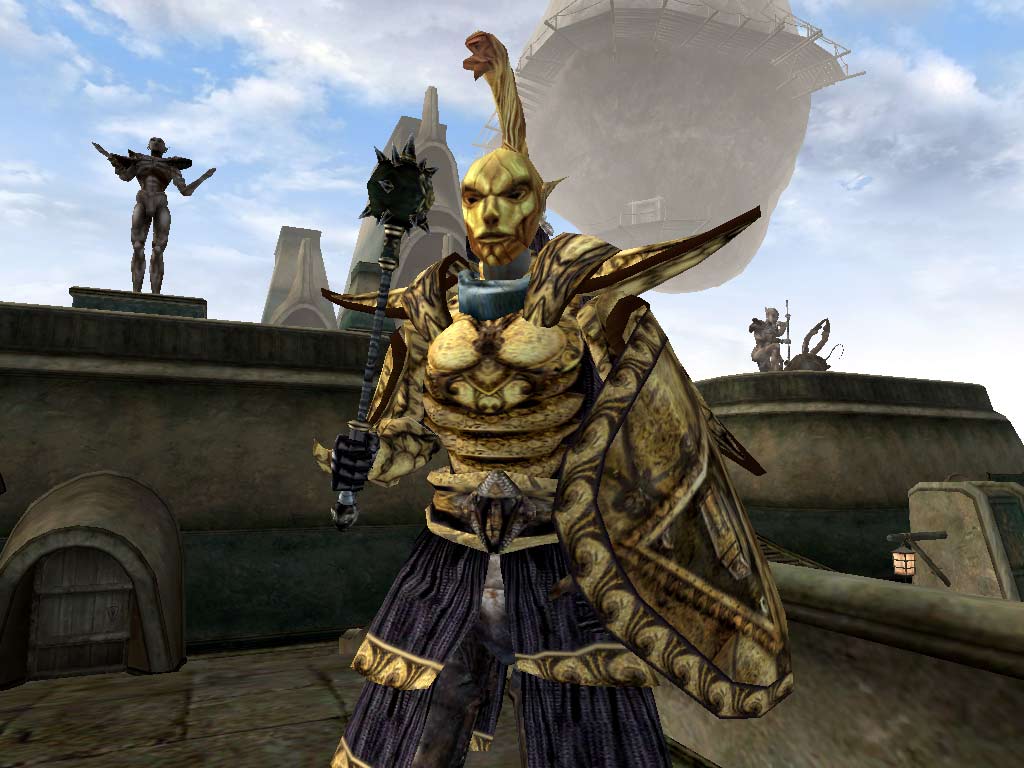
Picture it: you awake to find yourself in the bowels of a ship, the wood creaking around you, the sounds of the ocean outside. You have no idea why you’re there — only that you were released from prison without explanation and stuck on a ship to who-knows-where. There’s a dunmer, a dark elf, standing beside you, who asks your name in his gravelly voice before the guard comes and takes you away, leads you topside and kicks you off the ship.

After completing some paperwork with the local authorities, you’re set free.

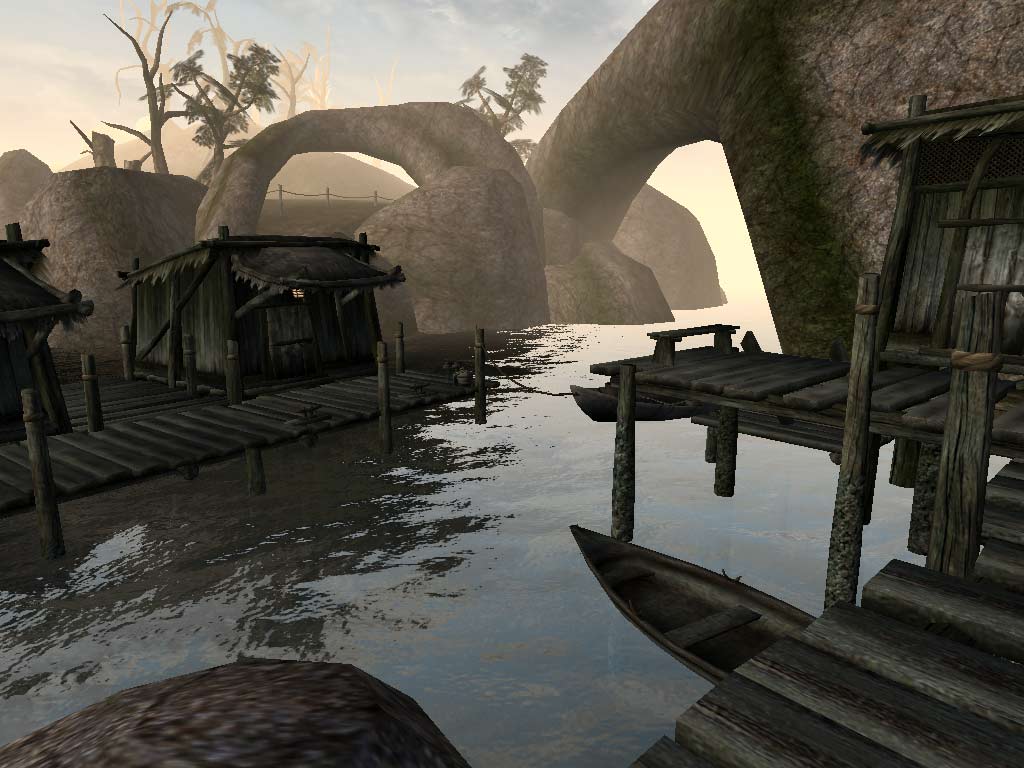
And what freedom it is. From the moment you step outside the door of the census building, your future is up to you. You can follow the gentle nudges the game gives you in the direction of the main quest; you can sneak around the town of Seyda Neen and rob its citizens blind; you can head off into the wilderness and try your luck with the denizens and monsters there; you can stick to the roads and make a beeline for the massive capital city of Vivec; or just about anything else you can think of. The game puts very few restrictions on you, and those it does largely feel natural.

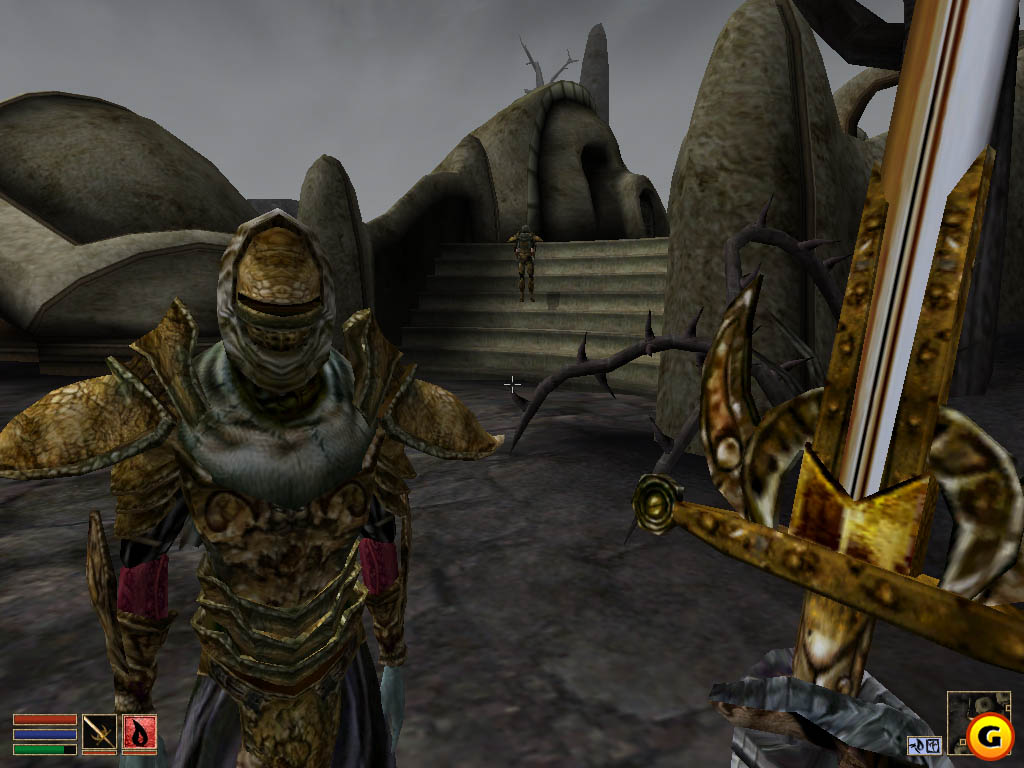
The Elder Scrolls games have always been about wide open worlds that allow you to explore at your leisure. The first two efforts were admirable in their pioneering of the genre, but were laden down with bugs and other issues. In this, the third game, the series hits its stride. With graphics that were, for the day, glorious; a truly huge gameworld to traverse; hundreds of quests and people to interact with; and an epic main quest that hands you the task of saving the world, the game was engrossing and enthralling.

The game is an RPG at heart, but it gives a unique twist to the typical D&D-spawned role-playing system. Instead of getting rewarded for every completed quest, killed monster, and picked lock with experience points (XP), the skills you use are the skills you get good at. In most RPGs, you could run around the game picking every lock you find but never getting any better at picking locks because you chose to funnel all your XP into buffing up your swordsmanship. In Morrowind, using your lock-picking skill improves your lock-picking skills, and using your sword improves your swordsmanship. It’s a far more intuitive way to go about character development, and it’s difficult to be satisfied with the old way of doing things after playing Morrowind.

Morrowind was originally released in 2002, and was followed by various patches and two expansion packs, both of which are extremely well done and entertaining.

However, in spite of all I have told you, you may still be wondering what exactly makes this game a classic. After all, there have been many games with innovative gameplay and an epic story that, while being duly noted as excellent games, can’t be found for sale anywhere and whose memory has faded from gamers’ minds. So what is it that separates Morrowind from the pack?

The true genius of the game lies in two areas. First, the back-story of the game — the world of the Elder Scrolls is fleshed out enough to be a real place. It has a fully worked out world, with nations, oceans, seasons, constellations, history, religions, races, wars, rivalries, and everything else you’d expect to find in a real place. Wikipedia has dozens and dozens of pages written by fans detailing the ins and outs of all this, which can make for a bit of daunting reading for a newcomer.

Outside of the first 10 minutes of character creation, nowhere does the game ever admit that you’re playing a game — the immersion of being in a real place affecting real things is very near complete. It even has its own supernatural realm of sorts, in which gods and demons live. At first glance that element might make some Christian gamers wary, but a bit of research reveals that the game doesn’t truly deal with the supernatural — the ‘gods’ are merely powerful creatures that live on different planes of existence, more like the gods of Greek mythology than the God of the Bible. It doesn’t directly address real world issues of God in any way. This makes it very playable for the gamers who have their heads on their shoulders.

The second area of genius applies only to the PC version of the game (sorry, Xboxians). The game shipped with a Construction Set, a slightly modified set of tools that Bethesda used to build the game. With these tools, nearly anything imaginable was possible to add to the game. Want a house deep in the Red Mountain? Fire up the construction set and build yourself one. Want a sword that does one thousand stabbing damage but only one slashing damage? Easy. Fancy yourself a rock star with adoring fans following you wherever you go? With a bit of scripting knowledge, it’s done in a flash. Mods that update the graphics, add enemies, weapons, and quests, allow you to wear more rings and necklaces, flesh out the back-story of a particular person that was passed over in the original game — almost anything that’s in the game can be modified, expanded, or completely removed, and nearly anything that can be dreamed up can be added in. My copy of Morrowind is currently running something like fifty mods, three or four of which are my own.

The modding community is extremely helpful on the creation side. Need help with a challenging script? First check out one of the three or four huge fan-made tutorials on the subject. If you can’t find your answer there, get thyself to the Elder Scrolls forums and ask. Usually within 24 hours you’ll have an answer.

The back-story of the game and its fleshed-out world gave fuel to the imaginations of games, and the Construction Set gave outlet for those imaginations. It’s a formula that has worked wonders for Bethesda’s games.

Bottom line — this game is epic in every sense, and will almost certainly devour your life for a while. The Game of the Year edition, which includes both expansion packs, can be found on the shelves of your local Best Buy for 20 dollars or so. Get out and buy it now, and tell me what you think.

Jerod Jarvis is an independent gaming journalist and founder of Duality Games. He maintains gaming columns for The Washington Times Communities and for The Outpost. When not blogging madly about games, he freelances for the Spokesman-Review in his hometown of Spokane, Washington and attends school at Whitworth University. Check out his presence on Facebook and Twitter to stay up on Duality Games updates and the inside scoop on the gaming news you care about.
Classic Review – Homeworld

Tags

, , , , ,

Ah.

The games of yesteryear. Those games of groundbreaking innovation and glorious storytelling. Those games which required more imagination than videocard. Those games which inspire gratuitous amounts of nostalgia on those who played them.

Of course, some of those games are more deserving of nostalgia than others. Games like System Shock, Starcraft, Deus Ex, and Final Fantasy VII (if JRPGs are what you’re into …*shudder*) all earned their places in the history books through their respective areas of excellence.

Homeworld is one of those games, though not all of you will have heard of it. One of the first that I ever owned and played, it is forever seated in my memory as one of the greatest games ever made.

Homeworld is a real-time strategy space epic telling the story of a people exiled from their home planet by a devastatingly powerful empire. Millennia have passed since the exile, however, and knowledge of their origins has faded to nothing but the foggiest memories and legends. When an ancient map is found in the husk of a prehistoric starship that details a path through space back to their home, however, disparate tribes are united in an effort to take the stars and travel back to their home.

The journey is long and marked with innumerable battles against overwhelming odds. The story is told mostly through pre- and post-mission cut scenes, which, despite the lack of recognizable characters, manages to be engaging and emotionally involving in a way that few RTS games are.

Homeworld originally shipped with a 50ish-page book providing ridiculous amounts of detail into the back-story of the game — a classy touch that is rarely, if ever, seen today. The gameplay itself was groundbreaking for the time, being the first game to feature fully three-dimensional combat—a system which has never really been bettered, in my opinion, even by such recent efforts as Sins of a Solar Empire.

Homeworld is still available online, through the likes of Amazon and eBay (the Game of the Year edition, which includes the aforementioned handbook, is also available on Amazon), and I highly recommend it to any fan of science fiction or strategy games. The sequel, Homeworld: Cataclysm is also excellent, though the ‘true’ sequel, Homeworld 2, was a disappointment (truthfully the only disappointing game I can think of that the developer, Relic, has released).

I’ve waited long years for a game to be released that holds the same magic for me that Homeworld did, and though some games have come close, no other strategy game since then has really done it. Find it, buy it, play it. If you love it, let me know here. If you hate it, print this article off, light it on fire and stuff it up your left nostril.

Jerod Jarvis is an independent gaming journalist and founder of Duality Games. He maintains gaming columns for The Washington Times Communities and for The Outpost. When not blogging madly about games, he freelances for the Spokesman-Review in his hometown of Spokane, Washington and attends school at Whitworth University. Check out his presence on Facebook and Twitter to stay up on Duality Games updates and the inside scoop on the gaming news you care about.

War is coming … again

Tags

, ,

Dawn of War 2 is on its way, theoretically arriving sometime early next year. It looks awesome.

The Dawn of War series is a personal favorite of mine. Excellent real-time strategy gaming served up by RTS devs extraordinaire Relic (makers of the awesome Homeworld, Impossible Creatures, and Company of Heroes), the games are set in the dark and brutal universe of Warhammer 40,000, where war is eternal and gothic sci-fi themes are rampant.

The games’ only content issue is the brutal violence, which involves a lot of blood. Because of this they definitely belong in the ‘M’ rated category (sorry, kids), but for those old enough to handle the content, it’s excellent stuff.

The new game looks to eschew many traditional RTS hallmarks, including resource gathering and army building. Despite the axing of what some might consider the most important parts of an RTS game, Relic has my full trust that they will deliver a game well worth the playing.

Keep your eye on this one, peeps.

Jerod Jarvis is an independent gaming journalist and founder of Duality Games. He maintains gaming columns for The Washington Times Communities and for The Outpost. When not blogging madly about games, he freelances for the Spokesman-Review in his hometown of Spokane, Washington and attends school at Whitworth University. Check out his presence on Facebook and Twitter to stay up on Duality Games updates and the inside scoop on the gaming news you care about.

Design a site like this with WordPress.com
Get started