Dark Knight the new Bioshock? And other news…

Just got back from a weekend down in southern California where I totally forgot that Blizzcon was being held. I take it as a compliment to my evident geekiness that I got asked multiple times if that was what I was down there for, though. I woulda looked into it, except that all 20,000+ tickets sold out in under eight minutes. At 125 dollars a pop, we have yet another example of Blizzard raking in cash hand over fist and still leaving money on the table for next time. The next World of Warcraft expansion was announced (Cataclysm), as well as a new class for Diablo III (the Monk), and a few other odds and ends.

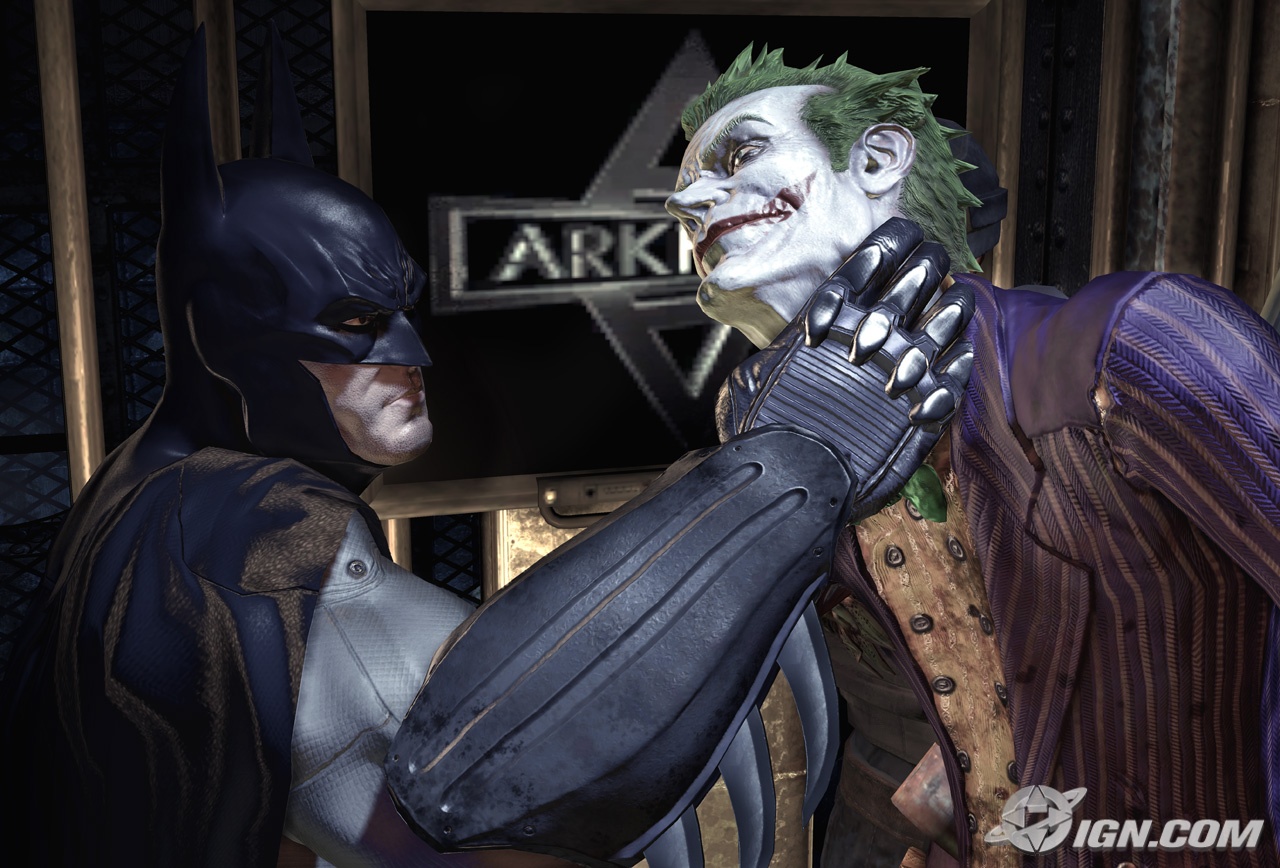
In other news, Gamesradar.com is calling The Dark Knight: Arkham Asylum ‘this year’s Bioshock.’ I am skeptical. As I’ve explained before, I was extremely impressed by the demo for the game, but it didn’t strike me anything like Bioshock did. I am now even more intrigued…we shall see what we shall see…

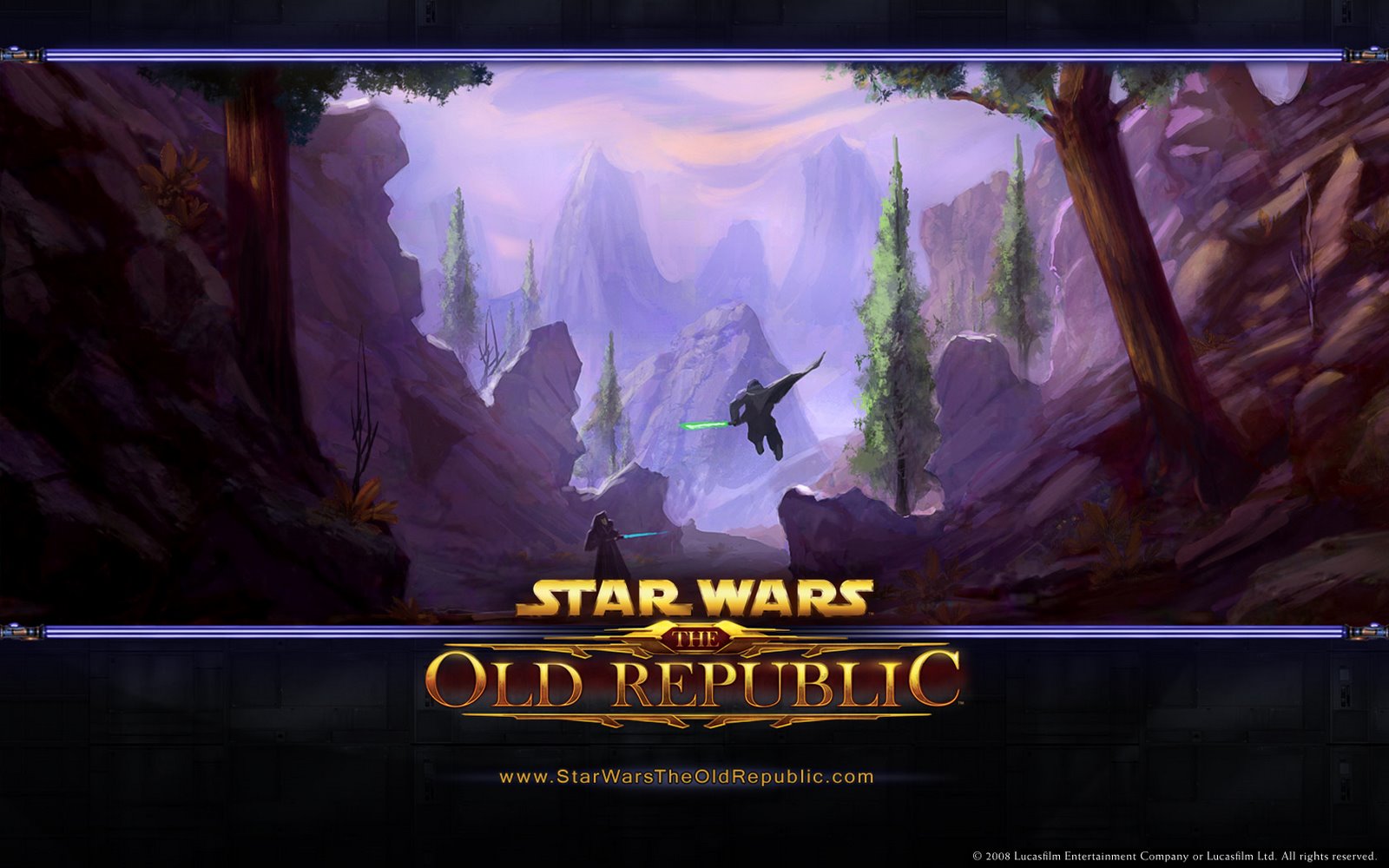
Penny Arcade Expo (PAX) 2009 is shaping up to be pretty epic, and I’m not just saying that cuz my 3-day pass is burning a hole in my pocket. Among the usual assortment of panels and discussions and what have you, the first public demo of Star Wars: The Old Republic will be shown, a game I get more excited about every time a tidbit of info is released. Will keep you all updated.

Jerod Jarvis is an independent gaming journalist and founder of Duality Games. He maintains gaming columns for The Washington Times Communities and for The Outpost. When not blogging madly about games, he freelances for the Spokesman-Review in his hometown of Spokane, Washington and attends school at Whitworth University. Check out his presence on Facebook and Twitter to stay up on Duality Games updates and the inside scoop on the gaming news you care about.

The Dark Knight rides again

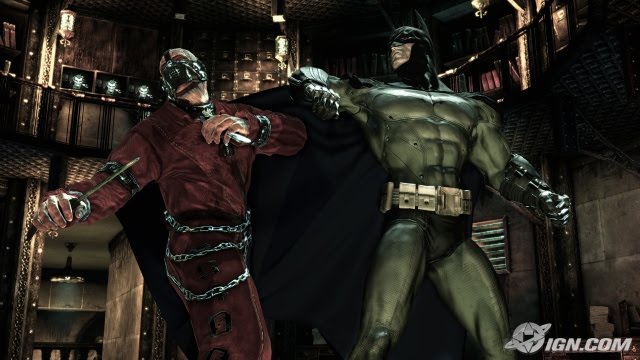
So I just got finished checking out the Batman: Arkham Asylum demo, and I have to say I’m pretty impressed. I’d heard this game had potential, and now I’m seriously excited for its release.

Combat is visceral and smooth, once you get the hang of it. Brawling with baddies is cinematic and simple – most maneuvers are accomplished with a single button. It’s also quite dynamic: in the several fights that I engaged in, I rarely got the feeling I was simple walking through a prescripted fight, using the same moves over and over. Depending on what exactly is happening each moment of the fight, Batman will alter his attacks and respond appropriately. Coupled with cinematic angles and some slo-mo, the end effect is quite impressive.

The other interesting aspect is a detective mode. Whenever you wish, you can switch from a normal view of the world into a planning view. While the perspective doesn’t change, the view changes to a heat sensitive, computer aided planning perspective, allowing you to pinpoint enemy locations and likely ambush spots. It’s rather innovative, and seems to fit in well with the rest of the game

.

By far the coolest facet of the game, however, is the freeform stalking of your enemies. The game appears to be quite nonlinear when it comes to how you take down a room full of baddies. You can swing from the rafters, picking them off with your batarang, or swoop down for a brutal knockout punch. Alternatively, you can sneak around vents underneath the floor, popping up behind your victim and reducing them to unconsciousness. And, of course, there’s always the hanging grab, where Batman hangs from the ceiling upside down and snags and thug, yanking him screaming up into the shadows.

All in all, the demo was quite intense and enjoyable, capturing the feel of the two most recent Batman flicks very well. Definitely one to keep your eyes on. Stay tuned for more info as the release date approaches.

Jerod Jarvis is an independent gaming journalist and founder of Duality Games. He maintains gaming columns for The Washington Times Communities and for The Outpost. When not blogging madly about games, he freelances for the Spokesman-Review in his hometown of Spokane, Washington and attends school at Whitworth University. Check out his presence on Facebook and Twitter to stay up on Duality Games updates and the inside scoop on the gaming news you care about.

Review – The Secret of Monkey Island: Special Edition

Tags

Somewhere in the last year or two, video games had their 2oth birthday. Now, I’m not referring the anniversary of the creation of Pong’s ancestors or anything quite that Genesistic. It wasn’t until the mid eighties or so that games really started taking off and becoming classic entertainment. And by classic entertainment, I’m of course referring to point-and-click adventure games like the Monkey Island series.


The problem that I’ve run into as a relative newcomer to the gaming scene (I may have mentioned somewhere before that I didn’t get into gaming until after the turn of the century) is that going back and trying to experience those classics can be a bit of a chore. First of all, it’s all but impossible to get many older games to work on modern hardware. Second of all, even if you do get a game to play, it can be extremely difficult to get sucked into entertainment that is archaic by today’s standards. Retro games are hard on the eyes, awkward to control, and require a much higher level of imagination than games today.

Now, nothing against imagination, but personally I’d rather be using my imagination to get myself believing that I’m in the game world and not sitting in a creaky office chair, rather than getting myself to believe that the pile of indecipherable pixels on the screen is supposed to represent a person whom I’m supposed to care about. Admittedly, this is an opinion many will likely disagree with, but there you have it. Without nostalgia to smooth over a game’s rough edges, playing an old game can be a bit like driving your Grandpa’s old clunker truck – an interesting experience, but not something you’d want to take for a long drive.

So when I heard that The Secret of Monkey Island was being given a facelift for re-release, I was excited. When it was released on Steam for the paltry price of 10 bucks, I couldn’t resist.


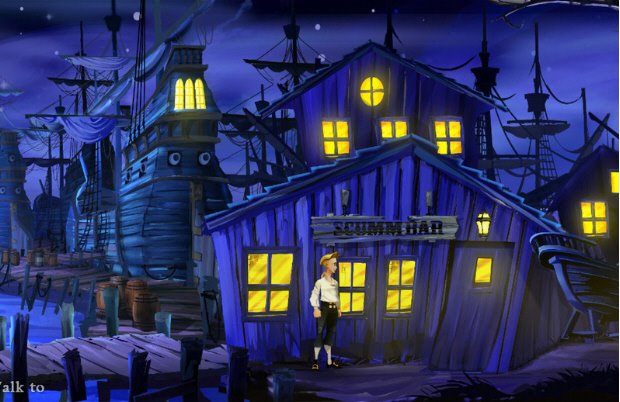
I’m happy to report that it’s worth every penny, and then some. The artwork is beautiful, giving the feel of playing through a watercolor piece of art. The all-new voice acting is also excellent, giving the game’s legendary humor new punch. While the game’s overall design still retains the slightly clunky feel of a retro title, this really becomes part of the charm as the game goes on.

There’s really not too much more to say. The interwebz are full of praise for the Monkey Island games, so my small voice won’t add much. The game is sharp, funny, beautifully rebooted and well worth the asking price. If you enjoy games, comics, a good story, or even just a chuckle or two, The Secret of Monkey Island: Special Edition is for you.

Jerod Jarvis is an independent gaming journalist and founder of Duality Games. He maintains gaming columns for The Washington Times Communities and for The Outpost. When not blogging madly about games, he freelances for the Spokesman-Review in his hometown of Spokane, Washington and attends school at Whitworth University. Check out his presence on Facebook and Twitter to stay up on Duality Games updates and the inside scoop on the gaming news you care about.

iTouch, Therefore I Game

So I had a birthday recently, and found myself the fortunate recipient of an iPod Touch. Besides the fringe benefits of no longer feeling technologically inadequate, I’ve been pleasantly surprised to find that the device is quite the respectable gaming platform. And I’m not just talking about solitaire or finger racing or that one game where you pop bubbles as fast as you can like a caffeine-poisoned monkey in a bubble bath. I’m talking actual games, from well-designed and addictive casual games to more serious strategic endeavors.

Several sites and blogs have made lists of what they feel are the absolute best iPod apps (gamesradar.com has a couple that are pretty good) so I won’t spend too much time recommending individual games. I’d rather comment on the phenomenon of the games in general on the iPod.

I’m not completely sure what it is about the iPod that makes it such an appealing games platform. It certainly isn’t its interface; while the touch screen is a boon to many types of applications, in games it is more often something to be overcome for lack of better tools. There are certainly notable exceptions to this, but I have to believe that a lot of games have stalled in development because there wasn’t a good way to reliably use greasy digits to accomplish precision tasks.

Neither is it the app store; while there’s a great many things about the app store interface on the iPod that are good, it is in desperate need of an overhaul. Finding a good game to give a whirl to can be a frustrating exercise in trial and error, both because the search function is a bit of a joke and because the rating system is unreliable at best. This isn’t too punishing for free games, but any game that charges cash to try out finds itself in the unprofitable category of ‘risky investments.’

Despite these and other limitations, there are thousands of games available in the app store, and hundreds of thousands of people playing them. Perhaps it’s the relative ease of getting a game published and distributed on iTunes compared with other platforms. Perhaps iPod gamers are generally less demanding of developers. I was rather blown away with some of the things that have been accomplished on that wafer-thin device, and found myself praising things about games that I would have been derisive of on any other platform.

Whatever the case is, I hope the trend continues, and I hope that Apple (who have never been particular proponents of the gaming industry) takes serious notice and begins to work more actively with game developers. I have little doubt that if it isn’t strangled by some odd corporate decision or policy, the iPod Touch and iPhone will soon find themselves rubbing shoulders with the Nintendo DS and Sony PSP as competitors in the hand-held gaming market.
With all that said, I’ve changed my mind about making a list of excellent game apps. If you have an iPod Touch or iPhone, listen up, cuz I’m about the share his wisdom with you.

Games:
Assassin’s Creed – Surprisingly enough, this is a solid platformer game with enjoyable combat and eye-pleasing visuals. Check out the free ‘lite’ version, which consists of the first level or so.

Knights OnRush – An addictive casual game in which you defend your castle against a horde of attackers, mostly by flinging them up into the air with a swipe of your God-like finger and watching them fall to their deaths. It’s all rather adorable, really, thanks to the art design.

Pocket Tanks – You will engage in long range tank-to-tank warfare in this artillery game. And honestly, what better kind of warfare is there?

Myst – Best. Game. Evar.

Need for Speed: Underground – Work as an undercover cop to infiltrate a gang of street racers, a la The Fast and the Furious. The controls are smooth, the acting is cheesy, and the graphics rival that of the PSP.

TapDefense – Free! Tower defense! The theological implications of a horde of demons assaulting Heaven’s gates aren’t as disturbing as they are ridiculous, but the gameplay is solid and challenging.

And there you have it. My humble opinion. Now go forth and game.

Jerod Jarvis is an independent gaming journalist and founder of Duality Games. He maintains gaming columns for The Washington Times Communities and for The Outpost. When not blogging madly about games, he freelances for the Spokesman-Review in his hometown of Spokane, Washington and attends school at Whitworth University. Check out his presence on Facebook and Twitter to stay up on Duality Games updates and the inside scoop on the gaming news you care about.

Classic Review – Call of Juarez

Tags

, ,

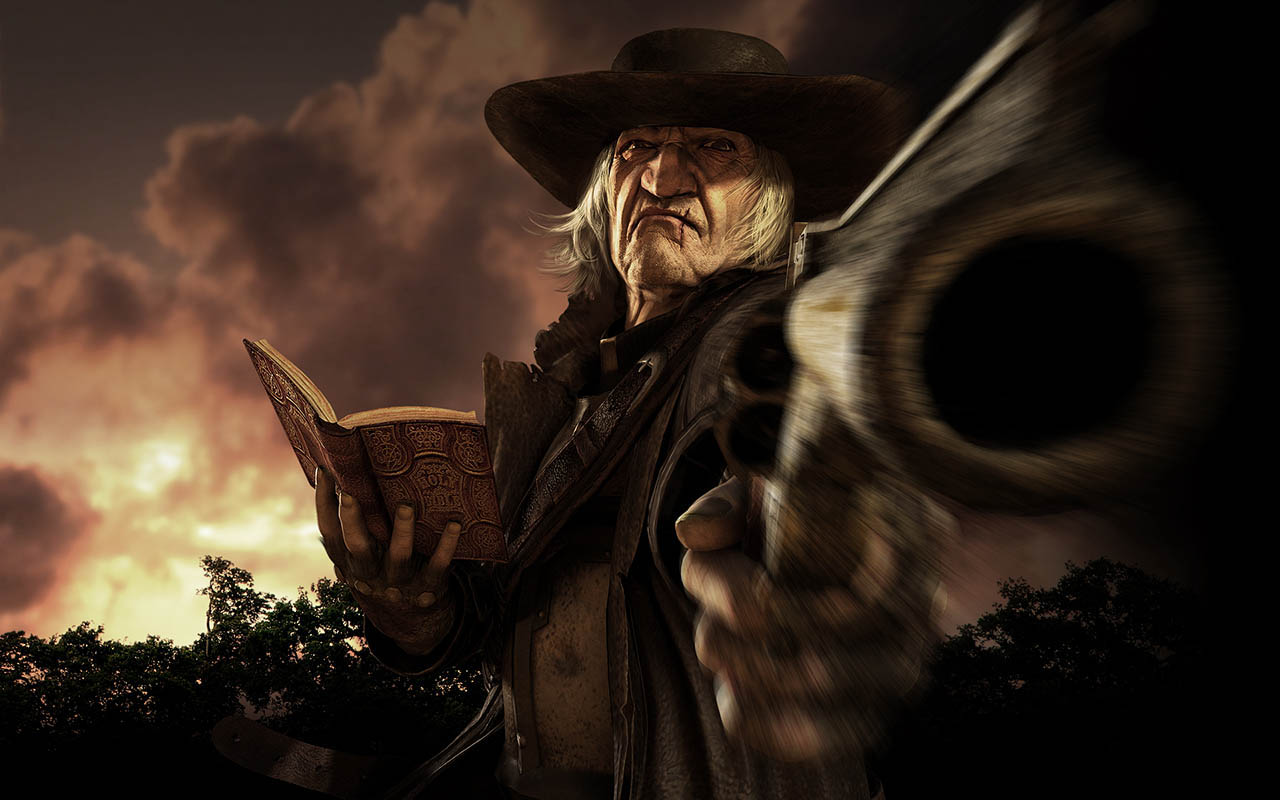
Dust rises in swirling cyclones, whisping over the hot desert. A man in a black hat surveys the horizon, his sweat-beaded face rough with stubble and pinched in gritty grittishness. His horse nibbles a cactus in the background and his spurs jingle in cliché harmony with his every step.

If John Wayne’s face didn’t pop into your head at least once while reading that paragraph, you should see a counselor before your case of epic fail gets any worse. (If you don’t know who John Wayne is, you are permanently banned from the cool crowd. Turn in your card and give back the T-shirt.) The Old West is one of Hollywood’s favorite settings, but gamers haven’t been given many opportunities to lend their uber-micro skillz to the winning of the wild frontier. The reasons for this are undefined. It could be that gaming’s traditionally weak storytelling habits don’t jive well with the sweeping ballads that westerns are known for. It could be that rendering the miles of wild west landscape was a challenge on older hardware. It could be that game developers are mostly nerds who are more into sci-fi than westerns. Whatever the case, the old L-Mouse Button (or one of those analog stick thingies if you’re a failbot) has seen more use as the trigger of a laser rifle than that of a six-shooter.
And so it was with curious anticipation that I fired up Call of Juarez. The game came out a year or three ago, but I had avoided it at the time out of concern over content issues (more on that later). Steam was running a special (that’s the story behind a lot of my games these days…) where Call of Juarez came free with the pre-purchase of its sequel, Bound in Blood, so with intention to review both games I sent my cash on its merry way.

The game is an odd mix of brilliant vision and storytelling mixed with strange design decisions and irritating bugs. While there are stretches of the game that flow well and provide a great deal of enjoyment, there are quite a few areas where the game’s issues rear their heads to sully the experience.

There are a few things the game gets dead on. The musical score is perfect – I don’t often talk about music in my reviews because the truth is that often the best game music blends in and goes unnoticed. Here, however, it sets the western tone with excellence.

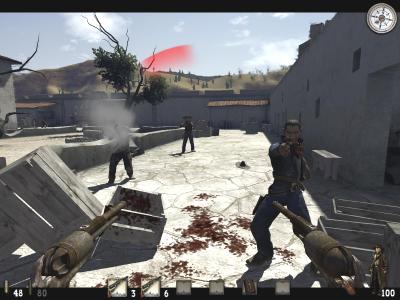
Gunfights are also done well, despite the fact they are home to a few of the issues as well. The game’s firefights are crafted to give the feel of the epic shootouts you might expect from an Eastwood flick, and they succeed more often than not. The satisfying variety of weaponry available helps keep the action fresh and interesting. Cover is a necessity and quick reflexes are critical. Chaos erupts as the bullets begin flying and bad guys throw up their hands and tumble over balcony railings as they take lead through the chest. When it all comes together, there are quite a few nail-bitingly intense gunfights that’ll leave you wanting to blow the smoke from your pistol barrel before twirling it back into the holster. Just don’t play on hard. When I first started the game I set the difficulty to its highest setting and proceeded to spend two frustrating hours trying to get through an area that took me twenty minutes tops at medium difficulty.

There are also a few set piece fights in the game, including areas where you can use a Gatling gun and even a cannon, and also a few one-on-one quick draw matches. None of these succeed quite as well as the rest of the combat at creating believable intensity, but they offer a bit of variety that can be refreshing.
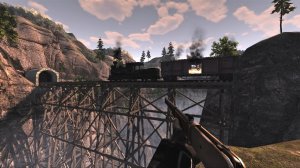
The story, however, is hands down the game’s best accomplishment. You’ll play two characters: Billy, a child whom trouble seems to follow in spite of his best efforts to outrun it, and Reverend Ray, a fire and brimstone preacher who happens to be Billy’s uncle. As you progress through the game you’ll alternate between Billy and Ray. Billy will sneak through an area, using cover and lots of quick saves to get through enemy-infested areas without being seen. Ray will then come through, kicking stealth in the teeth as his six shooters deal out death to anybody foolish enough to shoot back. This pattern isn’t universal enough to become monotonous, and serves its story-driving purpose quite well.

The game opens with Billy returning home after spending a few years out on his own. Soon after arriving, Ray catches Billy with the bodies of Billy’s mother and step-father (Ray’s brother). Billy runs, and Ray vows to bring the wrath of God to him by any means necessary.

It’s a simple premise, but it’s executed well, mostly through the intriguing development of the characters. Ray in particular is a fascinating character to play. It’s made clear that his life before donning the cloth wasn’t altogether on the right side of the law, and his struggle to understand God’s will is given enough weight to make it a genuine story of a man’s search for meaning and purpose.

There are a few issues to keep in mind. The nature of Ray’s spiritual journey means that for most of the game he’s dealing death liberally all in the name of ‘bringing God’s justice to the sinner.’ He believes himself to be the sword of the lord, and it isn’t until late in the game that he realizes that perhaps he has misinterpreted what God wants.

The spiritual struggle isn’t resolved quite as satisfactorily or explored as deeply as it should have been. While I was pleasantly surprised it wasn’t treated with the ham-handed disdain religion receives in a lot of productions, I finished the game wishing there had been a bit more resolution.

There are a few other content concerns. Foul language comes with a fair amount of frequency, though the most offensive words are rare. Bandits can be overheard discussing various topics around their campfires, many of which are of a sexual nature, and there is one scene near the beginning in which a bar girl starts to disrobe Billy and comments on his ‘family jewels.’ This awkward scene is cut short before it gets any worse, and there isn’t any nudity shown, but it’s enough of a step over the line to warrant concern.

Certainly the most pervasive content issue is violence. This is an M-rated game, but while the body count is quite high, the violence is relatively tame. Most bad guys go down with minimal blood, and the game doesn’t allow the harming of innocent civilians or animals.

Aside from content issues, the game’s design is quite rigidly linear, almost to the point of being arcade-like at times. Bad guys pop up from hidden spawn points like a cowboy version of Area 51, and there is rarely more than one possible path forward. Most irritatingly, the game frequently pops in with tutorial-like prompts throughout the game. The first time a bad guy challenges you to a duel, it’s helpful to know how to go about filling him full of holes. The fourth or fifth time, however, the aid just disrupts the flow and ruins the suspension of disbelief.

While none of these issues are bad enough to ruin the overall experience, they do prevent the game from achieving ‘classic’ status. Some players may appreciate the linear nature of the game. If you enjoyed Call of Duty 4’s overall design philosophy, you’ll probably like Call of Juarez, too, though it admittedly isn’t nearly as polished.

In the end, Call of Juarez manages to be an enjoyable game in spite of some irritations. I can’t wholeheartedly recommend it, however. While the story is one of redemption – and is one of the better gaming tales available on the shelves today – it takes enough detours into ‘hope-Mom-doesn’t-see-this’ land that caution should be exercised before deciding to partake in this wild wild western adventure.

Jerod Jarvis is an independent gaming journalist and founder of Duality Games. He maintains gaming columns for The Washington Times Communities and for The Outpost. When not blogging madly about games, he freelances for the Spokesman-Review in his hometown of Spokane, Washington and attends school at Whitworth University. Check out his presence on Facebook and Twitter to stay up on Duality Games updates and the inside scoop on the gaming news you care about.

Review – Cryostasis: Sleep of Reason

Tags

,

Perhaps it was the money I got from selling books. Perhaps it was the wave of B-game euphoria I got from playing Alien Shooter. Perhaps it was just late and I wasn’t thinking clearly. Whatever the reason, I bought Cryostasis.

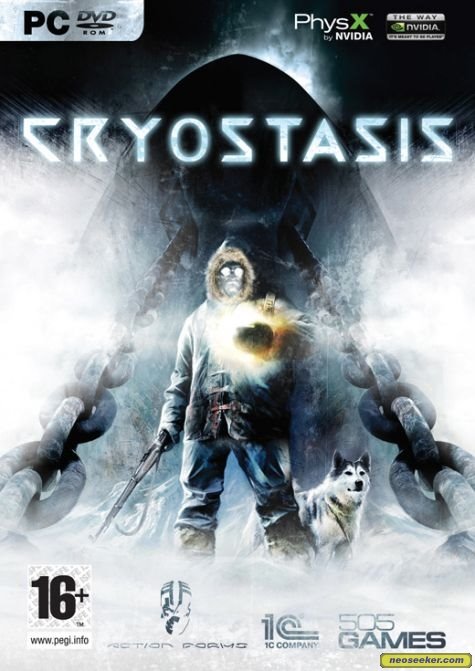
I knew it wasn’t going to be my new favorite game – I could tell just from the box art and single generic reviewer quote on the back that it was a budget title. But I hadn’t played a new game in a while, and I wanted something to review, so I picked it up and forked over my 29.99 plus tax.

Cryostasis is a “horror”-shooter published by Aspyr (mainly of Guitar Hero fame). Aspyr isn’t at the top of my ‘trusted devs’ list, but I figured it couldn’t be too bad. They’d also published Gothic III, which while being a bit of an acquired taste remains one of the more popular open-world RPGs on the market.

The game is set in the 1950s or so, and centers around an explorer sent to investigate the North Wind, a nuclear ice breaker ship that got itself stuck up near the north pole. Basically, you enter the ship and walk around trying not to freeze to death while beating up frozen corpses reanimated by…something. The story revolves around the player discovering what happened to the ship, why it was wrecked and why the crew won’t stay dead. Oh, and something about a tribe of natives stuck in a swamp. I never really figured out what the connection was there, but whatever. Anyway, a game that centers around beating up angry ice sculptures couldn’t be too bad, right?

Sadly, all my cautious hopes were for naught.

For this review, I shall read the claims of the box, and then refute them with the banhammer of my impeccable good taste.

Where to begin…ah yes. “Terrifying First-person shooter.” Cryostasis is supposed to be scary. And indeed, sprinkled liberally throughout the game are dedicated attempts at being horrifying. Occasionally it succeeds – one on-rails sequence in which you ride a life boat that is being attacked by an underwater enemy is a bit unnerving. But more often than not, the scares are limp attempts to startle the player by tossing enemies on-screen from unexpected angles. Some games use this technique to great effect, but here it is hampered by the sluggish controls that never seem to show the player what they’re supposed to see (a fact that is underlined by the game itself occasionally taking control of the camera to make sure the player sees something important) and the general unscariness of the enemies, which are apparently supposed to be dead crewmembers possessed by the Cold (capitalizing it makes it sentient, you see), but in fact look and sound more like washed out circus clowns with violent indigestion.

Next: “Mental Echo Ability.” The mysterious ability of the player character is that he can inexplicably see into the past of dead people, relive their last few moments and change the actions that got them killed. It’s an attempt at a puzzle system (saving their lives clears your path), but in practice it’s a kick to the teeth of suspension of disbelief. The ability is also used to fill in the backstory with flashback cutscenes, but again, it’s just not well implemented and comes off like the gimmick it is.

“Unique Setting.” I will give some level of props here to the designers. The North Wind is indeed a unique setting. Trying to survive in a frozen ship full of dead people while battling life-threatening cold isn’t something I’ve encountered before, and I have to admit the idea does have merit, at least on paper. The ‘man vs. cold’ concept in particular could have been brilliant if had had a better game built around it. This is an unfortunate case of a good idea ruined by poor execution.

Lastly, “Authentic Period Weapons.” I must honestly admit, I never saw these weapons, because I gave up on Crysostasis before the end. I held on as long as I could, hoping that the game would begin to redeem itself, but it just never happened. I did get to hit people with a pipe valve for a while though, which was a new experience not without its high points.

There are a number of other issues: the graphics are subpar and yet extremely demanding on system resources; combat is clunky and frustrating; the pace is slower than a retarded turtle; and I would rag on the story for being an utter mind-bugger, but since I didn’t have the courtesy to follow it through to the end, I’ll offer it the benefit of the doubt.

In the end, I’ll go along with the general consensus of other reviewers: If you’re desperate for something a little different and don’t mind something several notches short of perfection, feel free to give Cryostasis a try. It’ll be in the ten-dollar bin before the month is out, and you can give yourself a pat on the back for supporting a dev who wanted to break out of the mold.

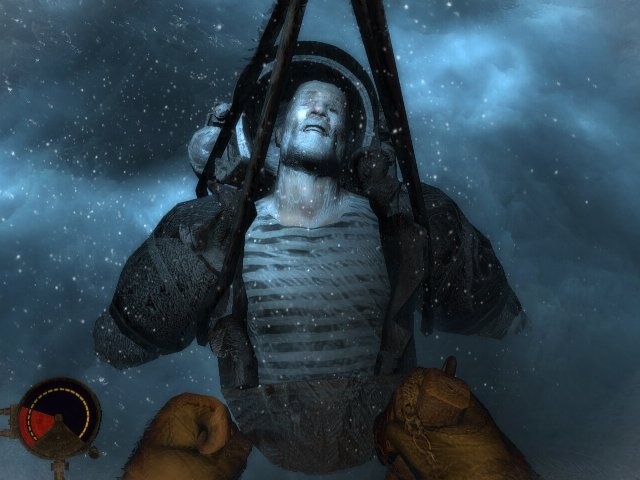
Oh, and here’s a picture I couldn’t find an appropriate place for but reeeaaaallly wanted to use anyway:

Jerod Jarvis is an independent gaming journalist and founder of Duality Games. He maintains gaming columns for The Washington Times Communities and for The Outpost. When not blogging madly about games, he freelances for the Spokesman-Review in his hometown of Spokane, Washington and attends school at Whitworth University. Check out his presence on Facebook and Twitter to stay up on Duality Games updates and the inside scoop on the gaming news you care about.
ROFLCOPTERS

In yet another sign that gaming is going mainstream, “noob” has the the honor of becoming the 1,000,000th word in the English language.

While this story is a bit lollerskates, it could have dire consequences for the gaming community. If people everywhere begin calling each other noobs, will the word lose its humiliating punch? How will we put little nooblets in their place without the diction of shame?

Only time will tell. For now, we gamers have the distinction of having created the millionth word in the English language. Woot.

Jerod Jarvis is an independent gaming journalist and founder of Duality Games. He maintains gaming columns for The Washington Times Communities and for The Outpost. When not blogging madly about games, he freelances for the Spokesman-Review in his hometown of Spokane, Washington and attends school at Whitworth University. Check out his presence on Facebook and Twitter to stay up on Duality Games updates and the inside scoop on the gaming news you care about.

Windows 7 coming in October?

Windows 7 might be released this fall. I’m excited for this. I currently have the beta installed on my computer, and it’s has some pretty sweet features. Best of all, it won’t require much in the way of hardware or software updates, so the transition won’t be nearly as painful as XP to Vista was.

Anyway, it’s probably only of interest to your uber-nerds out there, but it should be interesting to everyone how Microsoft goes about advertising for for this (admittedly much improved) OS after the Vista launch fiasco.

Anyhoo, check out the story on Slashdot.

Jerod Jarvis is an independent gaming journalist and founder of Duality Games. He maintains gaming columns for The Washington Times Communities and for The Outpost. When not blogging madly about games, he freelances for the Spokesman-Review in his hometown of Spokane, Washington and attends school at Whitworth University. Check out his presence on Facebook and Twitter to stay up on Duality Games updates and the inside scoop on the gaming news you care about.

Preview – Star Wars: The Old Republic

Tags

, ,


I’ve made no secret of the fact that I’m not a huge fan of mamorpaguhs (otherwise known as World of Warcraft). I’ve tried a few times. I gave WoW a whirl once just to see if I could understand what all the hype was. I downloaded the free trial of EVE Online after reading about the epic GHSC heist (seriously, click that link and read about it). I even purchased Guild Wars and gave it a few hours of my life. All of them fell flat for me. The truth is that I play games for the stories – I’m not a big fan of multiplayer in general (Team Fortress 2 being a notable exception). That’s why I was so disappointed in Demigod; also why I never caught on to the Counter Strike/Quake/Unreal craze. MMOs are built around the social gaming concept, and thus rely on players to interact with other players to truly enjoy the game. Take away this socializing aspect and the games themselves are pretty much boring and as all get-out.

It is needless to say, therefore, that when the rumors that the next game in the Knights of the Old Republic series was to be an MMO were confirmed, my gamer’s heart broke in twain. I felt betrayed and unloved. KotOR and its sequel are easily among the best games ever made, and even more easily the best Star Wars releases in any medium (including the movies). The secret ingredient behind this excellence was the storytelling – it was epic. And it still is epic – go buy both of the KotOR games right now and play them, n00b. If you already have played them, I take back that horrible insult and salute you.

However. As more details have been released, I’m finding myself growing cautiously optimistic. Optimistic because it sounds like Bioware is attempting to take the MMO genre in a new, story-focused direction; cautious because that is a monumental task and my heart can’t take much more breakage. But if anyone’s up for the job, it’s the master storytellers at Bioware (for the less informed among you, they’re the ones behind the first KotOR, Baldur’s Gate, Mass Effect, and the upcoming Dragon Age: Origins).

I’ll update you all with more details as they’re released – for now, keep an eye on this title. If Bioware can craft a perpetual-world MMO that still focuses on epic storylines and character development, I will be both impressed and probably sucked into the world of mamorpaguhs. We shall see what we shall see.

Jerod Jarvis is an independent gaming journalist and founder of Duality Games. He maintains gaming columns for The Washington Times Communities and for The Outpost. When not blogging madly about games, he freelances for the Spokesman-Review in his hometown of Spokane, Washington and attends school at Whitworth University. Check out his presence on Facebook and Twitter to stay up on Duality Games updates and the inside scoop on the gaming news you care about.
Review – Demigod

Tags

A new game review on Duality? A game reviewed by the Blade nigh a week after said game has been released to the wild? Such punctuality is a thing unheard of. Enjoy the timeliness of content while it lasts, faithful followers. My funding will only allow so much of it.

I picked up Demigod quite hopeful. I hadn’t played a solid strategy game for some time, and I’d been following the progress of the game for some time. The blend of action RPG heroes with real time strategy appeared fresh and polished, the visuals looked slick, and developer Gas Powered Games has turned out some gems, including Supreme Commander (which is teh pwnsauce, n00bs).

Most intriguing, however, was the backstory. It centers around the fall of a god after he (it?) divulged secrets that he really shouldn’ta oughta divulged. His unemployment resulted in an opening at the god table that needed filling, so the rest of the divines decided to hold a contest to decide the successor. Eight demigods stepped up to the challenge, and the game is based around their battle for supremacy.

I’d say that’s the story in a nutshell, but sadly that’s actually the story in its entirety. This is a game absolutely brimming with potential for a first rate single player campaign. In the game as it is, you pick from any of the eight demigods and play in a multiplayer match, whether versus other players over the internet or against computer controlled opponents. The only thing even resembling a single player campaign is a rather soulless tournament mode that has you earning favor points over a series of eight matches based on your performance. This is just a tragedy, both because it wastes the potential for a solid story and also because it robs the game of much needed depth.

Each of the demigods does have a backstory that appears to have been given some level of thought, and that backstory is reflected in how each character plays. But unfortunately, it’s all left where it starts – in the backstory. Nothing progresses or develops. It ends up feeling like the real-time strategy version of Street Fighter or Quake Live. But where a lack of story makes sense in those games, in Demigod it just feels like a missed opportunity.

As it stands, the game is very well done. There are a few bugs and such, but nothing irritating enough to detract from the overall experience. Each of the demigods plays very differently, and while none of them are particularly hard to master, their variety is entertaining and well done. The maps are creative and a pleasure to play on, and the gameplay itself is smooth and intuitive for the most part.

There aren’t many content issues. There’s no harsh language to speak of, and no sexual content (the one notable exception being the demigoddess Queen of Thorns who spends most of her time naked other than a few strategically placed brambles – however, given the birds eye view nature of the game her nudist tendencies don’t get much screentime). The only real cause for concern might be the setting of the game itself, which is rather pantheistic in nature and thus doesn’t line up well with Biblical truths. However, there are no blatant attacks on Christianity (or any other religion); the setting seems to be based more on Greek or Roman mythology than anything else. The discerning gamer will be able to see past the inconsistencies and enjoy the game’s fictional universe.

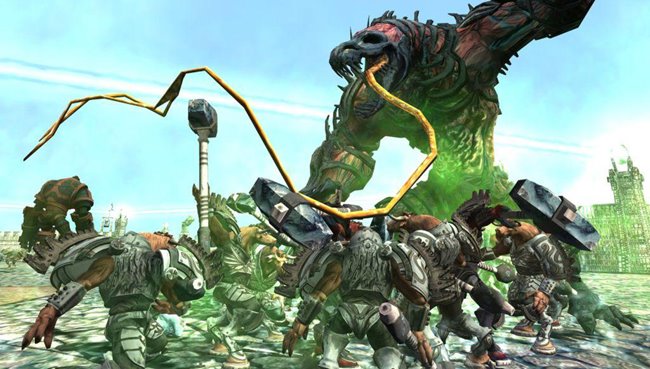
Demigod feels like the crunchy shell of something that should have had a gooey center. The excellent gameplay mechanics, creative setting, and intriguing backstory are wasted. What could have been an epic experience is left as a game that takes mere hours to completely exhaust of possibilities. Admittedly, this is something of a weak point in Gas Powered Games’ creations (Supreme Commander is another example of an excellent game that lacked much in the way of story, although at least an attempt was made in that game). In my humble opinion, it’s a weakness that should be addressed immediately if GPG wishes to see its creations avoid the bargain bin.

Jerod Jarvis is an independent gaming journalist and founder of Duality Games. He maintains gaming columns for The Washington Times Communities and for The Outpost. When not blogging madly about games, he freelances for the Spokesman-Review in his hometown of Spokane, Washington and attends school at Whitworth University. Check out his presence on Facebook and Twitter to stay up on Duality Games updates and the inside scoop on the gaming news you care about.
Design a site like this with WordPress.com
Get started