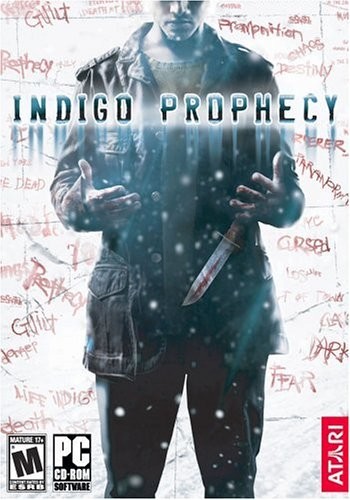
Classic Review – Indigo Prophecy

Tags

, , ,

Indigo Prophecy is difficult to classify. It’s part adventure game, part action game, part murder mystery flick, with mild platforming and FPSing thrown in for good measure.

And I thought there weren’t any surprises left for me in the gaming world.

There are a great many things to like about Indigo Prophecy. First and foremost, this game tells a story. Gameplay, visuals, and all the other elements that go into making a video game serve to move the story forward. It’s an emphasis rarely seen in the gaming world.

The developer, Quantic Dream, is now following up this effort with the PS3 exclusive Heavy Rain, which looks like it’ll be a technical masterpiece, if fraught with content issues.

Throughout the game, you’ll play as one of three characters: Lucas Kane, a man framed for a murder he didn’t commit; Carla Valenti, a dedicated homicide detective; and Tyler Miles, Carla’s gangster-turned-cop partner.

The story begins with Lucas committing the murder. I know, I just said that he didn’t commit it. But he did. Then again, he didn’t. Admittedly, it’s complicated. And a bit of a head trip. But the game weaves an intricate and intriguing tale that touches on all kinds of themes, leaving a lasting impression. I haven’t been so affected by a game’s story in quite some time.

This is a game with a kind of pacing normally found only in movies (which isn’t surprising, since lead developer David Cage is committed to the idea that games and movies are essentially the same thing). There are entire sequences with zero action, plot points, or puzzles to solve.

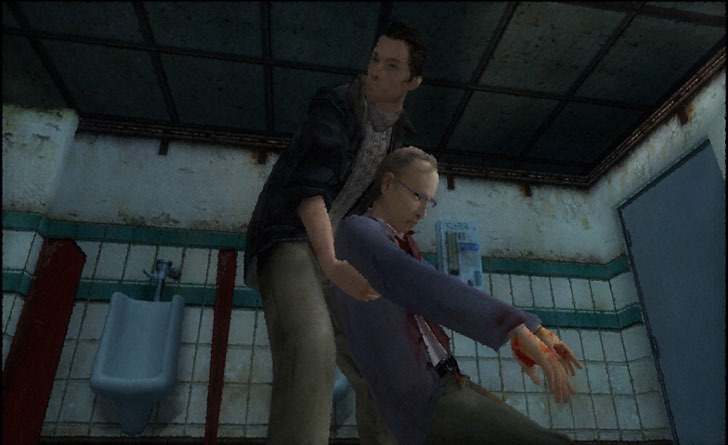
In one particularly memorable scene toward the middle of the game while playing as Lucas, you find yourself in his apartment after a particularly stressful day trying to calm his nerves. You have him pick up his guitar and play it. The game uses on-screen cues that are a bit reminiscent of Dance Dance Revolution (though not nearly that lame) to give the player the feeling that he is involved with Lucas as he strums out the song. There’s no real reason for doing this other than to connect with the character – the player could just as easily send Lucas to bed and move on to the next scene. It’s an emotional and strikingly human moment that brought a smile to my face.
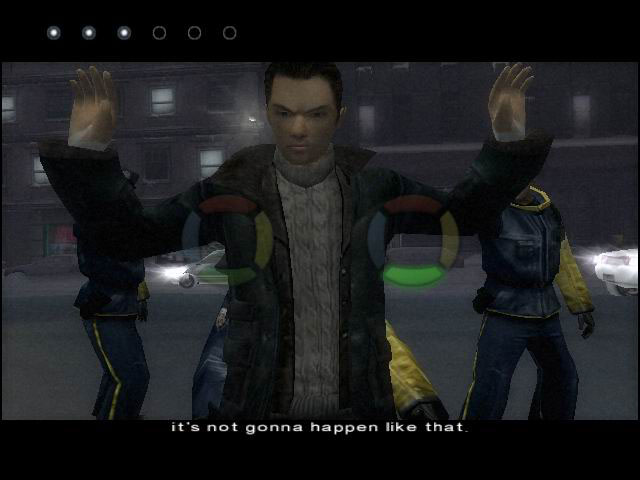
The same DDR-style on-screen cues are used throughout the game to involve you in what would otherwise be passive cut-scenes. When you get into a fight, you’ll have to follow the sequence of cues in the correct order to succeed. Sometimes failure results in death, and other times in missed opportunities.

The game does a fantastic job of wrapping you up in its world and involving you in the story. However, after finishing the game, I’m not entirely convinced it’s worth it.

There are a variety of issues. First and most easily identified is the sexual content. In the North American version of the game, most of this was censored out (the game is called Fahrenheit in other regions and contains the censored content). There’s still enough of it in the game to give me pause, however. There are two sex scenes in the game — one occurs completely off-screen, with only the audible portion of the act to titillate the player; in the second, a moment or two of sexual motion is visible before the scene fades to black.

There are a few other areas of sexual content, but none of it exceeds a PG-13 level. On the other hand, however, none of it is really justified in any way. On-screen sexual content is rarely, if ever, necessary to a story (in any medium). What sexual content there is in Indigo Prophecy is there merely for titillation, in an apparent grasp for superficial maturity. It’s a cheap attempt at sensualization that doesn’t belong in a game that is quite deep and honest otherwise.

The other major area of concern deals more directly with the story itself. Spoilers follow.
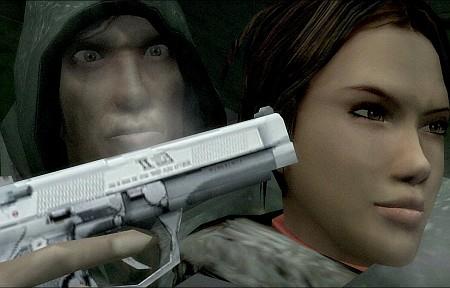
Lucas Kane did commit murder, but not of his own volition; he was the unwitting proxy of a mysterious figure known as The Oracle. Turns out The Oracle is working for a group of people called the Orange Clan, who are the last surviving tribe of Mayans. The Orange Clan feels a bit like the Illuminati, and its members have been waiting for centuries for the Indigo Child — a pure being — to be born. The Oracle is their bloodhound, and to find the Indigo Child he must perform human sacrifices — only he can’t actually perform them himself, hence the use of a proxy. The sacrifice opens a window to the other world where he can locate the child.

It also turns out that Lucas is blessed by something called the Chroma, which is apparently the Mayan’s version of the Force. It allows him to survive his proxy experience and then gives him superpowers.

So already we have weird spirituality, possession, a pseudo-Christ figure, and the Mayan version of the afterlife given credence. Not necessarily deal-breakers for someone who has their head screwed on straight. But wait … there’s more.

Lucas is a decent chap who willingly puts himself in danger to help those he loves. That’s good. But this admirable trait eventually leads to his death. Oddly enough, that’s not the end of his story.

Through methods that aren’t quite explained, the Purple Clan (who are apparently digital or something … that was never really made clear) brings Lucas back to life. Or, more accurately, undeath. He doesn’t breathe, his flesh is cold, but he moves and talks like a normal person. The Purple Clan did this so that Lucas could stop the Orange Clan from claiming the Indigo Child.

Bringing people back from the dead brings up all kinds of theological issues. Too many to list effectively here. Suffice it to say that the game offers no satisfying explanation for Lucas’ return to life, no discussion of the soul, and no justification for the idea that the dead can just be popped right back up from their graves.

Oh, and the second sex scene involves Lucas while in this undead state. Which is just … creepy. On a lot of levels.

I can hear people asking my why I don’t have a real problem with games like Left 4 Dead. It has undead, too, after all.
The difference is that Left 4 Dead and most other zombie games aren’t making any kind of real statement about life and death. They’re popcorn games. Where those games are all about running around screaming “AAAAHHHZOMBIESFTW!”, this game is more thought provoking, and draws on some real assumptions about the way the world works.

I’m not suggesting that David Cage believes in Mayan spirituality. But it’s quite obvious he doesn’t buy into Christianity, either. The game would look different if he did.

Other issues include graphic violence that manages to be disturbing in spite of dated graphics and a spattering of language.

Indigo Prophecy hits a lot of nails on their heads. It tells a compelling story in a compelling way. But it strays into some pretty iffy territory, and runs roughshod over the Christian worldview while doing so.

So, unfortunately, there’s just not enough redeeming value to give this game the nod. You’ll have to satisfy yourselves playing Evil Genius while I track down another classic game that’s worth giving a whirl.

Jerod Jarvis is an independent gaming journalist and founder of Duality Games. He maintains gaming columns for The Washington Times Communities and for The Outpost. When not blogging madly about games, he freelances for the Spokesman-Review in his hometown of Spokane, Washington and attends school at Whitworth University. Check out his presence on Facebook and Twitter to stay up on Duality Games updates and the inside scoop on the gaming news you care about.
Classic Review – Evil Genius

Tags

, , ,

In my quest to go back and play all the great old games that I missed in my formative years before I became a dedicated gamer, one thing has become clear to me: people have been making fantastic games for a really long time.

Evil Genius is an excellent example of this. I mean seriously – in how many games do you get to play an evil mastermind looking to take over the world?

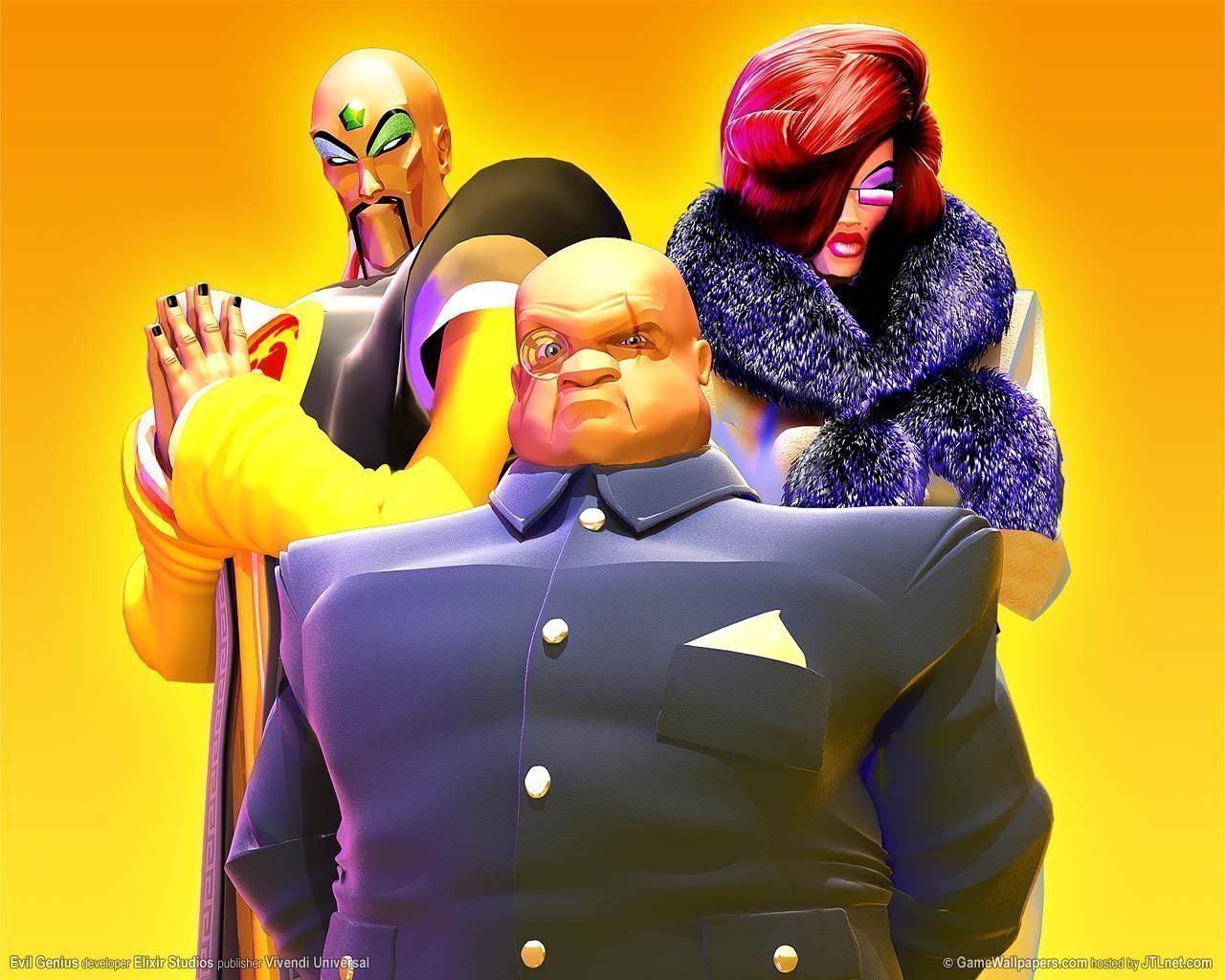
The game does its best to play on every spy fiction cliche available, from henchmen with superpowers to building an underground lair in a volcano. You choose to play as one of three evil geniuses, each with their own special ability that won’t actually affect gameplay all that much.

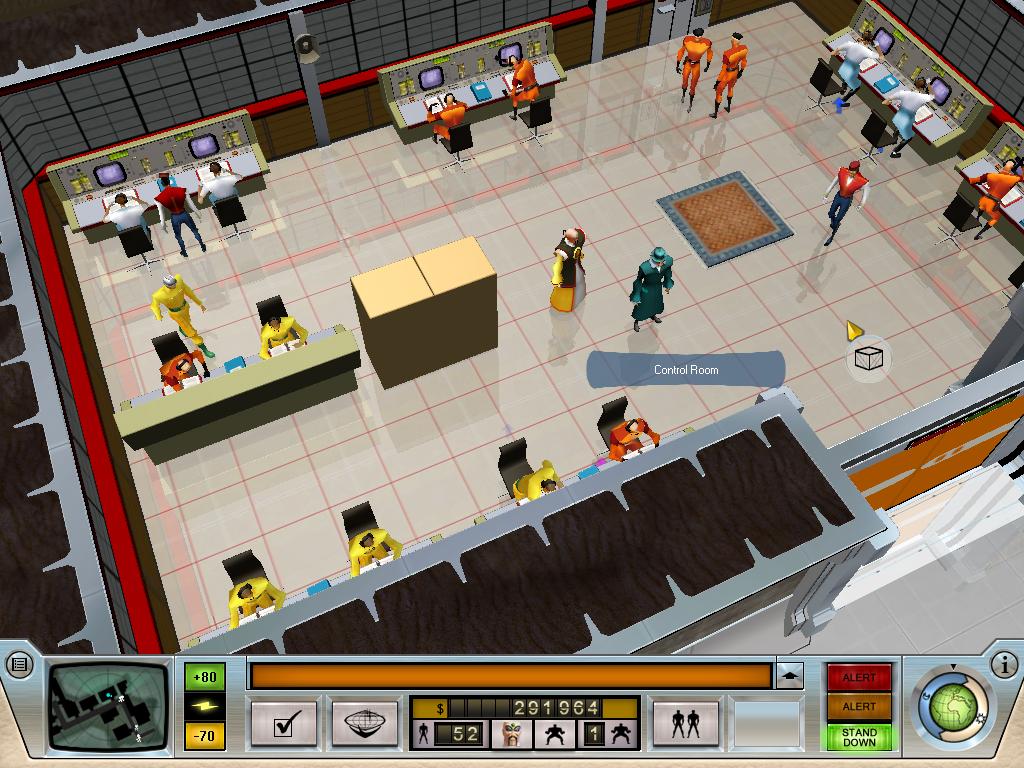
The game plays like an RTS. As the evil genius, you of course aren’t required to do any of the dirty work of conquering the world. In fact, 90 percent of the time you’ll have your character just sit around somewhere safe while your minions and henchmen do all the work. Cue maniacal laughter and evil hand wringing.

Minions make up the bulk of your evil force. You’ll start out with basic construction workers, who you’ll eventually be able to train up into more specialized classes to do more specialized jobs. You can’t directly control your minions, but can only give them general orders that will guide them. For example, when your base comes under attack by the forces of justice, you can’t select your soldiers and tell them to defend. But you can build security cameras that will detect the enemies and loudspeakers that will announce their presence, which will then cause your soldiers to run to the enemies’ location and do battle.

It’s a roundabout way of doing things, and there are times when it can be downright infuriating (watching an enemy super agent destroy half your base while your guards are all tooling around another room because you forgot to build a proper security system is maddening). Once you learn how to make it tick, however, it works.

The ultimate goal of the game is to take over the world, and as you might imagine, this will take an extremely long time. Depending on difficulty level and a few other factors, getting to the endgame can take anywhere between 50 and 100 hours. This isn’t helped by the game’s pacing, which is so slow that at times you can get up from the computer and go make yourself a snack without too much fear of hell breaking loose.

In terms of content, there aren’t too many concerns. The overall theme of the game, of course, is doing campy evil deeds to take over the world, which might strike some as problematic. This is handled in such a tongue-in-cheek sort of a way, however, that it doesn’t raise a red flag for me. Other concerns are mild violent content (the worst of which is probably interrogating enemy prisoners, but even this is largely inane and slapstick).

Mild language pops up now and again; one enemy super agent traipses around in a bikini, but the graphics in this game are old school enough that it’s not really a concern.

Overall, the game is not for everyone. If you have a short attention span, Evil Genius will turn you off quickly. If you hate micro-management, you’ll want to look elsewhere. But if you’re searching for a strategy game that will force you to think outside the box and give you a few laughs while you’re at it, Evil Genius may be what you’re after.

Jerod Jarvis is an independent gaming journalist and founder of Duality Games. He maintains gaming columns for The Washington Times Communities and for The Outpost. When not blogging madly about games, he freelances for the Spokesman-Review in his hometown of Spokane, Washington and attends school at Whitworth University. Check out his presence on Facebook and Twitter to stay up on Duality Games updates and the inside scoop on the gaming news you care about.

The Top 6 disappointing games of 2010

Tags

, , , , ,

A new year is upon us, and that means we all have a fresh 365 days to spend hiking, exercising, looking at birds, and hugging trees.


Alternatively, you could join me in spending 12 months LOLing at the n00bs outside and enjoy some gaming excellence.

Of course, given the massive pile of games that a certain sequel set in a modern war pushed into this year, there’s bound to be a few letdowns. And looking ahead, I’m already seeing some real crying-shamers headed for a Gamestop near you.

So allow me to lower your expectations. Trust me, it’ll be better this way.

Bioshock 2 (Release date: February 9)

If you’ve spent any time listening to me wax eloquent about video games, you know that I’m a huge fan of Bioshock. The game is as close to pure genius as the medium has ever come.

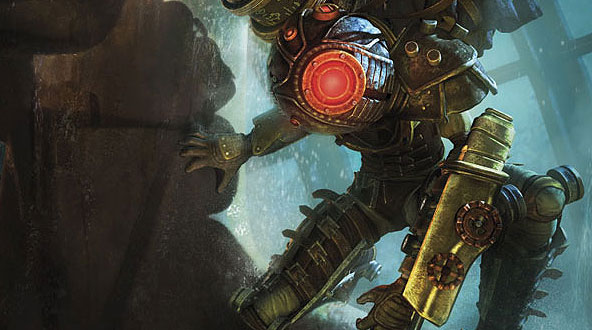
So when Bioshock 2 was announced, I was immediately suspicious. From the beginning, it has smelled like a cash-in: The exploitation of elements that gave the original such atmosphere (you can now explore the ocean floor and you play as a Big Daddy); the utter lack of comment from the developers on anything other than the superficial elements of gameplay (no real discussion of the deeper themes from the original). The whole process feels like the developers went through the first game, scraped the surface elements from its murky waters, and tossed those elements into the development machine without a thought toward what actually made Bioshock great.

The original Bioshock’s story, and the deep, dark themes it explored, were what made it such a landmark event. The game had a complete story, with a message posited and resolved. It needs no sequel.

I sincerely hope I’m wrong.

But I’m probably not.

Probable disappointment level: face-palming with bricks.

Splinter Cell: Conviction (Release date: February 23)

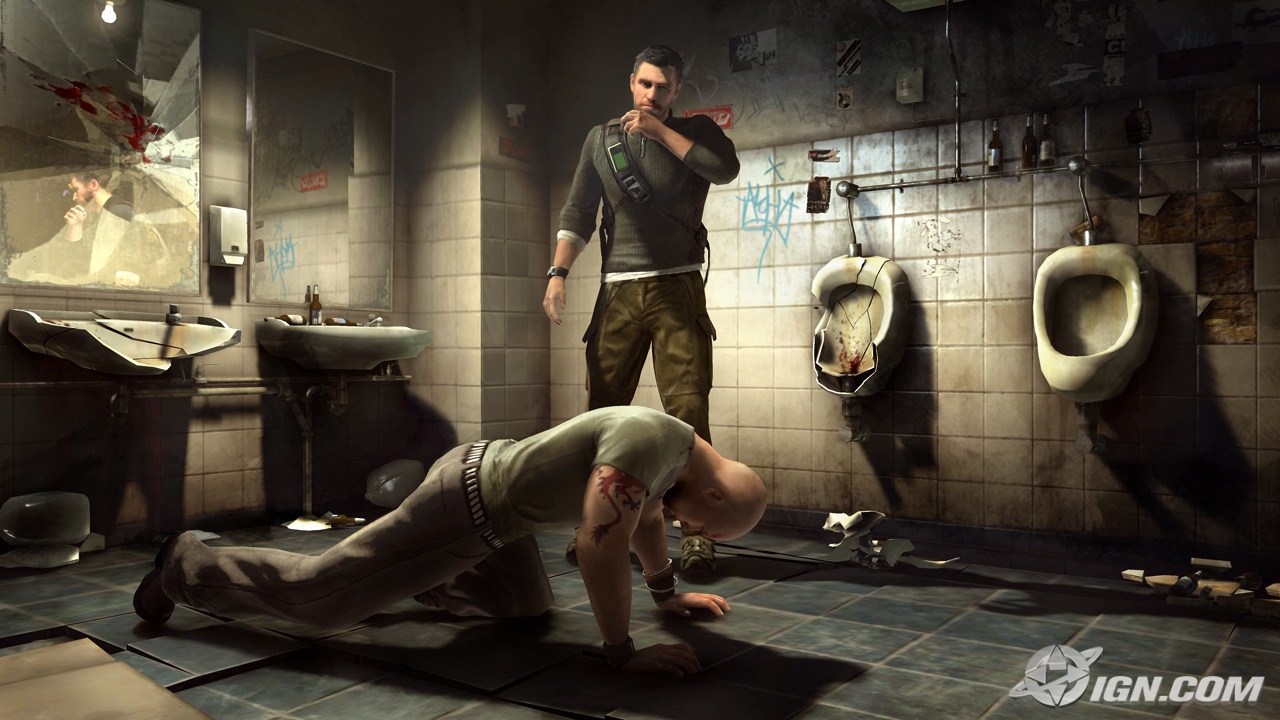
The Splinter Cell games rank among my all-time favorites. Sam Fisher is one of gaming’s great personalities, and Ubisoft has always done an admirable job of crafting great games for him to star in.

But as I’ve watched the development process of Splinter Cell: Conviction, something has appeared a bit off. The Sam in this game isn’t the Sam I remember from the previous games. This Sam has gone through a personality reboot, and the result appears to be a man with no drive for anything but bloodletting and revenge.

Now. There’s nothing inherently wrong with revenge as a plot device, but when your protagonist’s main justification for getting up in the morning is to kill everyone who ever looked at him funny, he begins to lose credibility.

Plot summaries:

Splinter Cell: Save the world.

Pandora Tomorrow: Save the world again.

Chaos Theory: Save the world, but angrier about it this time.

Double Agent: Save the world even though it’s tough emotionally.

Conviction: Ah, forget it, I’m just gonna kill freakin’ everyone.

Tell me you don’t see a breakdown there. I don’t want to channel this man anymore.

Also, the entire philosophy of gameplay has changed. In the old games, you got in, you got out, and you left no trace. Completing a mission without alerting anyone was one of the more satisfying feelings I have ever gotten from a game. Blowing people away was the n00b’s way out of difficult situations.

Splinter Cell: Conviction, however, appears to be based entirely around murderfying everything that moves. Strategic stealth action has been tossed out in favor of over the top violence. You still hide in the shadows, but only while sprinting toward your next neck-snapping belt notch.

This may end up being a well crafted game, but is definitely not in the spirit of Splinter Cell. And it probably won’t be one I’ll enjoy playing. Probable disappointment level: finding out that Uwe Boll is directing another movie.
S.T.A.L.K.E.R.: Call of Pripyat (Release date: February)

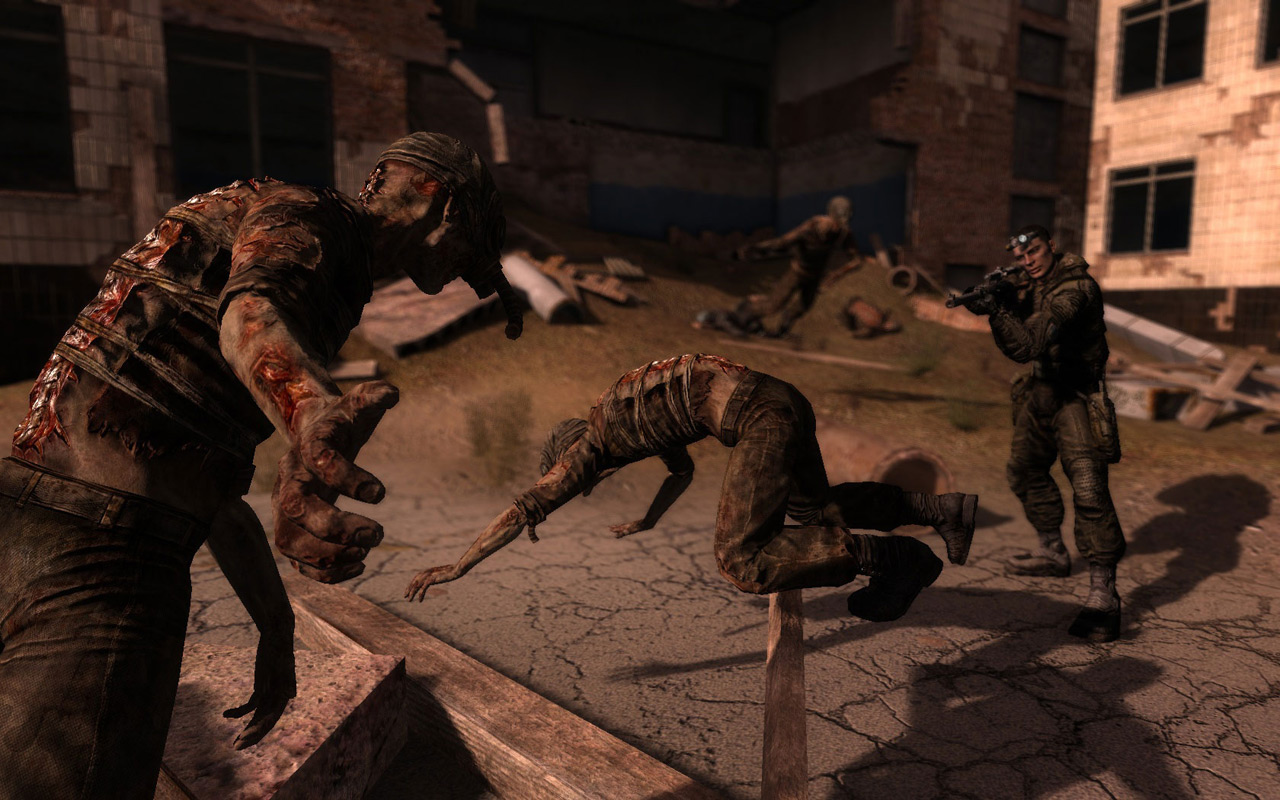
If there’s one game on this list that I hope I’m wrong about, it’s this one. The original Stalker (more accurately, S.T.A.L.K.E.R.) was an amazing piece of work. It had quite a few quirks and suffered from a lack of polish, but even so it delivered an atmospheric and intense experience that has rarely been matched.The second Stalker game, Clear Sky, was a prequel, and while it made a few technical improvements, all in all it was a disappointment. The devs spent too much time working on superficial things and not enough time on what made the original great: the sense that the gameworld was a real place, and that you were living in it. Or trying to.
That being the case, I’m concerned for this game. It has the potential for greatness. But if Clear Sky is any indication, Call of Pripyat may find itself uninstalled and tossed into my “Crushing Disappointments” box.

Probable disappointment level: Custer realizing this may be his last stand.

Alpha Protocol (Release date: Quarter 2, 2010)

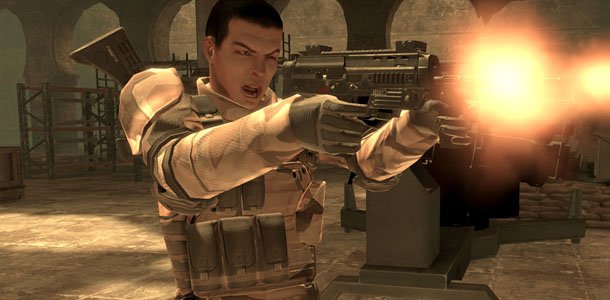
Obsidian is the creative bunch of people behind Neverwinter Nights 2. They also did Knights of the Old Republic II: The Sith Lords. In short, they are paragons of gaming greatness.

Their latest effort, Alpha Protocol, is a joint venture with Sega, and by all appearances will be the RPG equivalent of a James Bond movie.
I’m not really worried about this game from a technical perspective. I have little doubt it will be done extremely well.

What’s already disappointing me about this game, however, is the focus on the amoral side of spy fiction: the women, the callous violence, and the embracing of a utilitarian view of the world (i.e. the ends justify the means).

I’m all for games with mature elements, and even for protagonists with major flaws in their moral fabric, depending on how it’s handled. But if I’m going to slip into the shoes of a character, particularly in an RPG, I want to feel good about that person. I want to play the hero, the overcomer, the one who holds himself to a higher standard. There are exceptions to this, but in general I don’t want to roleplay a complete tool.

Playing a character who takes what he wants just because he can, be it sex, money, or lives, doesn’t sound appealing to me. Watching Bond do it on screen is one thing; doing it myself for dozens of hours in a game is entirely another.

Hopefully the game will offer the player the choice of whether or not to take the high road, but I’m not optimistic.

Probable disappointment level: Buzz Aldrin after Neil Armstrong beat him down the ladder.

Deus Ex 3 (Release date: september)

Potentially the biggest disappointment about this game is that it might not even come out this year. There’s only been the faintest of rumblings about its existence from the devs, and little information of real importance has been released other than a teaser trailer back in 2007.

Even if we offer the benefit of the doubt, however, the fact remains that this game has big shoes to fill. Deus Ex rests solidly in the halls of glory in many a gamer’s heart. The game was a groundbreaking exploration of not only game design, but also of human nature and morality. Admittedly, the story offers little in the way of answers to the questions is raises about free will, government, and other subjects, but I have to give it credit for crafting an experience that causes the player to stop and think about such heavy subjects.
Such games are few and far between, however.And the odds are stacked against this one, because even a good game would be a disappointment here; Deus Ex 3 will have to be straight up fantastic to meet the expectations that are laid upon it.

Probable disappointment level: Japan on December 8th, 1941

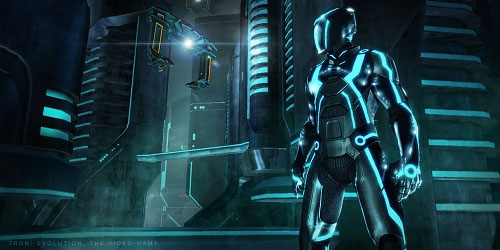
Tron: Evolution (Release date: December)

Apparently a prequel for the movie (Tron: Legacy) coming out this Christmas, Evolution has a lot of bad karma working against it: It’s a movie game (never a good sign); the trailer oozes edginess and melodrama (Warrior Within, anyone?); and the developer’s last effort was Turok, a reboot game that showed little respect for its roots and barely registered above average with the critics.

The trailer for the game has me worried. It’s intense. It’s dramatic. It’s dark. And it’s really not what I’m looking for in a Tron game.

The last major game set in the Tron universe was Tron 2.0, which was great fun. And really, that’s all that this game needs to be: fun. It doesn’t have to be dark. It doesn’t have to be thought-provoking. It doesn’t have to be superficially “mature.” It just has to be fun.

Admittedly, it was just a trailer, so I could be wrong and the developers could be on the right track.

But I’m not getting my hopes up.

Probable disappointment level: I’m beaming down to the surface, and I don’t have a last name


Here’s hoping I’m completely wrong about all of these! With any luck, at least one of these games will turn out to be worth playing. And I’ll let you know which one(s) that is.
Happy New Year, and keep gaming on.

Jerod Jarvis is an independent gaming journalist and founder of Duality Games. He maintains gaming columns for The Washington Times Communities and for The Outpost. When not blogging madly about games, he freelances for the Spokesman-Review in his hometown of Spokane, Washington and attends school at Whitworth University. Check out his presence on Facebook and Twitter to stay up on Duality Games updates and the inside scoop on the gaming news you care about.


The Legendary Duality Game of the Year Awards

Tags

, , , , ,

Welcome, faithful readers, to the first annual Duality Game of the Year Award ceremony. These awards are prestigious and filled with laud. I expect them to become legendary and widely respected any day now.

Careers will be affirmed, hearts will be broken, and most importantly you’ll find out which of this last year’s games were worth your money.

I will only be handing out one award this year, and that will be the award for The Ultimate Best Game for PC This Year Period award. There are several contenders for this enviable title, but there will only be one winner.

Dragon Age: Origins


If you read my epic review of DA:O, you know how I feel about this game. It’s fantastic. Gripping, multi-layered story; fully realized characters you actually care about; rich, deep, immersive backstory … I really can’t say enough.

DA:O is easily the best RPG to come out this year. Come to think of it, it’s easily the best that has come out in a few years. Bioware has their blockbuster game creation system down to a fine science. The best part is their focus on story; above all the other excellent elements the game brings together, the story reigns supreme. It’s a beautiful thing for this critic to behold.

Also beautiful to behold is the emphasis Bioware put on the PC version of this game. With better graphics, a more advanced camera, and a user interface fully optimized for a mouse and keyboard setup, it is encouraging to see a developer place such importance on a PC game these days.

Batman: Arkham Asylum

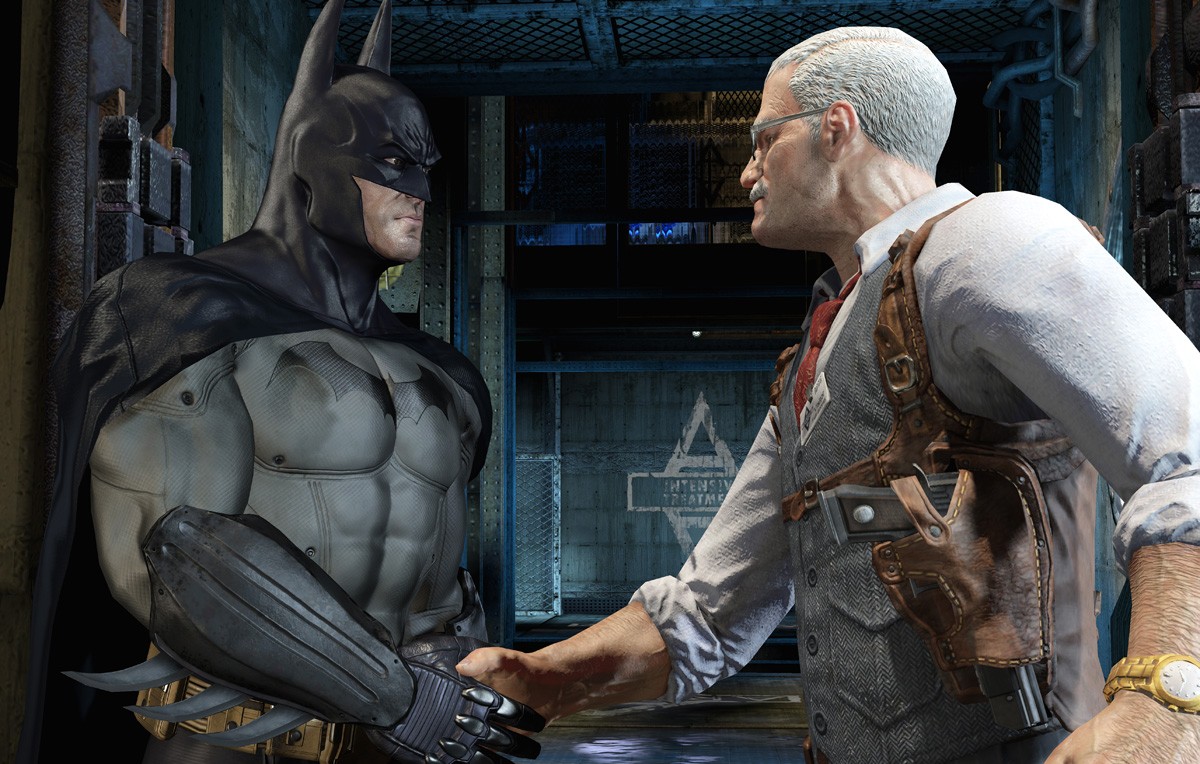
I’ll join with the general chorus of reviewers and agree that this is by far the best superhero game to come out pretty much ever. The game captures the feel of the latest two Batman movies perfectly, and at the same time draws inspiration from the truckloads of comics that star the caped crusader.

While the story doesn’t match up to Dragon Age’s, it serves its purpose well and is treated with enough importance that it doesn’t feel like random events stringing the gameplay together. Polished with excellent voice acting and delivery, you really feel like the star of a Hollywood blockbuster.

What really lands Arkham Asylum in the running for a game of the year is its rock solid gameplay. A beat ’em up to end all beat ’em ups, the game features an unmatched combat system that manages to paradox together intuitiveness and complexity, beauty and viciousness. Couple that with an extremely entertaining stealth system, a belt-load of gadgets, and the chance to punch The Joker in the face repeatedly, and you have an award-winning combination.

Left 4 Dead 2


Valve’s follow up to last year’s multiplayer zombiefest was not met with universal enthusiasm; however, despite the fact that it kind of feels like a cash-in, the game is technically excellent and expands on the theme of the original game nicely.

The game’s AI director still runs the show, ensuring that no two games are ever exactly the same, but it’s been improved for this showing. New enemies, new weapons, new maps; sounds like a solid multiplayer sequel to me.

And with Valve’s legendary faithfulness to its fan base, you can rest assured that this game will stay fresh for years to come via updates and DLC.

Call of Duty 4: Modern Warfare 2

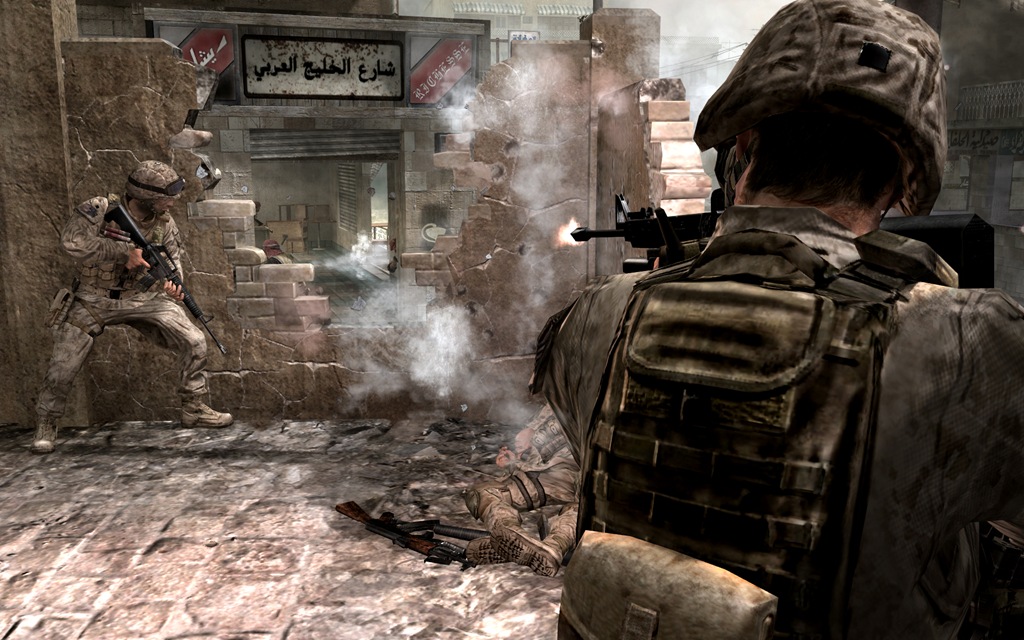
I’ll be honest … I’m admitting this to the running only because I know it’s a technically impressive game. An extremely tight design, adrenaline laced story, co-op and legendary multiplayer all fall into the mixing pot and emerge as the highest grossing entertainment release since Monopoly.

However. I remain steadfast in my semi-defendable dislike of this game. And anyway, Infinity Ward really gave PC users the short end of the stick on this one, with a severely crippled multiplayer, arguably the most anticipated part of the game.

Warhammer 40k: Dawn of War II


You really can’t say enough about Relic. Like Valve, Blizzard and a few other devs, it seems that all they do is sit up in their posh offices and churn out ridiculously good games.

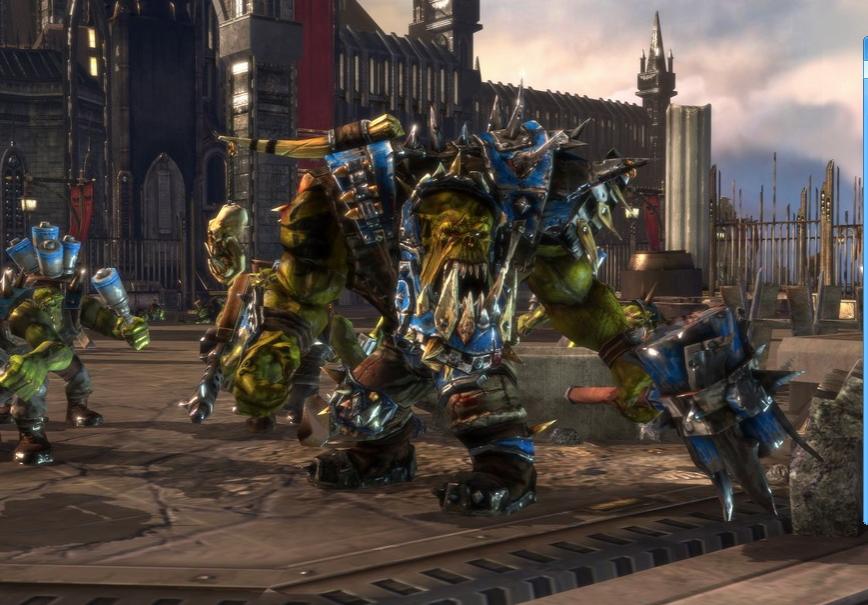
The Dawn of War series is no exception. The original games are hands down the most fun you’ll have sticking a chainsword through a space ork anytime, anywhere. And while the sequel is a bit of a different beast, focusing more on strategic control of a small squad than on map-spanning bloodbaths, it follows in the tradition of excellence.

Taking control of a squadron of Blood Raven Space Marines, you’ll battle to save several planets from being overrun by the insatiable Tyrannids. The fun here is definitely in the role-playing elements; you’ll level up your squad as you progress, find new gear and learn new ways to decimate your foes.

And the final verdict is…

Well done, sir, you’ve done it again…

Batman: Arkham Asylum!

This was a tough pick, particularly between Arkham Asylum and Dragon Age. Dawn of War II is a great game, but ultimately its weak story sets it on a lower rung than the other games here. Left 4 Dead 2 is extremely well done, but I can’t justify giving such an incredibly awesome award to a game that feels almost exactly like its prequel. And I just finished burning several copies of Modern Warfare 2, so I couldn’t really give that one the award …

Ultimately, it came down to entertainment value. While Dragon Age sports the better story and is undeniably more epic, Batman wins out in gameplay and just plain fun-ness. It’s a fantastic game, and while it is brutally violent it doesn’t dabble in a lot of the sexual content that Dragon Age does. Batman: Arkham Asylum wins the award. If a representative from developer Rocksteady wants to swing by my house, I’ll give them a dollar. But I won’t hold it against them if they can’t make it — they’ll be awfully busy partying when they find out they won.

Every game on this list is excellent and deserves your hard-earned dollars. Get out and buy them before all the games that Modern Warfare 2 scared into next year eat up all your time.

Jerod Jarvis is an independent gaming journalist and founder of Duality Games. He maintains gaming columns for The Washington Times Communities and for The Outpost. When not blogging madly about games, he freelances for the Spokesman-Review in his hometown of Spokane, Washington and attends school at Whitworth University. Check out his presence on Facebook and Twitter to stay up on Duality Games updates and the inside scoop on the gaming news you care about.
Review – Torchlight

Tags

, , ,

People seem to be under the impression that massive multiplayer (MMO) games (such as World of Warcraft) are the digital equivalent of heroin. In my opinion, that analogy is flawed because, while both are addictive and can reduce your life to smoking ashes, heroin is reportedly pleasurable in short spurts.

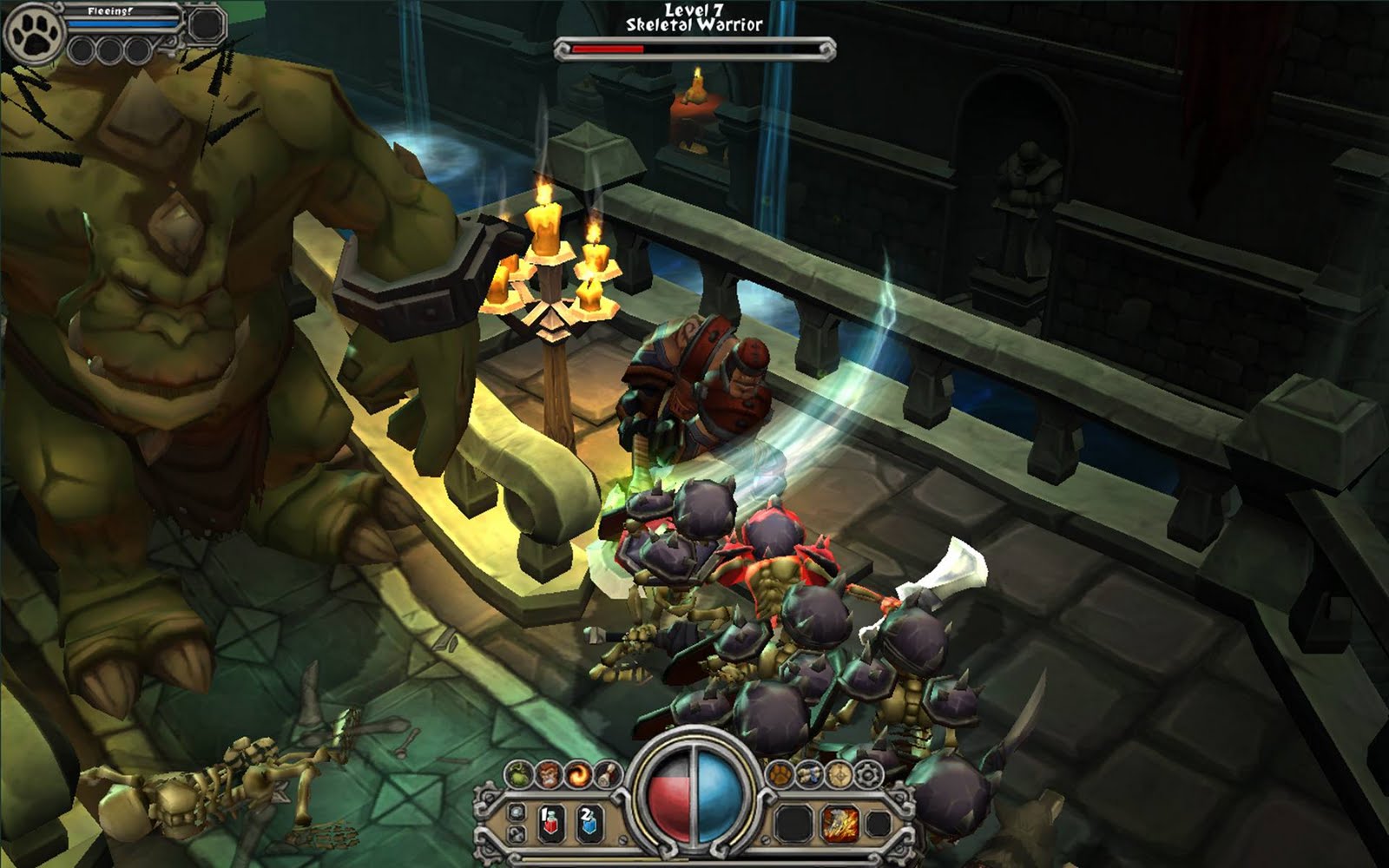
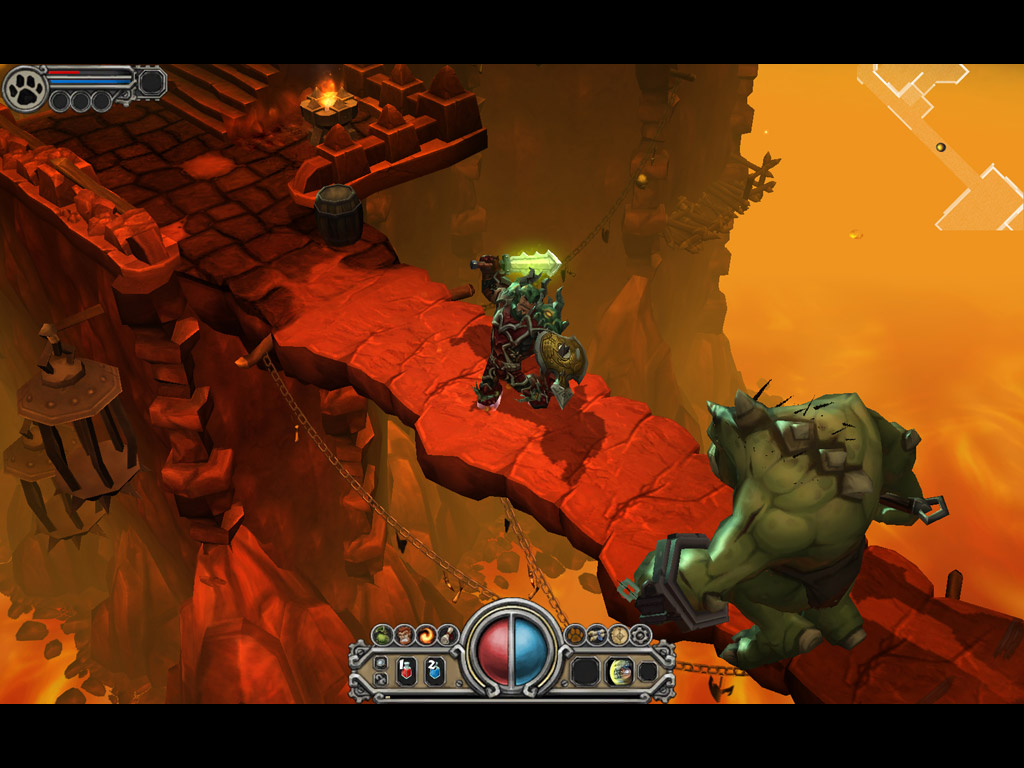
But I digress. My point is that MMOs are not the addictive sleep-killers of the gaming world. That crown belongs to the action role playing game (ARPG). Torchlight belongs to this family of games, resting on the mantle next to Diablo, Titan Quest, and many others. The formula is simple — give the player a weapon, give the player a mission of the “save the world” variety, chuck a dump truck-full of enemies at the player, then go make popcorn and let things develop as they will.

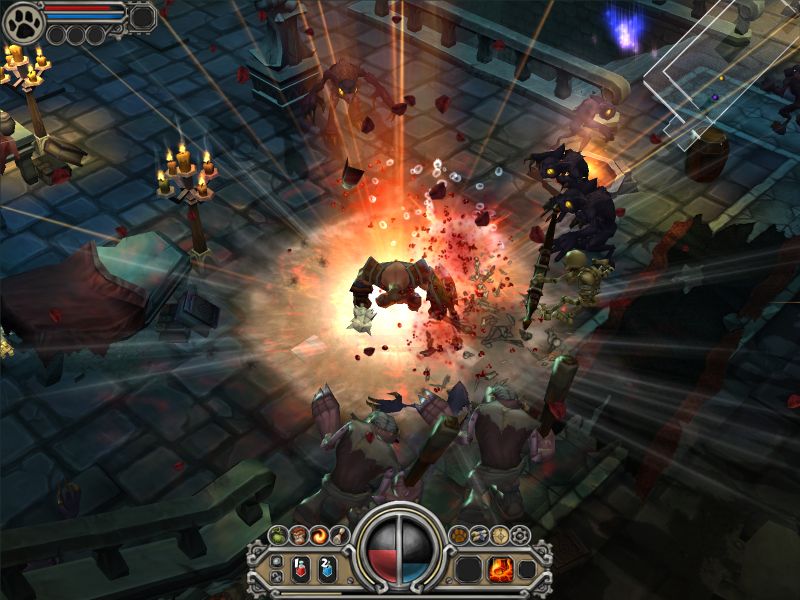
Torchlight strikes the bulls-eye with such force and accuracy it pins several attacking skeletons to the target — something you’ll be doing with a high degree of frequency once you fire this game up.

The premise is simple and elegant. The town of Torchlight is under attack by creatures which are coming from the mines underneath the town, and it’s your task to descend into the bowels of the earth and root out the source of the offending critters.

You can select one of three character classes — melee, ranged, or spellcaster. Your choice determines exactly what methods you’ll be using to send enemies to meet their respective makers. Melee players carve through the horde with swords, axes, warhammers and the like. Ranged characters slaughter from a distance with bows and flintlock firearms. And spellcasters use a combination of death-dealing staffs and spells. All characters can use any weapon type, provided they meet level and stat requirements. However, your class type will determine which weapon type you are most effective with.

Fast-paced action is the name of the game here. Enemies rarely last longer than a second or two, and even the enemy hero characters fall without too much trouble. It didn’t take my melee character much more than thirty seconds to make the end-game boss run weeping to his maternal entity.

Gameplay is a near-perfect mixture of enemy-stomping, loot-collecting and level-progression. New gear is dropped from vanquished foes, found in assorted chests and crates, or purchased back in the town of Torchlight. As in all the best games of this genre, finding a sword that does more damage per second than the one you’ve been using for the past thirty minutes is a feeling not unlike Christmas morning. More accurately, this game feels like Christmas morning every thirty minutes. If that’s not a recommendation, I don’t know what is.

The game’s premise of an infested mine provides a convenient and believable explanation for level progression: going deeper and deeper into the mines. Each level will take 20-30 minutes to sweep through. There are also a few “lost dungeons” which are accessible via scrolls or side quests, providing an occasional change of pace.

The game also addresses some of the common frustrations with ARPGs. Most prominent is the full inventory issue. Nothing breaks up the pace of an epic slaughterfest like having to trudge back to town to sell off excess gear. Torchlight eliminates this by providing you with a pet who will not only fight alongside you, but will also carry loads of unwanted trinkets back to sell on the surface, leaving you free to continue dungeon raiding. You will still have to go back yourself occasionally, but even this is made painless by the ability to use portal scrolls almost anywhere, which will save your progress and whisk you back topside instantly.

There aren’t many content issues to worry about. The ranged character dresses a little provocatively; cartoonish blood gets splashed around. Overall, the game is relatively accessible and appropriate for its rated audience (the game is rated T for teen).

Most importantly, this game is just plain fun. It doesn’t require much effort or thought, but it’s an addictive and entertaining experience that will definitely feed that hunger you’ve been feeling since finishing Titan Quest. It will also keep you up to all hours of the night (I’ll never get those hours of sleep back … and I’m strangely ok with that.)

Torchlight may have lower production values than Blizzard’s upcoming Diablo III, but it’s still a great game, and it has enough replay value that you might still be playing it when Diablo III comes out in 2034.

Jerod Jarvis is an independent gaming journalist and founder of Duality Games. He maintains gaming columns for The Washington Times Communities and for The Outpost. When not blogging madly about games, he freelances for the Spokesman-Review in his hometown of Spokane, Washington and attends school at Whitworth University. Check out his presence on Facebook and Twitter to stay up on Duality Games updates and the inside scoop on the gaming news you care about.
Review – Men of War: Red Tide

Tags

, ,

Let it first be said this game could be more accurately titled Men of War: Masochists Apply Within.

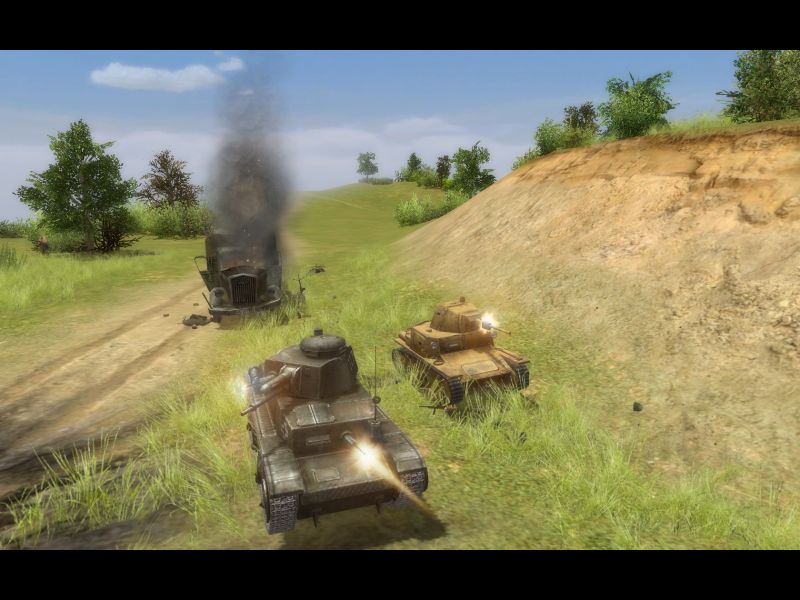
Even on easy difficulty, this game is punishing on just about every level imaginable. The game throws you into the first mission without anything even resembling a tutorial. For some games, that wouldn’t be a big deal. Not so for MoW:RT; the game not only dispenses with a traditional RTS control scheme, but nearly every gameplay mechanic is so ridiculously detailed and nuanced it takes hours just to get comfortable.

The story is based on true events. The emphasis the game places on historical realism is evident throughout – the opening cut scene is almost fifteen minutes of historical World War II footage, and a lot of the dialogue appears to have been lifted from authentic sources.

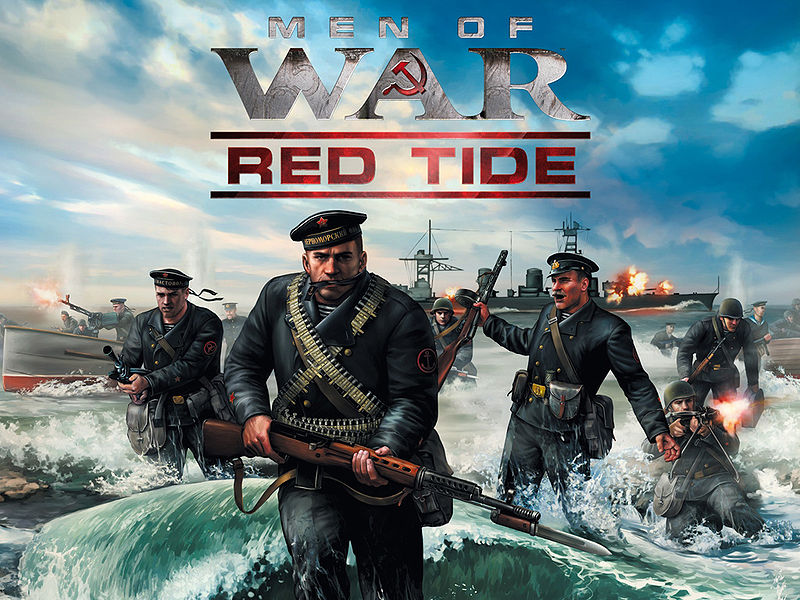
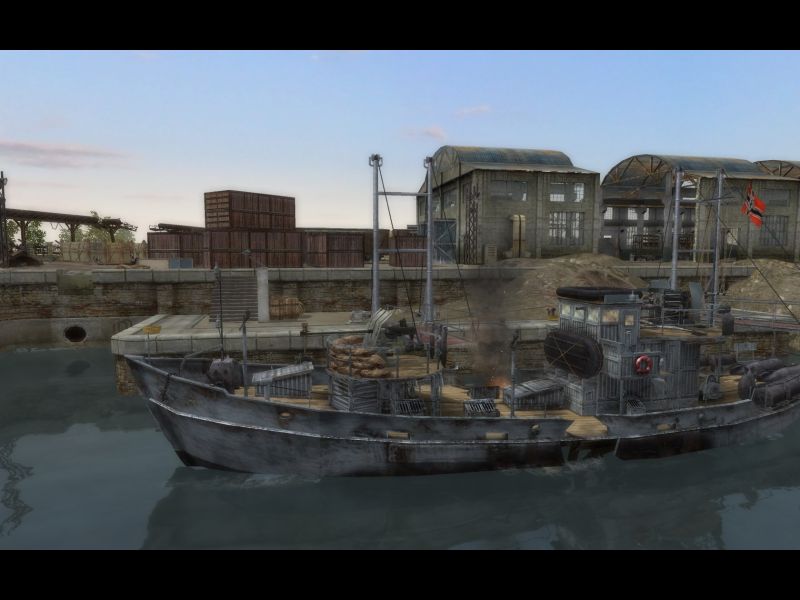
You are given control of the Black Coats, otherwise known as the Soviet Marines. You’ll battle through several of the key battles in the Black Sea campaigns during WWII. The setting is different enough from the typical WWII game that it doesn’t feel like a recycled Company of Heroes, and there’s just something charming about controlling a bunch of little guys who respond to your commands in Russian.

Red Tide lands squarely in the “Polish is for n00bs” category. This is no Company of Heroes, with every graphical and interface detail lovingly polished to perfection. This is a game where even deciphering the heads-up display (HUD) takes dedication and a read-through of the manual. The graphics are adequate, but nothing to write home about. Same story with animations and writing. What voice acting the game contains is generally awful.

But don’t get me wrong – the rough edges do not ruin this game. The lack of polish almost feels deliberate, as if the game is saying “if you’re looking for an easy game, go boil your head.” For those with enough patience to stick with it past the baptism-of-fire opening mission will discover layers of realism and nuance built into just about everything.

Not only do you have direct control over your soldiers’ posture (upright, crouching, or prone) and stance (weapons free, return fire, hold fire), but also each individual man’s inventory, health status and equipped weapon. You can even tell them when to reload their gun; control exactly where they move and fire using a pseudo third person action control system; tell them to walk or sprint; and the list goes on.

That’s not even getting into the huge variety of different weapons, ammo types, vehicles, artillery and armor you can mess around with. The game is astoundingly deep; each play session brings some new facet to the surface. It’s the kind of experience that stays in your mind even when you’re not playing, an attribute of the best games.

However, it’s not without its issues. The AI appears to be a casualty of the detailed control system, making it a very bad idea to leave your troops to their own devices for any length of time. Enemies are also given to odd behavior on occasion.

The punishing, ridiculous difficulty could also be considered a problem unless you’re really into trial-and-error gameplay. I played on the easiest difficulty setting thinking that it would be the fastest way to get through the game – it turned out to be the only way to get through the game, period. I strongly suspect the other difficulty settings are actually the seventh and eighth circles of hell. This is not a game for the faint of heart or the easily discouraged.

To wrap this up, I give this game a qualified recommendation. Anyone looking for a hardcore, realistic WWII simulation will find lots to love here, as long as they don’t mind getting over the quirks. The game is deep, layered and provides a very satisfying sense of accomplishment once your finally meet its demands.

On the other hand, if you’re looking for a pick-up-and-play game, or if you swear by Command & Conquer, you’re going to want to look elsewhere to get your itch scratched, because Men of War: Red Tide won’t scratch it as much as rip it open and watch it bleed out.

Jerod Jarvis is an independent gaming journalist and founder of Duality Games. He maintains gaming columns for The Washington Times Communities and for The Outpost. When not blogging madly about games, he freelances for the Spokesman-Review in his hometown of Spokane, Washington and attends school at Whitworth University. Check out his presence on Facebook and Twitter to stay up on Duality Games updates and the inside scoop on the gaming news you care about.
Bioshock Fortress 2 and other genius

Tags

, ,

I stumbled across these vids on YouTube. Do not miss them. Language/violence warnings.

Bioshock Fortress 2
Huxley Fortress 2
Borderfortress

Jerod Jarvis is an independent gaming journalist and founder of Duality Games. He maintains gaming columns for The Washington Times Communities and for The Outpost. When not blogging madly about games, he freelances for the Spokesman-Review in his hometown of Spokane, Washington and attends school at Whitworth University. Check out his presence on Facebook and Twitter to stay up on Duality Games updates and the inside scoop on the gaming news you care about.
Games for your wish list

Tags

, , , , , ,

Christmas 2009 is admittedly a little sparse in terms of new releases. Modern Warfare 2 scared most publishers into next year, leaving us without much to be playing.
Fear not, however. Your Christmas wish list need not be empty. There’s still plenty to be jolly about. Here’s a few games that you can start dropping hints around family members for.

Team Fortress 2
If you haven’t already experienced Valve’s incredible team-based multiplayer shooter, you haven’t yet had a fulfilled life. With gameplay dialed down to perfection, an art style that would make Mona Lisa smile, and an incredible development team pushing out new content on a regular basis, there’s nothing not to love about this game. Originally released as part of the (awesome) Orange Box, it’s now available on its own, via Steam or retail purchase.

Dragon Age: Origins
You know how I feel about this game. It’s incredible. Huge, sprawling fantasy role-playing at its best. Grab a sword and dive into a world so completely developed you’ll find yourself looking for it on the map. With over 100 hours of content and DLCs on the release horizon, this is one gift that keeps on giving.

The Telltale adventure games
Pick a series, any series. Sam & Max, Tales of Monkey Island, Wallace & Gromit – this studio has yet to swing and miss. Each game is a variation on the point and click adventure theme, but done with such panache that all the boring, stale clichés of that genre are nowhere to be found. And these games are funny. Several of gaming’s most brilliant minds are hard at work on the writing of these tales – and best of all, most of them can be enjoyed by the whole family.

Psychonauts
I’m gonna keep finding excuses to bring this game up. Psychonauts is a one-of-a-kind experience. It’s an excellent platformer. It’s an intriguing and entertaining story. It’s laugh out loud funny. It’s weird, touching, bizarre, uplifting, amusing, and intense. And since it’s been out for a while and because apparently only myself and six other people had the sense to buy it, it’s now dirt cheap. It’s a gift even your kid brother could afford – you are without excuse. Get it.

The Myst series
Admittedly, the Myst games fall squarely into the “love ‘em or hate ‘em” category, but if you haven’t had a chance to find out where you stand on the issue, it’s well worth the experience. Myst was the first real computer game I ever played, and you can figure out what’s happened since then. I would advise not bothering with Myst V or Myst Uru, but Myst I-IV are beautiful, engaging, incredible games. You can get the first three in a single box, and the fourth doesn’t cost much these days.

Tron 2.0
This one might be a bit hard to track down, as it was a bit of a cult hit even when it was released, which was a while ago. But trust me, it’s worth it. Even if you’ve never seen that crazy weird Disney movie from a million years ago, getting sucked into a computer and racing through cyberspace to save the world from a digital virus is an experience like none other. Besides, the new movie is coming out soon, so you might as well brush up on your Tronology.

Jerod Jarvis is an independent gaming journalist and founder of Duality Games. He maintains gaming columns for The Washington Times Communities and for The Outpost. When not blogging madly about games, he freelances for the Spokesman-Review in his hometown of Spokane, Washington and attends school at Whitworth University. Check out his presence on Facebook and Twitter to stay up on Duality Games updates and the inside scoop on the gaming news you care about.
Epic Review – Dragon Age: Origins

Tags

, , , ,

There are games out there that truly immerse you. You put your headphones on, lower the lights, settle into your chair, and lose yourself in the game. “Dragon Age: Origins” is one of those games.

There are games whose world is so complete and fleshed out that after spending time in it, you’re almost surprised when you can’t find it on the map. “Dragon Age: Origins” is one of those games.

There are games in which the sense of progression, of character interaction, of epic story is so great that not only do you feel like the star of a Hollywood blockbuster, but you completely lose track of time and are only alerted to the fact that it’s 4 a.m. by your face hitting the keyboard. “Dragon Age: Origins” is definitely one of those games.

Origins of heroism

When you first fire up the game, you’ll create a character. This is a hallmark of role-playing games, but “Dragon Age” puts a bit of a spin on it. Your decisions during the character creation process will dramatically affect your experience.

You pick your race: dwarf, elf or human. Your choice affects which class your character can be (i.e., dwarves can be warriors or rogues, but not mages), which in turn affects your back-story.

The back-story is what makes “Dragon Age” truly unique. Instead of dropping you into the one-size-fits-all shoes of a generic hero, you’ll play the first few hours of the game as just another average citizen. Your concerns are not those of saving the world – they’re of the more mundane variety. You might be a city elf preparing for your wedding day, or a dwarf noble dealing with political intrigue, or one of four other origin stories. These three- to six-hour intro sequences serve to bridge the story gap that most games leave between your character being an everyman to being a hero.

At the end of every origin story you’ll be inducted into the Gray Wardens, a group of warriors dedicated to battling the darkspawn. From here on, the story is largely the same for all characters, but the player still has remarkable control over the details of how things turn out.

Technical excellence

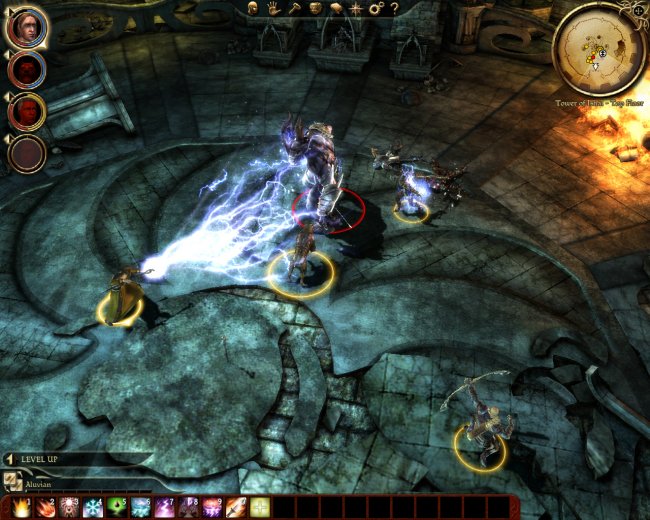
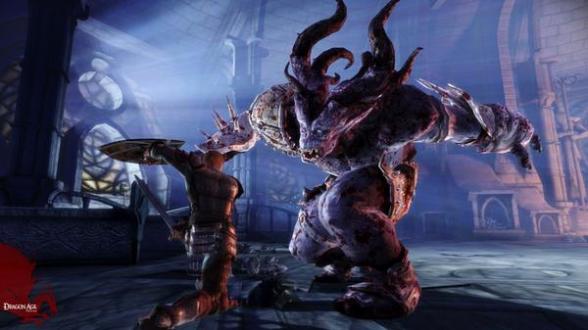
If you’ve played “Knights of the Old Republic” or “Neverwinter Nights 2,” you’ll feel right at home here. Bioware’s classic under-the-hood turn based combat system makes a glorious return in “Dragon Age.” Combat is visceral and well-animated; you can pause at any time during play to issue commands or just to catch a breather – something you’ll find yourself wanting to do often as the difficulty ramps up. Battles against particularly challenging foes often culminate in deliciously satisfying finishing moves. After finally bringing down an ogre near the beginning of the game (a feat that took many, many attempts), my dual-wielding rogue made all the effort worth it by leaping onto the falling beast’s chest in slow-motion, using her daggers to scale his bulk, and finishing the kill with a blade through the face. Just about every battle in the game is a challenge, which adds greatly the atmosphere of desperate struggle.

Graphically, the game isn’t all that special. Characters and equipment are, by and large, meticulously detailed and stand up brilliantly to zoomed-in scrutiny. The game world and environments take a hit for this, though, as there are few that will take your breath away.

Gameplay, however, is as tight as a drum. The combat is smooth and, aside from a few AI issues, flawless. Exploration is intuitive and rewarding. Leveling makes real differences in your character’s power level.

A tale of dragons

The story is long, intricate, and satisfying. The darkspawn have risen in what the land of Ferelden knows as a Blight. Three times in the hundreds of years before the game, Blights have ravaged the land, led each time by an arch-demon. The arch-demons are rare High Dragons, discovered and tainted by the evil darkspawn. Soaring through the storm-stained skies, breathing fire and striking terror into the hearts of defenseless citizens, they are the impetus behind the horde’s relentless onslaught.

In the game’s history, each time a Blight spilled across the lands, the Gray Wardens rose to meet its devastating tide, and each time the darkspawn broke against them like waves on unforgiving rocks. You are one of the few remaining Gray Wardens, and it is your task to build up an army powerful enough to meet their threat.

Along the way you’ll gather a party of characters. Each character has a full and complex back-story, complete with hopes and dreams, deep dark secrets, and even personal preferences in regards the various gifts you can find and offer them. You can choose to interact with each character and grow closer to each one, finding out more about them and increasing their level of trust in you. Alternatively, you can treat them like dirt and spurn their every suggestion. Or you can ignore them. It’s up to you.

The only complaint about the story is a small thing: the main quest tends to get lost in the quests leading up to it. Dealing with an abomination outbreak in the Circle Tower or stopping a werewolf plague in the Bracilian forest just seems more immediate and more fleshed out than the task of stopping the Blight ever becomes. So much time and effort goes into building your army and gathering allies, the final battle ends up feeling more like an afterthought. And, without spoilers, I must stand before you and say that final battle is a rather major anticlimax. At least it ties up loose ends and doesn’t demand a sequel (though I hope that there is one).

Content concerns

On the content side, there are some issues. Religion plays a prominent role in the game – the Imperial Chantry with its revered mothers and lay priests clearly draws heavily from Roman Catholic and Islamic influences. While the player is never forced to pay fealty to a deity or worship in any way, there really isn’t any getting away from it in-game.

That said, it fits with the game’s fiction, and in my play-through I never noticed direct attacks on Christianity or any religion. There are themes throughout that alert gamers will pick up on (all truth is essentially equal; all roads lead to heaven; if it feels good, do it; etc.). While it would not be wise to play the game with one’s brain turned off, most of these issues can be navigated with a little thought and previous conviction.

Language pops up now and again, but never at any serious level – a refreshing change from the direction that many so-called “mature” games are taking these days. Alcohol and drug abuse also make appearances, but not in graphic ways.

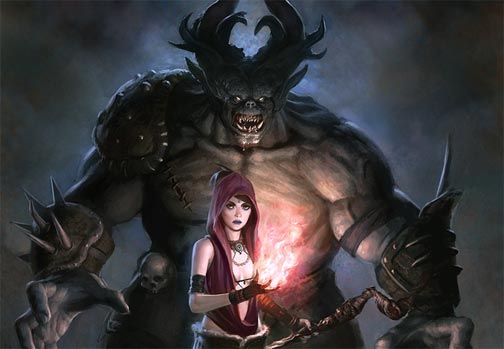
Sexual content is perhaps the game’s biggest red flag. In a few places, characters appear rather scantily clad. The worst offender is Morrigan, a shape-shifting mage who will join your party early in the game. Her default outfit is a bit on the revealing side, to put it mildly. Attempts to alter her attire are thwarted by the fact that the most powerful equipment available to her is of the same category of revealingness. It could be argued that the getup fits with her character (she was raised in isolation from society, and she’s something of a seductress), but in my opinion it largely distracts from much more interesting facets of her persona.

A few non-human (but distinctly human-esque) female enemies appear topless with only a bit of their modesty saved by curiously inflexible locks of hair. The ability to be become sexually involved with a select few of your party members is also there. It’s entirely optional, doesn’t cross a PG-13 level of explicitness, and one character, to his credit, treats the act as something more sacred than a kiss. But the overall feeling the game gives is that it’s just a natural part of every casual romance. The cheapening effect this has on the relationships you develop with these characters is apparent.

As for violent content, there’s an odd mix here. Blood plays a prominent role in everything about this game. Gouts of it erupt during battle, it stains many of the game’s menus, and characters will be spattered in it after even the mildest of violent confrontations. Even the game’s signature logo dragon is made of blood. In spite of this, however, the violence is otherwise largely non-graphic. Other than the occasional decapitation, there are no gaping wounds or realistic blood-letting. I suspect Bioware choose this platelet-coated direction to add to their supposed theme of “dark fantasy,” but in reality it’s just kind of ridiculous.

In climactic conclusion

In the end, the game largely overcomes its flaws and objections. There’s a great story told here, one that touches on themes of self-sacrifice, redemption, forgiveness, love, faith, justice, and a myriad of other encouraging concepts. It’ll also give you your money’s worth – while I didn’t keep track of time as strictly as I should have, my first play-through was at least 100 hours long, and I left a decent amount of content unfinished. There are two DLCs available at the time of publication, with one more on the way. Both are extremely well done and add significantly to the game – well worth their price if you don’t happen to get a version of the game that includes them.

Dragon Age: Origins is definitely one of the best games of the year; perhaps the best, period. The gameplay is engaging and polished to a fine sheen; the story is an epic page-turner; and while there are content concerns, for the mature adult gamer these are relatively minor, especially in the face of the positive themes the game espouses. I completely recommend it, and would love to hear your own experiences with the game. Leave a comment, let me know how it went down for you.

Jerod Jarvis is an independent gaming journalist and founder of Duality Games. He maintains gaming columns for The Washington Times Communities and for The Outpost. When not blogging madly about games, he freelances for the Spokesman-Review in his hometown of Spokane, Washington and attends school at Whitworth University. Check out his presence on Facebook and Twitter to stay up on Duality Games updates and the inside scoop on the gaming news you care about.

Dumb game ideas…that worked

Tags

, , , , ,

Throughout history, man has had ideas. Some of these ideas have been strikingly good, such as the wheel, fire, popcorn, and the entire Hardy Boys series. Others, sadly, have not been so good.

Social laws dictate that most bad ideas will naturally die out. Ideas like grunge music, Nazism, and Dane Cook’s sense of humor are all examples of unfortunate things that thankfully haven’t stood the test of time.

However, there are some extremely poor ideas which, for one reason or another, haven’t died out. This is particularly true in the gaming arena. Sometimes this is because it turns out the idea wasn’t so bad in the first place; other times it’s more because the gaming public in general isn’t the most discerning group of people.

This week’s column will examine a few of these bad ideas, and attempt to explain the series of events that led to them not dying like the unfortunate travesties they may or may not be.

Fun...
Fun…

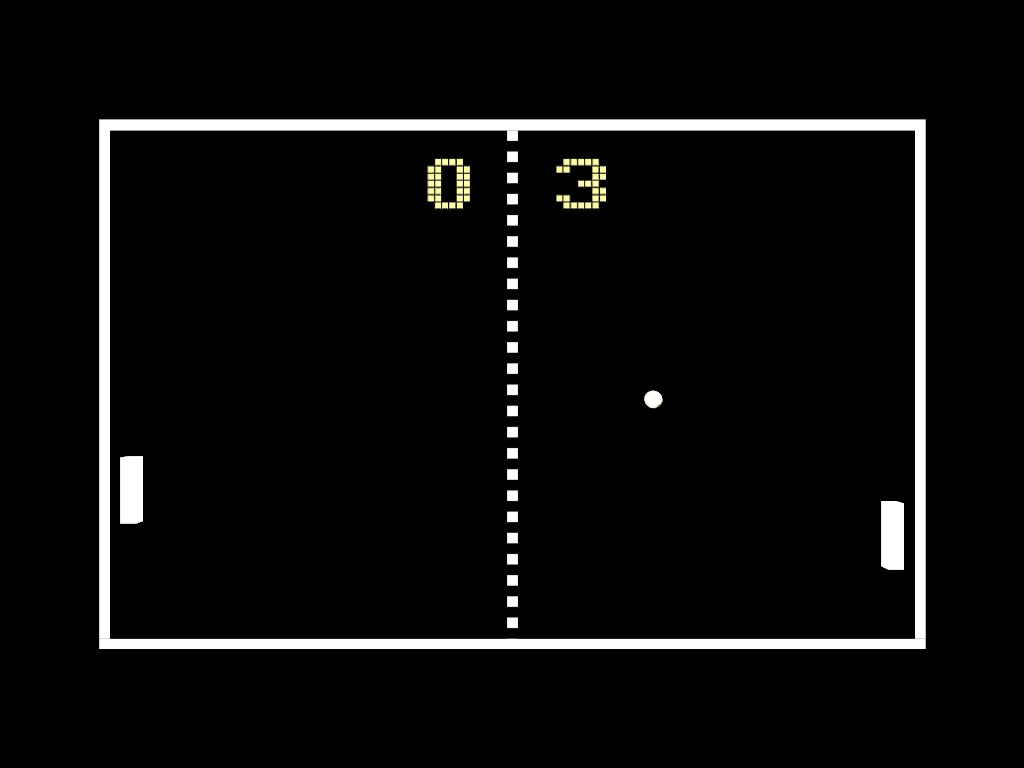
Pong: What!? Pong? The grandfather of games? Surely, Mr. Jarvis, you aren’t blaspheming against the Progenitor?

Well, yes. I am. Seriously, think about it. Who was the guy sitting around in his office so incredibly bored he thought it would be cool to create a game in which two white blocks float around while another white block floats around between them? Even allowing for the fact that there weren’t any other games to compare the idea to, surely someone looked at the screen at some point during the creation process and said, “Kinda lame, ain’t it?”

Of course, Pong stood the test of time. This is more a testament to fact that people really had no lives in the eighties than any genius of the game, however – Pong would have been a big deal to a culture in which muscle cars were no longer made and everyone listened to Rick Astley.

Psychonauts: If you haven’t played Psychonauts, shame on you. It’s a fantastic platformer with a real sense of humor and a great storyline. Developer Double Fine has since jumped the PC ship by releasing Brutal Legend on consoles only, so I blame all of you who didn’t buy the game for my current state of unhappiness.

That said, the game is a bit of an odd concept. The story is about a kid with psychic powers who sneaks into a psychic summer camp to learn how to be a psychic warrior, which he does by entering various characters psyches and platforming a lot. It’s the kind of idea you’d expect to come up towards the end of a caffeine fueled all-nighter, kind of like the one I pulled before writing this article…

However, the game is quite solid and enjoyable, and still available for purchase if you look hard enough. Do yourself a favor and buy the game; doing so will enrich your life and also remove the curse of my wrath from your descendants.

Now that we've had our six hour meeting, gentlemen, let's get to grinding!

Now that we’ve had our six hour meeting, let’s get to grinding!

World of Warcraft: Ok, put your pitchforks down and douse the torches. Come, let us reason together, says the Lord. Think about this game with me.

Here is a game that is quite literally so boring that it requires you to play with a large group of other people just to keep it interesting. This is not a game. It’s a social experiment in group management.

You might work at a job where your boss breathes down your neck, the guy in the cubicle next to you won’t stop making annoying sounds, and the quirky guy down the hall who really shouldn’t have been hired seems bent on making every task as much of a chore as possible. You flee your place of business, peeling out of the parking lot while thanking the powers that be you’ve survived another day.

Then you go home, fire up World of Warcrack and log into Ventrilo, and do it again. Except the irritating coworkers are replaced with the disembodied voices of your guildmates. And you’re strangely ok with this?

The success of WoW isn’t entirely mysterious. The backstory is impressive; the amount of lore and the completeness of the world that has been created is a little ridiculous; the game mechanics have been honed down to a fine science. But who was the guy who stood up at the Blizzard corporate meeting and said, “I know, why don’t we throw out all the storytelling and everything else lovable and cool about the Warcraft IP and make a game that actually encourages hours and hours of mindless grinding in the pursuit of a lonely life in a basement somewhere?”

Rereading that last paragraph, I realize I may be a little bitter. I was a big fan of Warcraft III…give me a break.

Puzzle Quest: The idea behind Puzzle Quest is mixing role-playing (traditionally a hard core genre) with Bejeweled (traditionally a casual game), tossing a few swords and spells into the pot, and standing back to see what kind of horrific Frankensteinian mashup emerges from the mix.

Surprisingly, a quite enjoyable little game rose from the unholy grafting. Puzzle Quest has all the charms of your typical casual game (colorful, family friendly, easy to pick up and play) with many of the elements usually reserved for more in-depth titles (character progression, some semblance of story). The game works in spite of its unthinkable origins.

If you don't click this image, you're life won't be complete
Lawl…

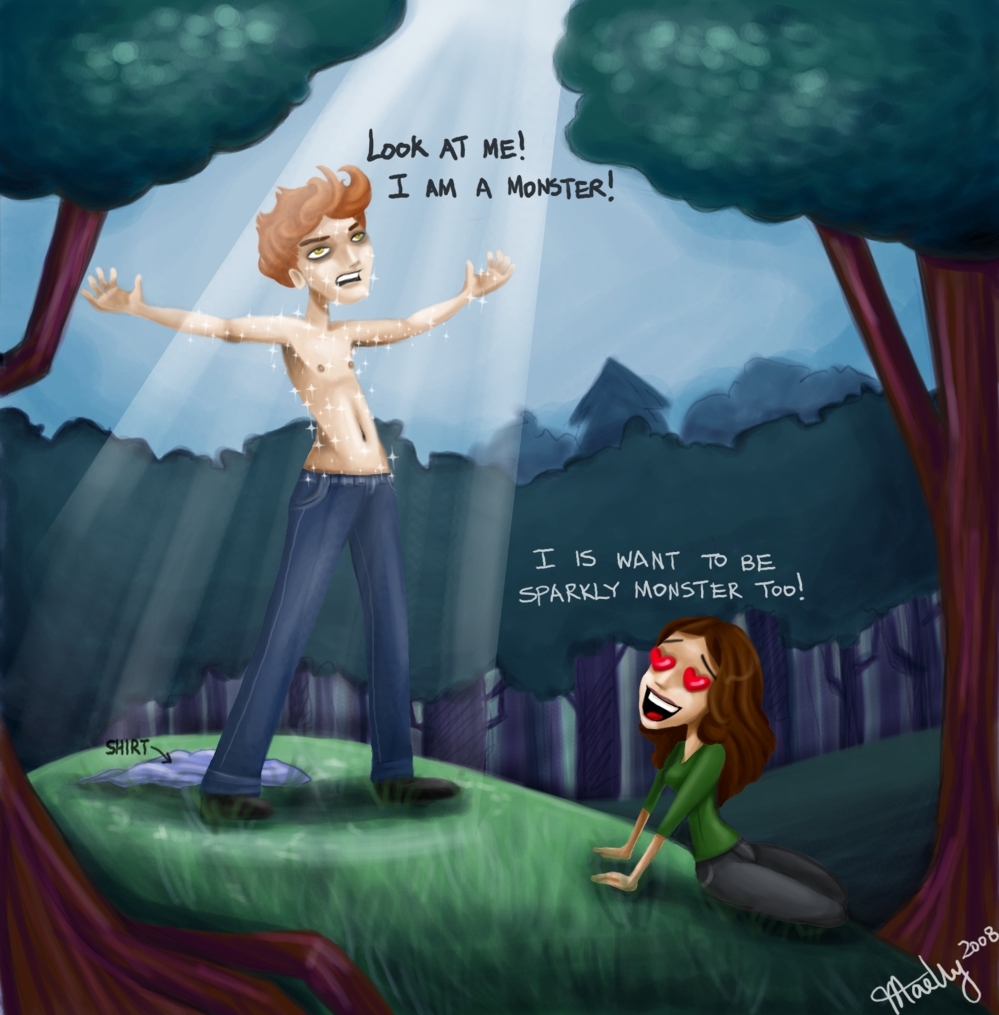
Twilight: Ok, so this isn’t a game. But the new movie just came out and I can’t resist right now.

Let’s just be honest. These movies are basically an excuse for young girls to goggle at shirtless guys with big pecs. At the risk of my Man Card spontaneously combusting, I will admit that I did read the first book. I will also admit that it wasn’t all that bad. But these films are a travesty on everything that is good in the world. Things like “good acting,” and “my eyes not bleeding.”

What was Meyer thinking? A story about vampires…that sparkle!? Vampires…do not…sparkle! They guzzle the platelets of the living! They rise from the grave in the dead of night to stalk hapless innocents, may or may not transform into bats, have a deadly fear of crucifixes and are completely and totally unable to have children (they are dead, after all…). And they most definitely…do not…sparkle.

I need to sit down.

Jerod Jarvis is an independent gaming journalist and founder of Duality Games. He maintains gaming columns for The Washington Times Communities and for The Outpost. When not blogging madly about games, he freelances for the Spokesman-Review in his hometown of Spokane, Washington and attends school at Whitworth University. Check out his presence on Facebook and Twitter to stay up on Duality Games updates and the inside scoop on the gaming news you care about.

Design a site like this with WordPress.com
Get started